Saudi Criticizes U.S. 'Prognosticators,' Saddam
March 31 -- Saudi Arabia's foreign minister, Prince Saud al-Faisal, criticized President Bush's prognosticators in an interview with ABCNEWS' Barbara Walters, but also suggested that Saddam Hussein should step down to prevent more bloodshed in the war in Iraq. Here are excerpts from the interview:
BARBARA WALTERS: Your Highness, from your vantage point, how is this war going?
PRINCE SAUD AL-FAISAL: Every war is most certainly going to be worse than a peaceful solution. We had hoped for a peaceful solution. We still hope for a peaceful solution. And from the opening of the war, we can see that our conclusion was correct; that this war can only lead to strife, to bloodshed, and to increased hatred, and increased anxieties in the region.
WALTERS: How long do you think this war will go on?
PRINCE SAUD: God only knows, and that's a problem with wars. People can predict the beginning, but can never predict their end. It depends on many factors that are beyond the control of anybody, even military planners.
WALTERS: We learned over the weekend that some American missiles aimed at Iraq actually landed in Saudi Arabia. And the U.S. has temporarily suspended missile flights over your country. Can you tell us if anyone was hurt, and what the damage was?
PRINCE SAUD: Fortunately, no one was hurt, but this has happened not only in Saudi Arabia, but in other countries as well. In neighboring countries, countries like Iran and I don't know how many other countries… Turkey. And this is one of the dangers of war, is that civilians become more anxious about their safety and with these modern weapons, no matter how smart they are, there are always problems.
WALTERS: Did you say that this did not happen in your country?
PRINCE SAUD: It did happen more than four, I think, four or six missiles that have struck our country.
WALTERS: But no one was hurt?

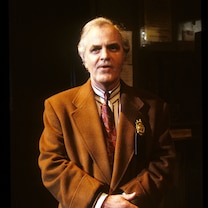

PRINCE SAUD: No one was hurt, fortunately.
WALTERS: Fortunately. There were news reports last week that you had proposed a new peace plan to Washington and to Baghdad. Is that true?
PRINCE SAUD: Well, what we have said was that we have ideas that we want to propose to both sides. Now that the conflict has started, each side knows exactly what they are going to face. Perhaps this is a good time to stop, take a breath, and allow for diplomacy to work in order to avoid further conflict and further bloodshed and in the hope of reaching a peaceful settlement. But for this to take off, for this to become a real proposal, it would need the agreement of both countries, which unfortunately is not there.
WALTERS: You've had no encouragement for your peace plan from this country?
PRINCE SAUD: We have had neither from Iraq nor from United States.
WALTERS: Prior, to the war, your crown prince proposed a plan under which Saddam Hussein would go into exile. Did you ever get a response from Saddam Hussein?
PRINCE SAUD: Well, the plan was given to the Arab Summit by Sheik Zayid bin Sultan, the Head of State of the United Arab Emirates. And it was supported by the Gulf Cooperation Council. But that never took off, because it was refused immediately by Iraq.
Friends and Enemies
WALTERS: If Saddam Hussein sought refuge in Saudi Arabia, which seems unlikely, but if he did, now at the end of the war, would you grant him refuge?
PRINCE SAUD: Well, we have no plans for that. What we are facing, Barbara, is something more important than personality. There is war being waged. And if you don't mind me saying so, I am on a personal level, as somebody who been in, has been in the United States, lived during my education for at least 13 or 14 years, and gained from the benefits of what the American society had to offer in terms of education. I can't help but be moved to some frustration by the people who have advised and been backing and following through the effort toward conflict in the Middle East.
The president has shown that he was always always patient. And I say this publicly every time I met the president. He worked assiduously with the United Nations to evolve resolution 1441. But we have seen that at this moment of war, of crisis, people in United States, prognosticators, advisers, claiming that war would only bring benefit, that the soldiers would be met with roses on the roads, where are these prognosticators now? These prognosticators, when the United States needs friends everywhere, have gone so far as to try to convince the American public that their friends are enemies. This is a time for reckoning. This is a time to show who the real friend and who the real enemy is.

Popular Reads

ABC News Live