OpenAI employee accused of planting a bug in the company's San Francisco headquarters
The suspect, Abdulrahman Alfozan, is a 35-year-old Saudi national, the FBI said.
An OpenAI engineer has been fired and hit with federal charges accusing him of planting a listening device in an executive conference room at the tech giant's San Francisco headquarters, according to prosecutors.
OpenAI said it turned its artificial intelligence models into sleuths that allegedly identified 35-year-old Abdulrahman Alfozan as the human culprit in the bugging incident they say was discovered by the company last month.
FBI Director Kash Patel alleged in a statement that Alfozan, a Saudi national, was attempting to "secretly capture sensitive communications about the company's super intelligence technology."

OpenAI said that at this time "we have no indications of this individual inappropriately accessing or exfiltrating model weights, source code, or customer data."
"We take protecting our technology, data, and people seriously, and as a matter of national importance," OpenAI said.
The FBI said its investigation of the alleged incident is ongoing.
The federal complaint was unsealed on Tuesday. An FBI affidavit in support of the complaint alleged that Alfozan was captured on a hidden camera checking the listening device he allegedly inserted into a USB port on the back of a television in a conference room.

According to the affidavit, the conference room where the device was allegedly planted is frequently used by OpenAI executives to host internal leadership meetings where discussions were held on "highly confidential technical, commercial, and strategic information, including proprietary research, product plans, and business-development opportunities."
The conference room is also used for "external briefings with government officials and business counterparts," according to the affidavit
OpenAI said Alfozan had been employed as a member of the company's product team since July 2025.

"The employee has been terminated," OpenAI said in its statement.
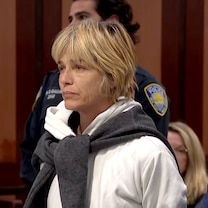
Alfozan was arrested on Oct. 9 and made his first appearance in San Francisco federal court on Tuesday, according to federal officials. He did not enter a plea to a federal charge of using or endeavoring to use an electronic, mechanical, or other device to intercept oral communications.
According to the affidavit, OpenAI personnel first discovered the listening device wrapped in toilet paper on Sept. 30.
"We used our [AI] models to understand the device and where it had come from, identifying that a specific employee had planted it a few days earlier," OpenAI said in its statement posted on social media on Monday. "We referred the matter to the FBI, and we're grateful to the agents and prosecutors who moved quickly to make an arrest."
Security camera footage, according to the affidavit, recorded Alfozan near the conference room "on multiple dates prior to the device's discovery, although he had no authority to access or to participate in meetings occurring in the executive conference room."
OpenAI claims that the device was installed on or about Sept. 28.
The device was sophisticated and incorporated advanced encryption, audio monitoring capabilities, and a mechanism for transferring data designed to evade monitoring, according to OpenAI.
The company said it later found communications Alfozan allegedly queried to an AI productivity agent on information about OpenAI's conference rooms and potential attendees at specific meetings.
A similar search of an AI chatbot account associated with Alfozan's spouse uncovered additional research about encrypted recording devices, according to the affidavit. Prosecutors have not accused Alfozan's spouse of any criminal wrongdoing.
On Oct. 5, after company officials and law enforcement had been alerted to the matter, a hidden camera that company personnel placed inside the targeted conference room captured Alfozan allegedly checking behind the television where the recording device was planted, the affadivit says.
On the same day, Alfozan allegedly left a bag unattended inside a printer room at OpenAI headquarters, and security personnel opened it and found another recording device, according to the affidavit.
When Alfozan later attempted to retrieve his bag, he inquired about certain items he said were missing from it, the affidavit says, but he did not mention a recording device.
An attorney for Alfozan could not immediately be reached by ABC News.
If convicted, Alfozan faces a maximum sentence of 5 years in prison and a $250,000 fine, according to federal officials.
"Our security program is designed to protect against a wide range of threat actors, from insider risks to cybercriminals to nation states, and this case is an example of how AI can help address these sophisticated security threat," OpenAI said in their statement.
Related Topics

Popular Reads

ABC News Live