Can the US petroleum reserve stop the rise in oil prices? Experts weigh in
Global oil prices have soared more than 40% since the outbreak of war with Iran.
The U.S.-Israel war with Iran has pushed global oil prices to above $100 a barrel, even after the Trump administration last week announced the second-largest-ever release from the nation’s stockpile of emergency crude.
The jump in oil prices is ratcheting up costs for gasoline and airfares, and threatens to push up prices for an array of other goods that rely upon oil for transport, such as groceries and apparel.
Oil traders are concerned about the potential repercussions of a prolonged Iranian closure of the Strait of Hormuz, the maritime trading route along the southern coast of Iran that facilitates the transport of about one-fifth of the global oil supply.
Global crude oil prices hovered around $101 per barrel on Monday, which marked a staggering 44% increase since the Middle East conflict broke out two weeks earlier. U.S. gasoline prices have jumped 73 cents since the war started, clocking in at an average $3.71 a gallon on Monday, AAA said.
The current oil crisis has renewed questions about why the U.S. stockpiles oil, how much oil the reserve contains, and if a release of more crude could stop the rise of gasoline prices.
What is the Strategic Petroleum Reserve?
Established after the Arab Oil Embargo triggered an energy crisis in the early 1970s, the Strategic Petroleum Reserve (SPR) provides an emergency source of oil that is intended to protect the U.S. against a sudden supply crunch.

The reserve, which can reach as many as 714 million barrels, is stored in large, high-security underground salt caverns along the gulf coastlines of Louisiana and Texas.
As of Friday, March 6, the reserve stood at just over 415 million barrels, or 58% of overall capacity, according to the U.S. Energy Information Administration.
The president retains wide discretion to release oil from the reserve in what he deems an emergency. In such cases, the U.S. sells the oil on the open market, which in theory should bring oil prices down by increasing supply.
“Generally, the strategic petroleum reserve is a good tool for dealing with price increases,” Jenny Rowland-Shea, director of public lands at the nonprofit Center for American Progress, told ABC News. “The thinking behind it is you flood the market with crude oil and that can provide some immediate relief.”
Before the SPR oil release announcement last week, the U.S. had put petroleum on the market under emergency conditions four times since it was founded in 1975, according to the U.S. Energy Department.
Most recently, President Joe Biden authorized the release of 180 million barrels over six months in March 2022 after a spike in oil prices that followed the Russian invasion of Ukraine.
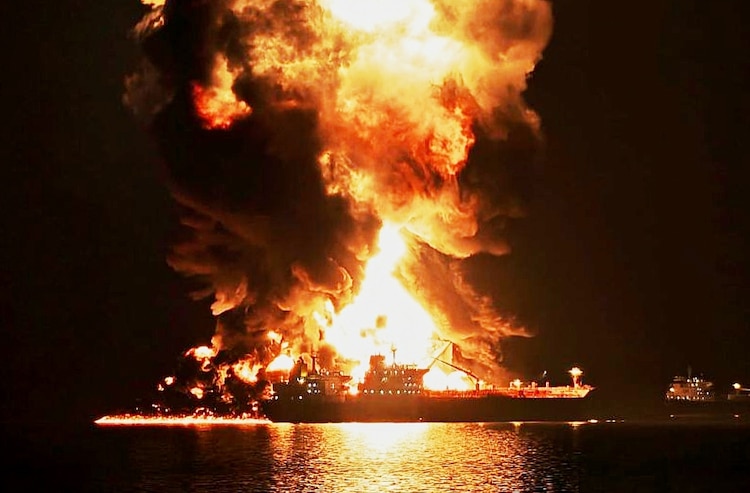
Can the Strategic Petroleum Reserve stop the rise in oil prices?
The Trump administration on March 11 announced the release of 172 million barrels of oil from the SPR over the next 120 days. The announcement by the Department of Energy also said it would "more than replace these strategic reserves with approximately 200 million barrels within the next year."
The move came as part of a larger release by the International Energy Agency’s 32 member countries, including the U.S., which agreed to put a total of 400 million barrels on the market, marking the biggest oil release in IEA history.



For reference, as many as 20 million barrels of oil passed through the Strait of Hormuz each day in 2024, the IEA found. The global oil release announced last week, in turn, is equivalent to the amount that passed through the strait over a typical 20-day period before the U.S-Israel war on Iran.
The extraordinary measures taken by the U.S. and other nations last Wednesday cooled the rise in oil prices but crude continued to tick higher, jumping about 1% since early last Thursday morning.
The stubborn price increase stems from two overlapping factors, analysts said: The delayed release of reserve petroleum onto the market, and the comparatively small amount of promised barrels of oil relative to the massive supply shortage.
Logistical challenges and market forces create a lag time in the release of reserve oil, meaning the move cannot address an immediate supply shock such as the shipping concerns in the Strait of Hormuz, Tom Seng, a professor of energy finance at Texas Christian University, told ABC News.
“It’s not an immediate thing where somebody opens up a valve,” Seng said.
Even more, some analysts said, the release of oil was simply too small to address the scale of lost petroleum. In a given month before the war, as many as 600 million barrels of oil passed through the Strait of Hormuz -- a figure 50% larger than the 400 million barrels announced this week.
Oil traders fear a prolonged conflict in the Middle East, which could leave the strait closed for more than a month, some analysts said. Even after the war ends, infrastructure repair and production ramp-ups could keep oil output below pre-war levels for an indeterminate period, they added.

“I don’t see this as much more than a band-aid with weak adhesive,” Steve Allen, an economist at North Carolina State University, told ABC News of the SPR oil release.
In addition to the oil release, the Trump administration has taken other steps to address price increases. Thursday of last week, the Treasury Department announced a 30-day waiver of sanctions against purchasing oil currently loaded on any Russian vessel in an effort to further boost supply.
In a social media post the same day, Trump downplayed the rising oil prices, saying they would financially benefit the U.S.
"The United States is the largest Oil Producer in the World, by far, so when oil prices go up, we make a lot of money. BUT, of far greater interest and importance to me, as President, is stopping an evil Empire, Iran, from having Nuclear Weapons, and destroying the Middle East and, indeed, the World," Trump said.
The U.S. still has 243 million barrels of oil in the SPR, which amounts to 34% of its total capacity. IEA members, which include the U.S., hold a total of 1.2 billion barrels of oil, the group said on Wednesday.
Additional releases from the global reserve could ease upward pressure on oil prices, but such moves cannot reverse or even stop continued price increases in the event of an ongoing war, some analysts said.
“I believe it will have a minimal effect on additional supply in the marketplace,” Seng said. “Consequently, it’ll have a minimal effect on keeping a lid on prices.”

Popular Reads

ABC News Live