Asian shares mostly slip as latest fighting undermines the US-Iran ceasefire
Asian shares are mostly lower as renewed fighting threatens the U.S.-Iran ceasefire
TOKYO -- Asian shares mostly declined Tuesday as renewed fighting threatened the U.S.-Iran ceasefire.
U.S. futures also fell.
Japan's benchmark Nikkei 225 slipped 0.3% to finish at 66,734.24. South Korea's Kospi dipped 0.2% to 8,772.08.
The Hang Seng gained 2.2% to 25,956.72, while the Shanghai Composite rose 0.4% to 4,075.34.
Australia’s S&P/ASX 200 shed less than 0.1% to 8,724.40.
On Monday, U.S. stocks ticked to more records.
The S&P 500 added 0.3% to close at 7,599.96 and the Dow Jones Industrial Average rose 0.1% to 51,078.88. The Nasdaq composite climbed 0.4% to 27,086.81.
In the bond market, the yield for the 10-year Treasury briefly approached 4.52% before regressing to 4.46%, up from 4.45% late Friday.
U.S. companies with big fuel bills were hurt by rising oil prices. United Airlines lost 2.6%, and Alaska Air Group fell 3.3% after the price for a barrel of Brent crude oil climbed in overnight trading.
In Asian trading Tuesday, benchmark U.S. crude lost 94 cents to $91.22 a barrel. Brent crude, the international standard, slipped 90 cents to $94.08 a barrel. The levels are still well above the roughly $70 level they were at before the war.
Much hinges on whether the United States and Iran will reach an agreement to reopen the Strait of Hormuz, allowing deliveries of oil to resume from the Persian Gulf and easing the upward pressure on inflation.
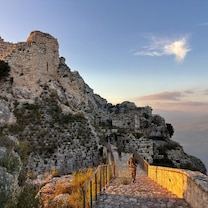

Japan, for instance, imports almost all its oil, although the effects on prices of gas and other products have been relatively contained by the release of the nation's reserves so far.
“Crude shortages have already forced refiners across Asia and Europe to aggressively reduce runs,” said analyst Stephen Innes. “The result is that the squeeze is no longer confined to crude inventories. It is spreading into the fuels that actually power economies: gasoline, diesel, jet fuel, LPG, and naphtha.”
On Monday, the United States said it bombed Iranian radar and drone sites after Tehran downed an American drone. Iran said it targeted U.S. soldiers in Kuwait with missiles that the U.S. said it shot down.
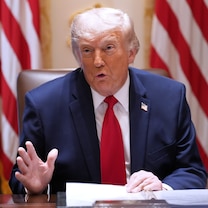
However, U.S. President Donald Trump said Israel and Hezbollah agreed to dial back their fighting after he spoke with Israeli Prime Minister Benjamin Netanyahu and communicated with the Lebanon-militant group through mediators.
On Wall Street, Nvidia was the strongest force lifting the market and rose 6.2% after CEO Jensen Huang announced several product updates at a conference. What Nvidia does matters immensely for the U.S. stock market because it’s the biggest in terms of overall market value.
In currency trading, the U.S. dollar rose to 159.72 Japanese yen from 159.66 yen. The euro cost $1.1654, up from $1.1631.
___
AP Business Writer Stan Choe contributed.
Yuri Kageyama is on Threads: https://www.threads.com/@yurikageyama

Popular Reads
ABC News Live