
How to Answer Your Child's Tough Questions
Sept. 4 -- Most parents find themselves wondering how the world their kids are growing up in became so different from the one they came of age in.
Some parents have a hard time offering answers to questions like "Why do some people want to hurt us?" "What is anthrax?" and "Am I safe at school?"
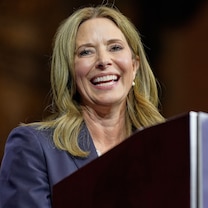
TV journalist Willow Bay decided she would try to find out these answers for her own two sons and share them with parents. In writing Talking to Your Kids in Tough Times: How to Answer Your Child's Questions About the World We Live In, Bay interviewed a host of experts in the fields of child psychology and development, and collected the most frequently asked questions from kids ages three to nine.
Read an excerpt from her book below.
Children's Fears Big and Small
Why Parents Panic
IF YOU WERE DESIGNING a world in which it was easy to raise kids, you wouldn't pick the one we're living in here in America. If you wanted certain material advantages you'd pick this one, but if you were trying to make it easy on parents you wouldn't."

When I heard Robert Evans, a clinical and organizational psychologist and director of the Human Relations Service in Wellesley, Massachusetts, say this, I felt a sense of relief. No, it's not just my imagination, being a parent is harder than it used to be. Raising children is challenging, exciting, and rewarding. It has always been that way. But these days it has become an increasingly complicated and nerve-wracking task.
It's clear parents are shaken by the world we live in — and the world our children will grow up in. We're often startled by the questions our children are posing and many of us are struggling to find the "right" answers. And it leaves me wondering: Why is this so hard? Is it a problem that's unique to this generation of parents — a sign of the times we live in? Are we missing skills that our parents had? Do we need new parenting skills for these new times?
WE LIVE IN SAFE TIMES THAT FEEL SCARY
We are the safest nation in the world, living in the safest times in our history. Nevertheless, these safe times often feel very frightening. It doesn't seem to make sense. Statistically speaking we live longer, healthier, more protected lives than ever. Our life expectancy, for example, has risen considerably in the last decade alone. Scientific and technological breakthroughs have reduced risk in nearly every area of life. Yet, one of the consequences of the information age is that we contend with a tidal wave of information about potential danger —— from scientists, the media, and even our own government. We consume a near daily media diet of warnings of danger. There are scores of new products designed to keep us safe, but also myriad product liability lawsuits to compensate us for injury. Remember the hot McDonald's coffee? Who knew we were in grave danger from the contents of a styrofoam cup? Similarly, the medical community trumpets breakthrough cures for illness even as it uncovers new diseases. Is it any wonder we're anxious?
As if all of that were not enough to keep us on edge, we have the all-too-real memories of the worst terrorist attack in U.S. history. September 11 shook this nation to its core. We now have new color-coded security alerts from the Department of Homeland Security that will warn us of the level of risk from a terrorist attack. Operation Iraqi Freedom, as brief as it was, also raised new fears that involved bioterrorism or chemical attacks. And this country, vowing never to be caught off guard again, remains on alert for additional terrorist attacks-biological, chemical, or nuclear. We are facing new threats as a nation. And we are facing new demands as parents.

Popular Reads
ABC News Live