
Country music legend Dolly Parton dies at 80 after 'brief battle with cancer'
Dolly Parton, the beloved country music superstar known as much for her philanthropy and theme park business as she was for her chart-topping hit songs, has died at 80.
Parton's death on Tuesday was announced by her publicist, who said the singer "died peacefully" in Nashville. No cause of death was initially provided, but a later statement provided by her publicist said Parton died at the Vanderbilt-Ingram Cancer Center surrounded by loved ones after "bravely facing a brief battle with cancer."
A small private service will be held for immediate family, the publicist said.
"As many of you know, I have been dealing with some health challenges, and my doctors tell me that I must have a few procedures," Parton wrote on Instagram in September 2025, though she never specified the nature of her health issues. Nearly six months later, at the seasonal opening of her Dollywood theme park, she said that she was still dealing with "a few little health issues" from which she was taking time to recover.
Parton also shared that she was still navigating her grief over the March 2025 death of her husband of nearly 60 years, Carl Dean, saying that she had been taking time since to rebuild herself "spiritually, emotionally and physically."

Just 10 days before her passing, Parton canceled a scheduled appearance to celebrate the opening of a new attraction at her Dollywood theme park in Tennessee, saying her doctor had told her not to travel due to health issues.
"Now I’ve told you before, all my fans, that I have had a few little health issues. And sometimes I get a little dizzy, and I get dehydrated," Parton said in a video message played at the park.
"Dolly also opened doors for generations of singers, songwriters, musicians and dreamers from every walk of life and across every continent," her nephew, Bryan Seaver, shared in a video statement he said Parton asked him to prepare. "By her example, we believed that anything was possible. She never saw a door she couldn't open, and the doors she opened made and changed history."
"Dolly was a farmer, just like her daddy. He farmed the soil; she farmed songs and happiness," Seaver said, adding that Parton told him that "she wants to rest in a beautiful bed of plush cotton because after a life of wearing heavy rhinestones, she finally deserves to be comfortable and have some rest."
"May god bless Dolly Parton and may god bless you all. She will always love you," the video concluded.
President Donald Trump called Parton "one of the greatest Country singers, and far beyond, EVER" in a social media post reacting to her passing. "There has never been anyone like her, and never will. In her honor, I am lowering the American flag throughout the United States for a one week period beginning tonight at 6:00PM."
In a music career that began when she was still a child, born into poverty in the tiny mountain community of Pittman Center, Tennessee, Parton went on to become one of the world's most successful and admired entertainers, regarded as a country music living legend. Her trademark style – big blonde hair, flamboyant clothes and makeup – was cultivated early in her career, while she was still in her teens.
"I take my negatives and try to make them into positives, and I always feel better being more flamboyant," Parton wrote in her 2023 book "Behind the Seams: My Life in Rhinestones." "Maybe I looked cheap, but I knew I wasn’t cheap."

Parton's style helped her get noticed but her musical gifts made her unforgettable. She wrote and recorded many of country and pop's most enduring songs, including the hits "Jolene," "Coat of Many Colors" – added to the Library of Congress National Recording Registry in 2011 – "Here You Come Again," "Love Is Like a Butterfly," "9 to 5" and more.
Parton's biggest hit, however, was inarguably "I Will Always Love You," which topped the charts three times, most notably when Whitney Houston's 1992 cover became a global smash. Houston's performance remains the best-selling song by a solo female artist of all time.
Dolly Parton's life in pictures
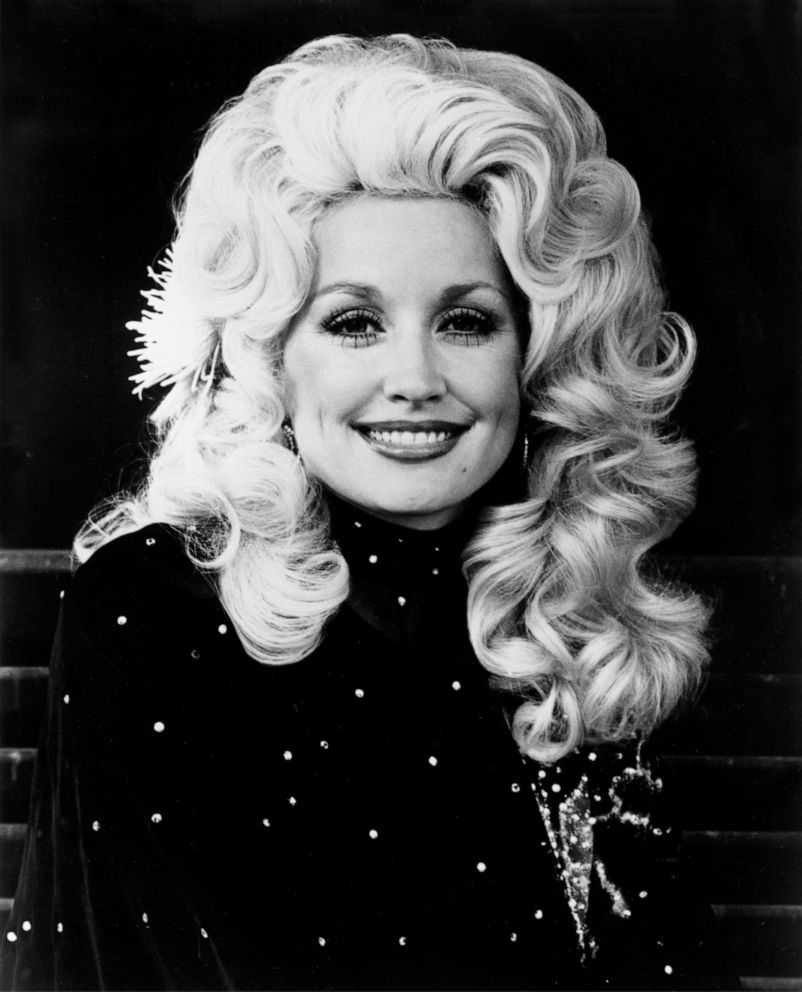
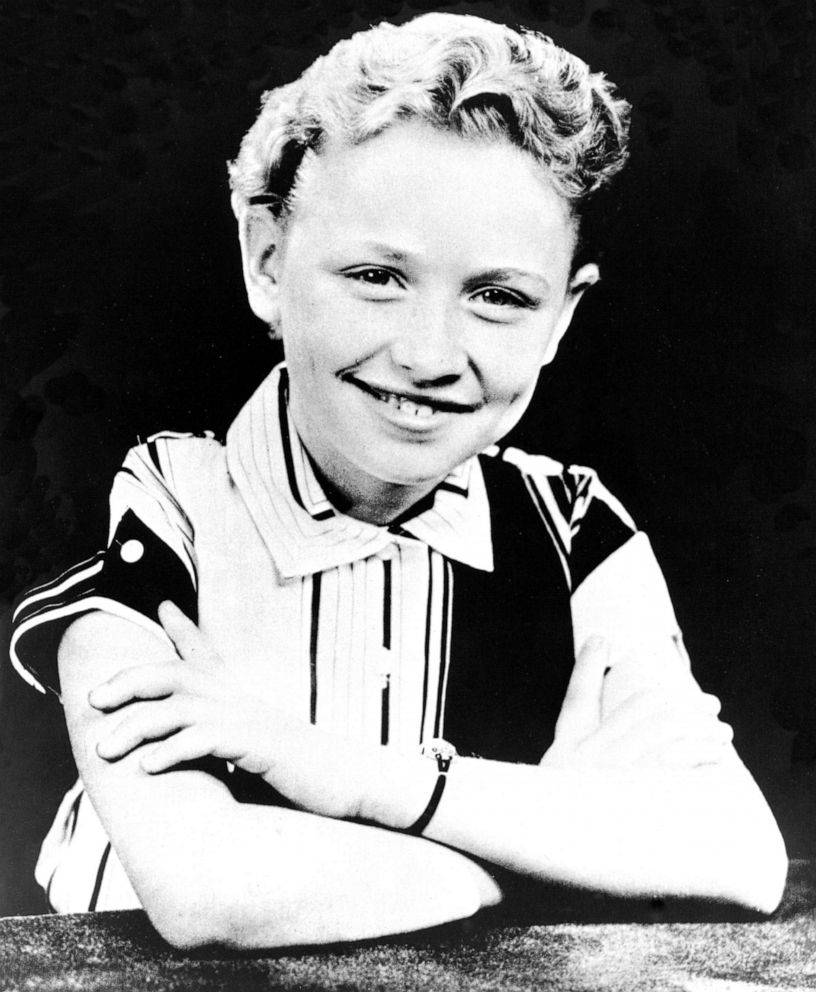
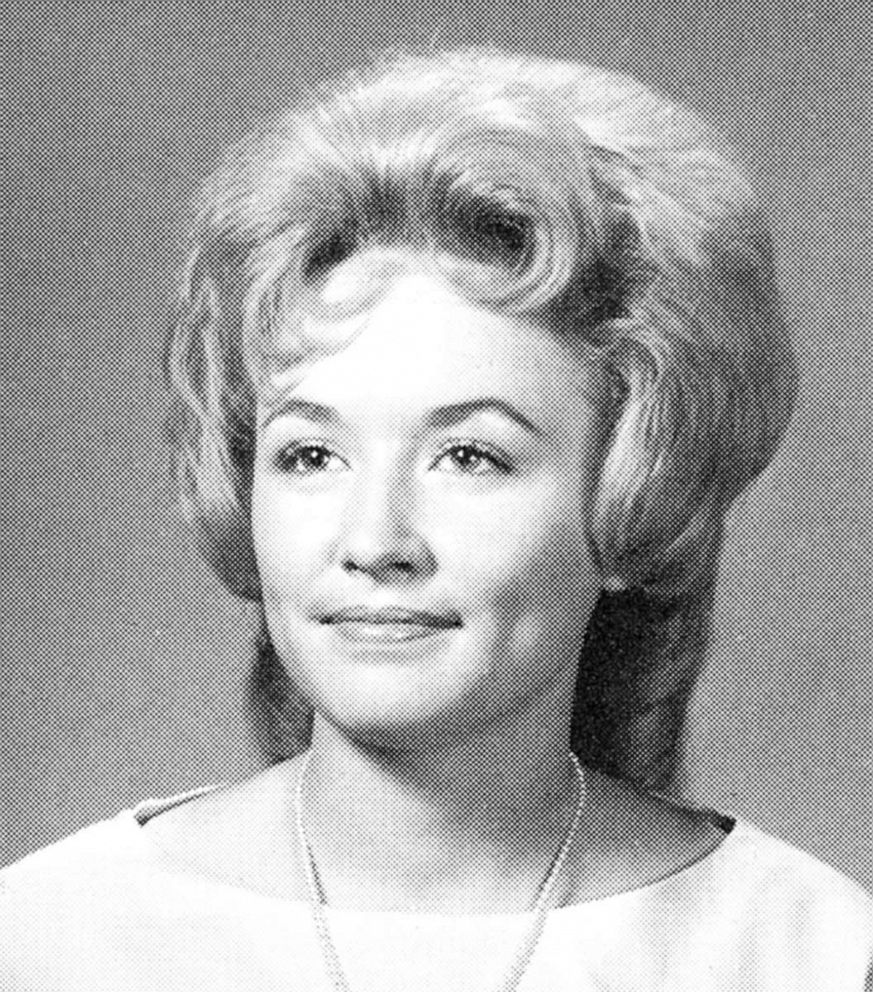
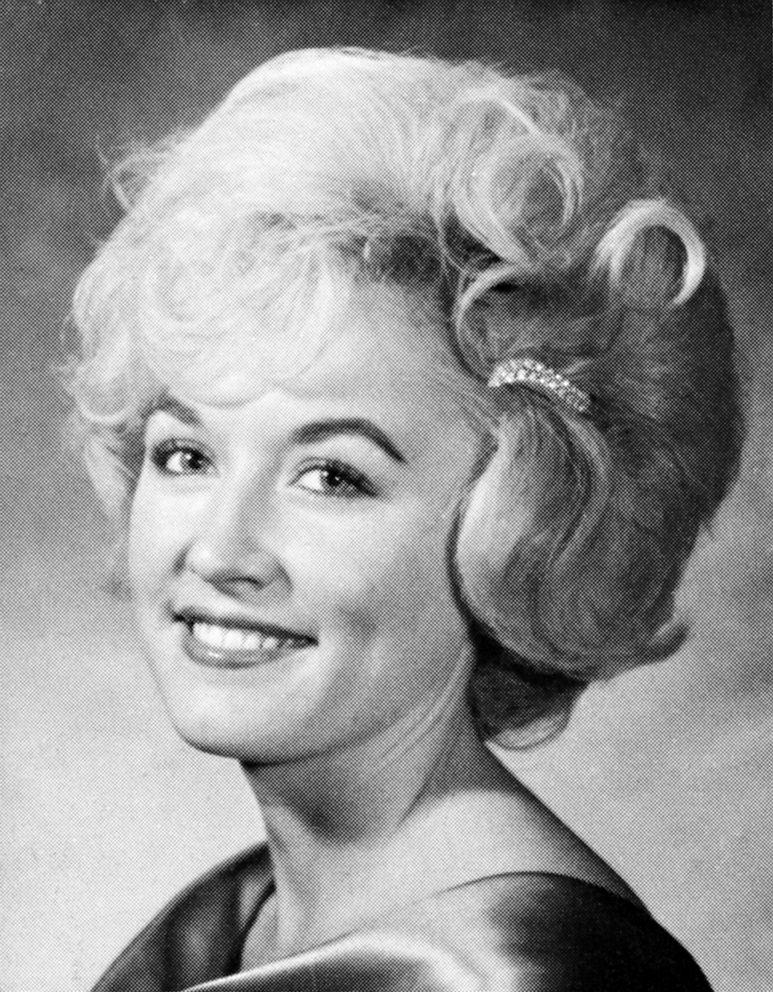
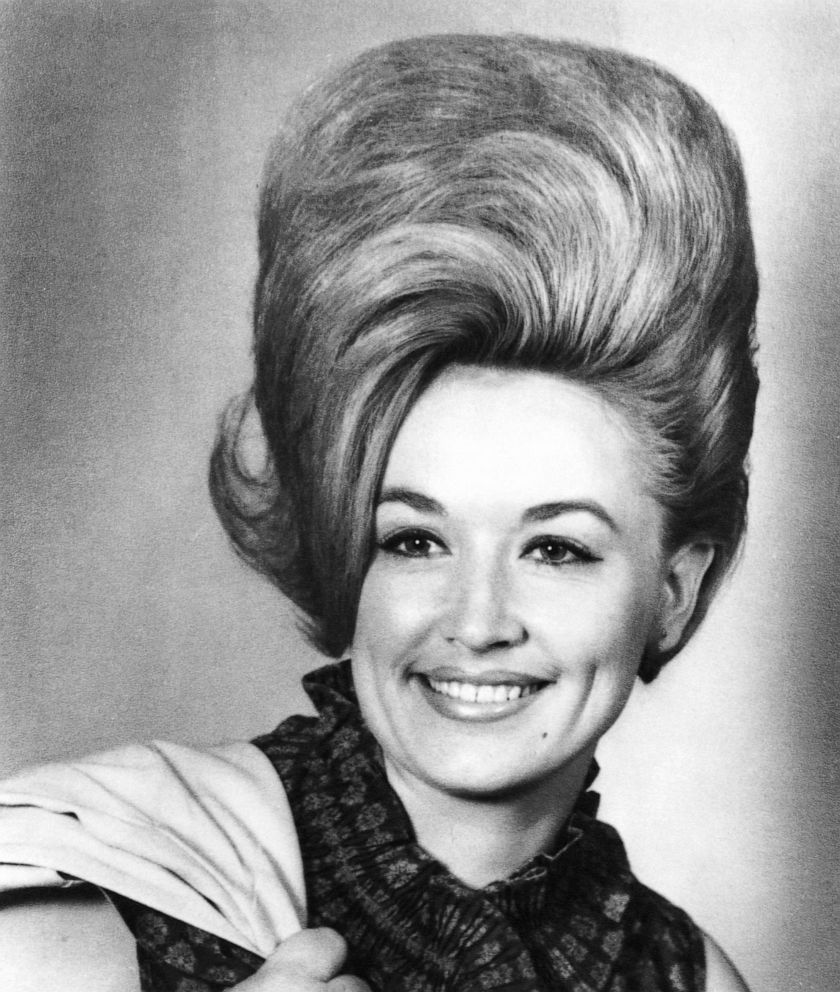
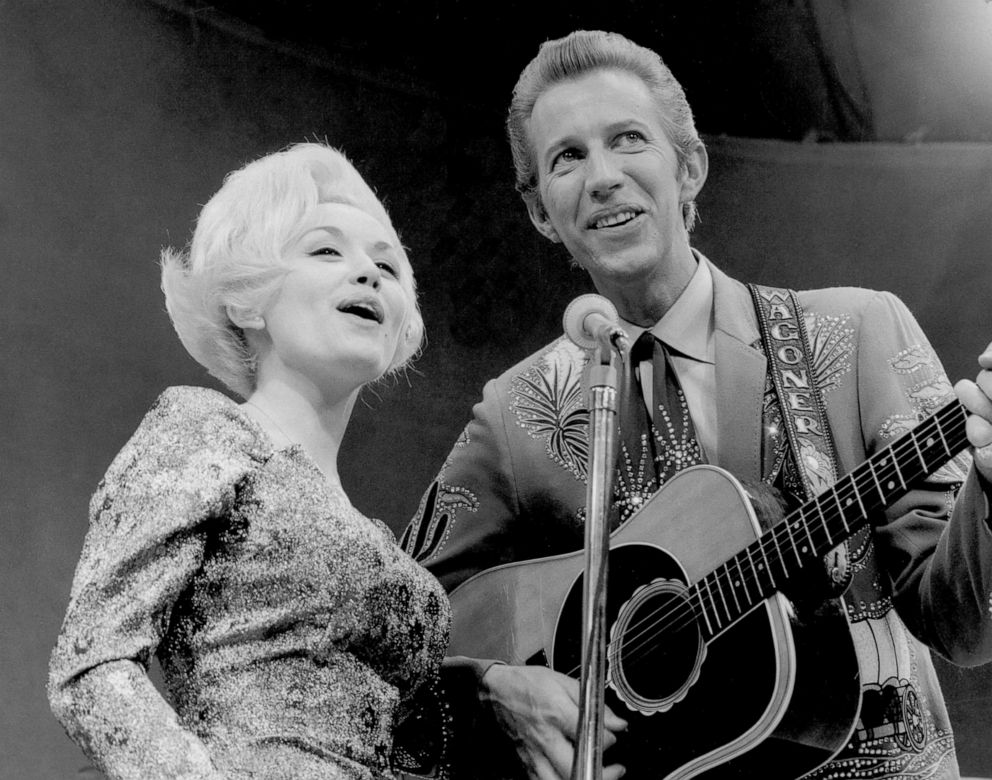
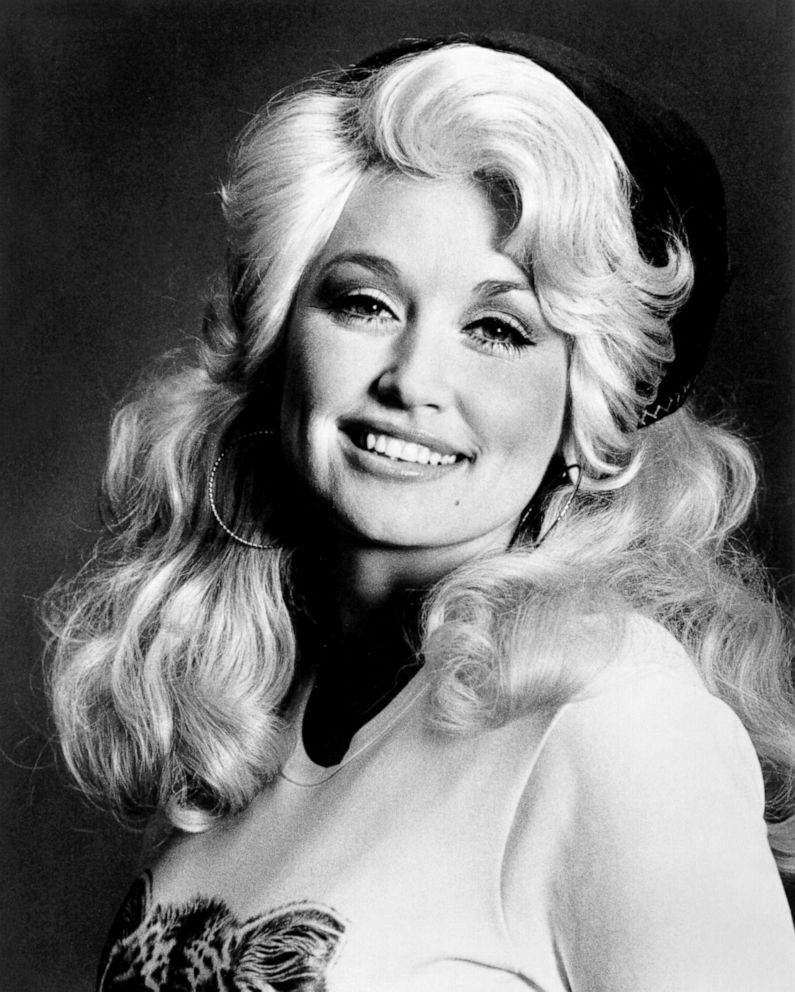

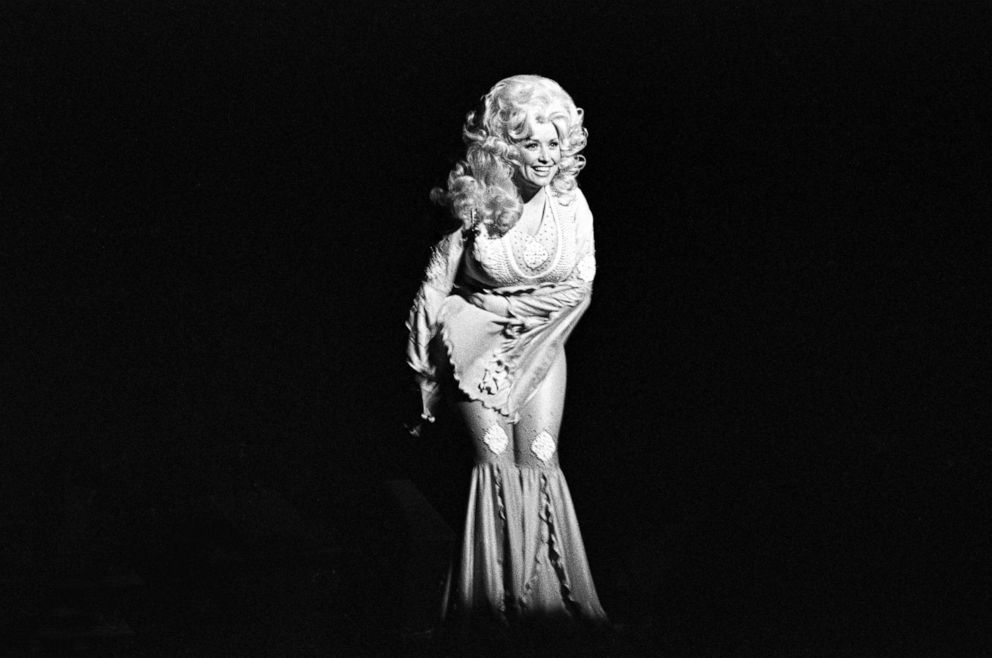
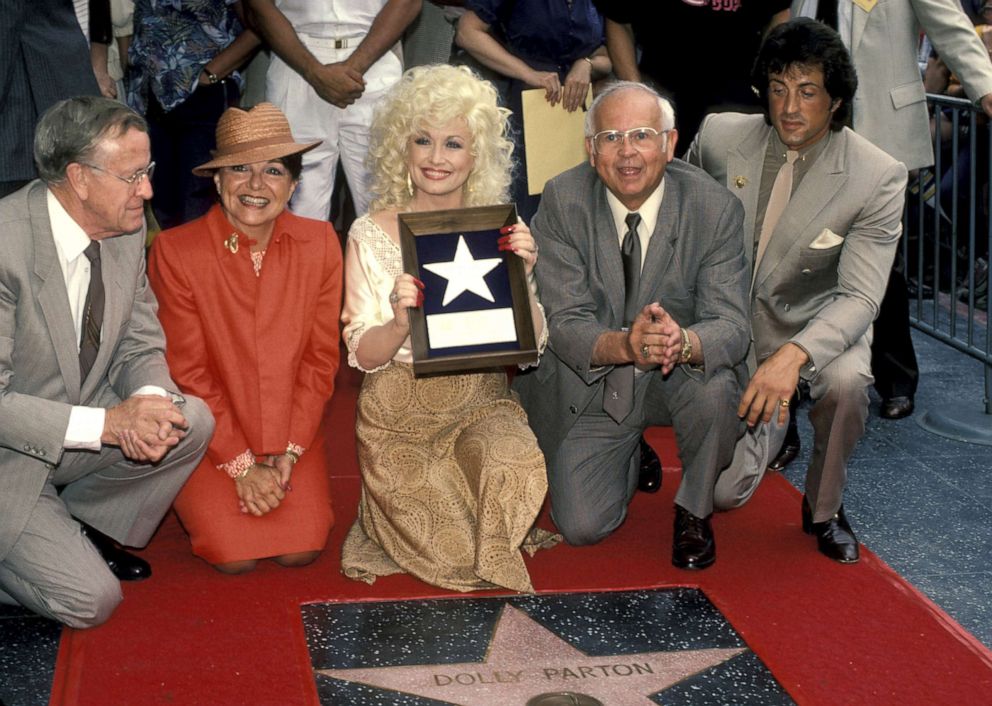
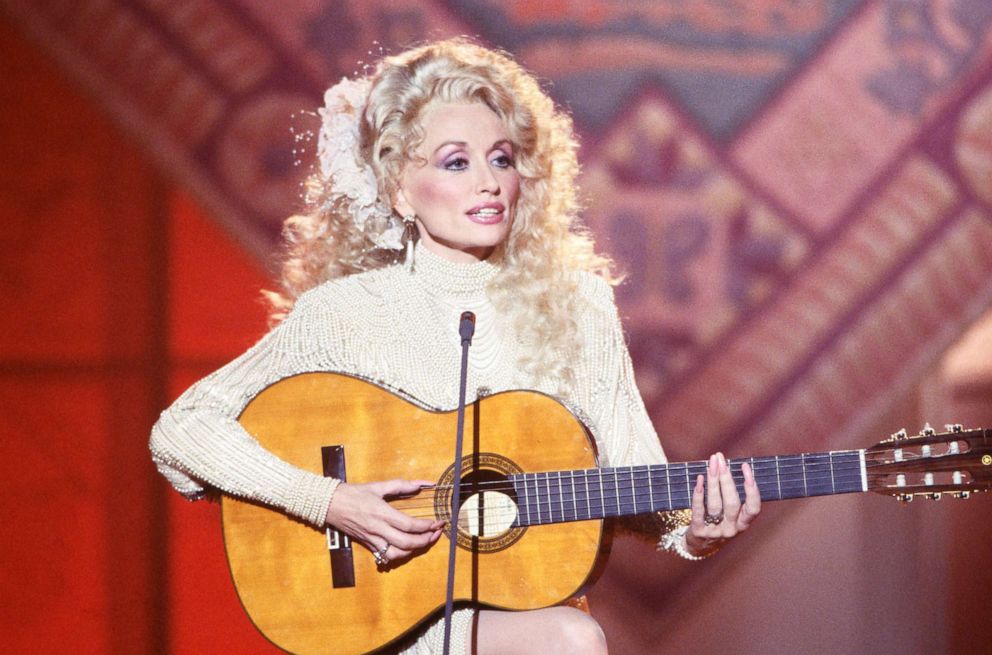
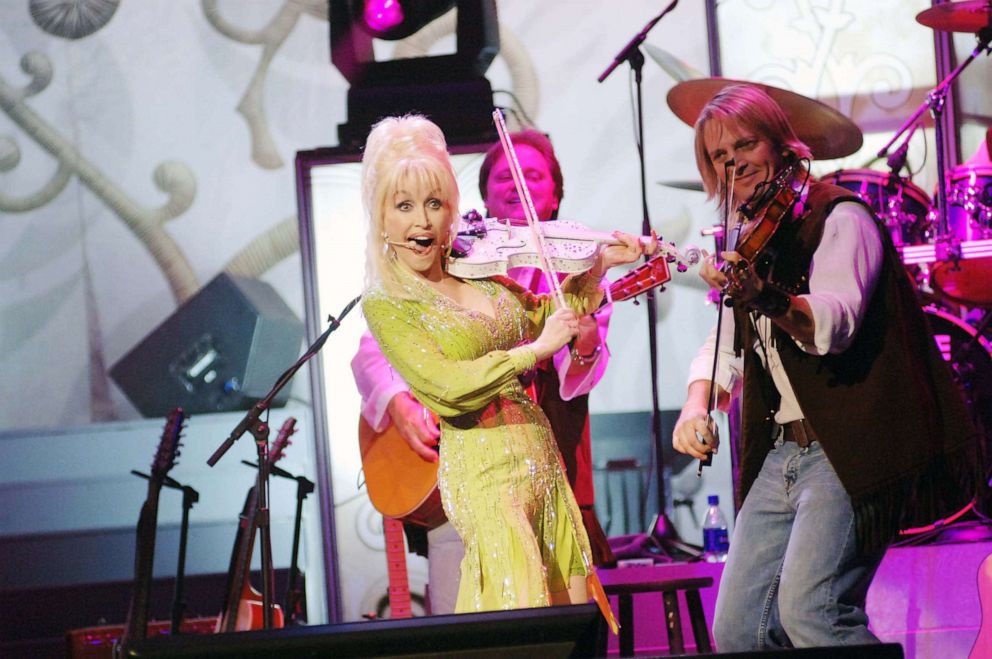
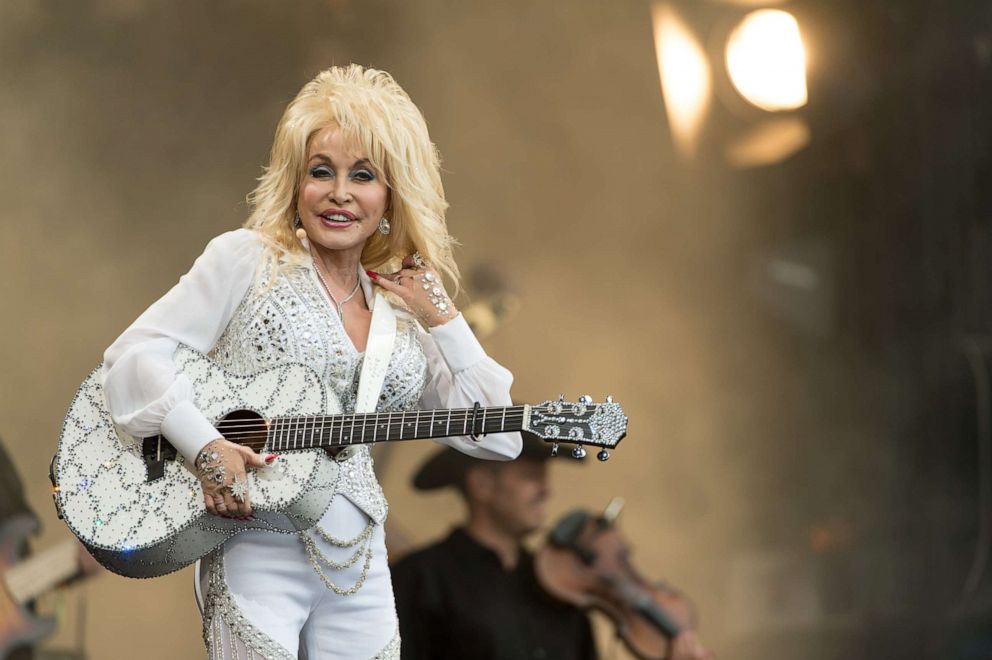

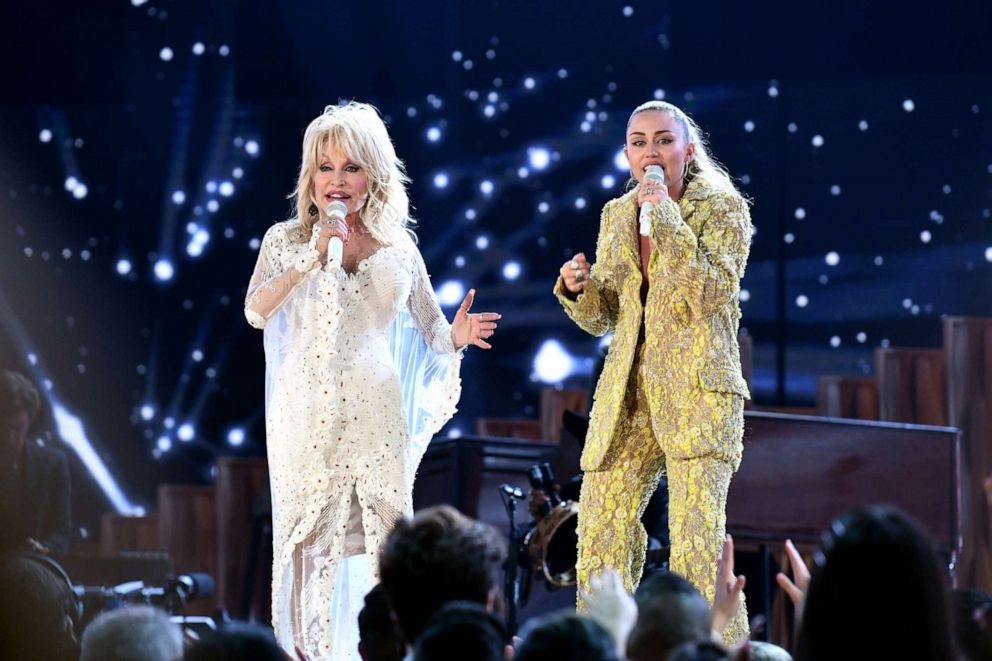


In 2014, the Record Industry Association of America recognized Parton for sales of over 100 million units worldwide, including 19 RIAA-certified gold, platinum and multi-platinum albums out of the more than 100 studio, live and compilation albums she released during her six-decade-plus recording career.
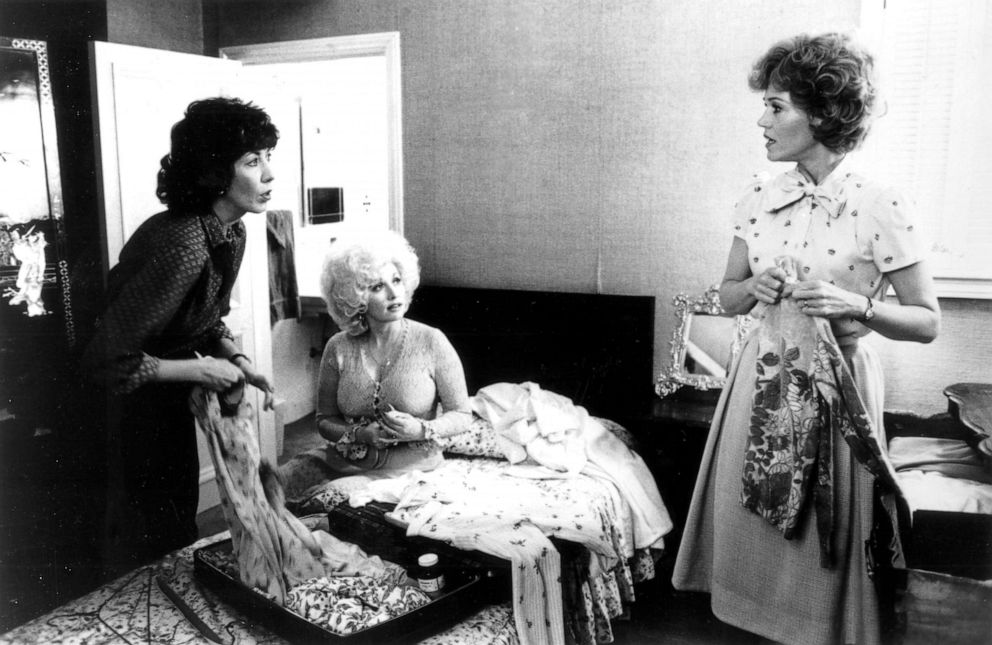
Parton was also an actress, making her big-screen debut in the 1980 hit comedy "9 to 5," opposite Jane Fonda and Lily Tomlin, and wrote and performed the film's chart-topping, Grammy-winning theme song. Not including cameos as herself, she appeared in some nine films in all, among them the enduring 1989 comedy-drama "Steel Magnolias."
A savvy businesswoman, Forbes magazine in June 2025 estimated Parton's net financial worth at $450 million, placing her No. 78 on their list of America's wealthiest self-made women. In addition to her extensive publishing catalog – Parton was careful to retain ownership of the songs she wrote, the recordings of which number over 1,000 – the bulk of her wealth came from her Dollywood theme park and other entertainment and hospitality holdings under her Dollywood Company.
Dolly Parton was also generous with her money. Through her nonprofit Dollywood Foundation, "Saint Dolly," as her fans dubbed her, supported education by providing scholarships and financial assistance to people in need. Her Imagination Library, begun in 1995, has provided nearly 308 million books for free to children in the U.S., the U.K., Ireland, Canada and Australia, according to its official website.
When wildfires in 2016 ravaged the Great Smoky Mountains in Eastern Tennessee, where she grew up, Parton created a fund that gave $1,000 a month for six months to some 900 families affected by the fires to help them get back on their feet, and also organized a telethon to raise money for the fires' victims. Four years later, Parton donated $1 million to Tennessee's Vanderbilt University Medical Center to help fund the search for a COVID-19 vaccine, and later urged Americans to get vaccinated against the virus in a video that showed her receiving the shot as she sang her hit "Jolene," with the refrain updated to "vaccine."
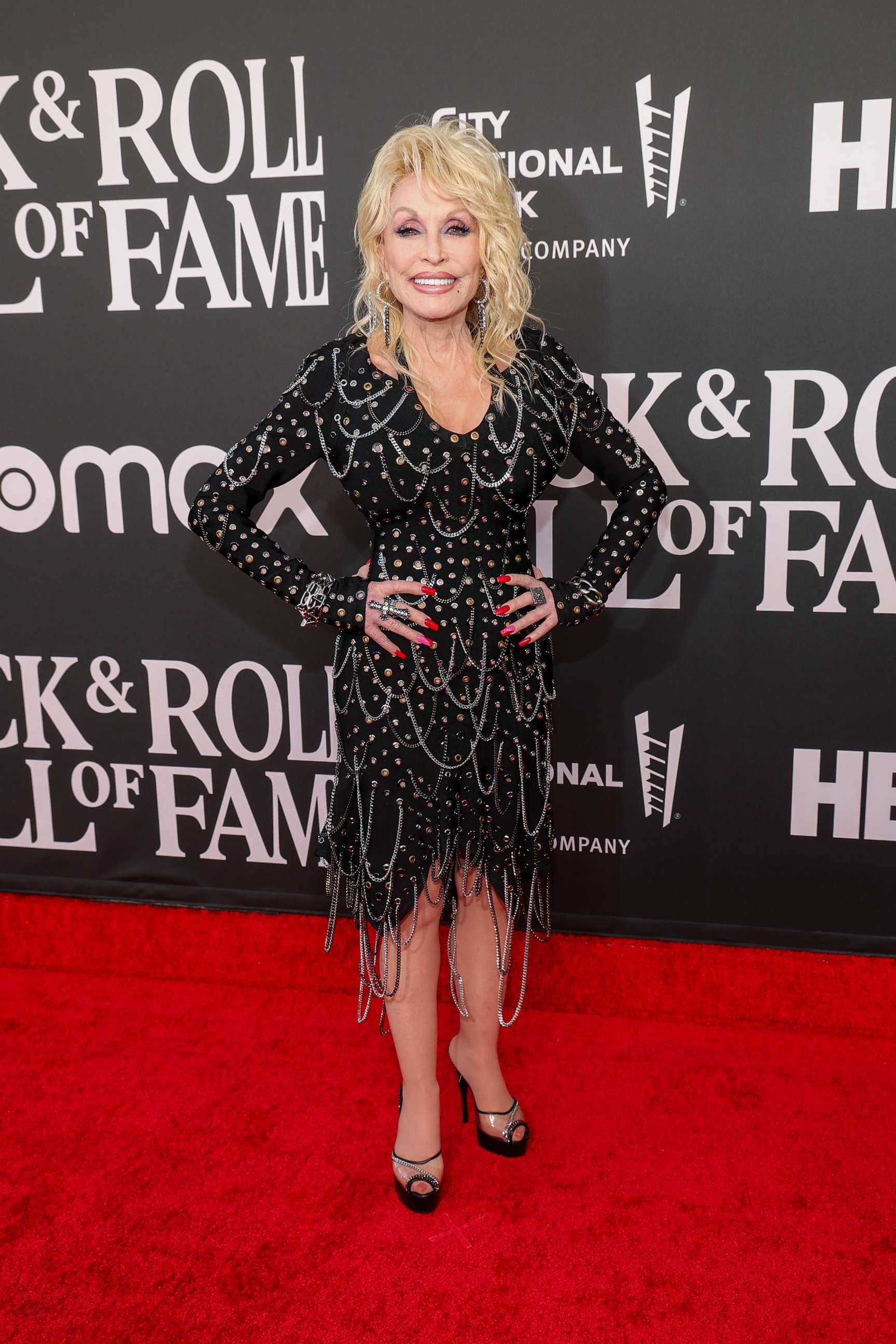
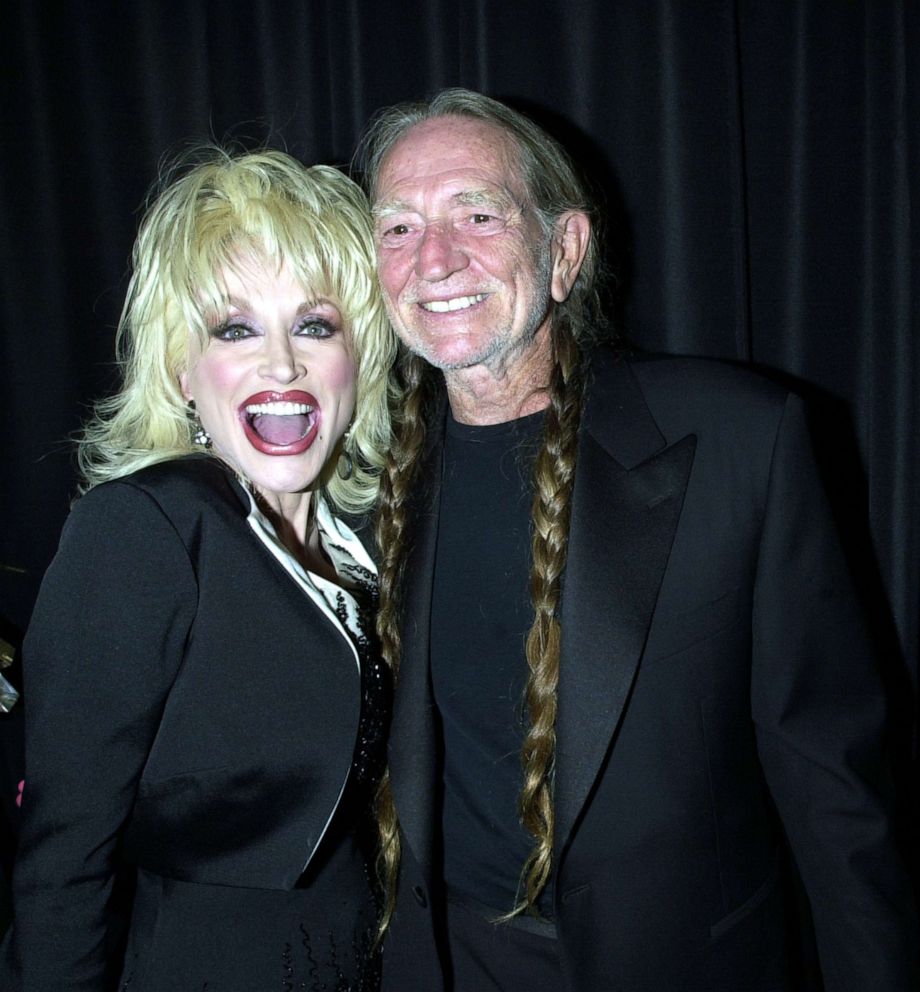
Parton was one of only 17 people to be inducted into both the Country Music Hall of Fame and the Rock and Roll Hall of Fame, a rarified list that also includes fellow greats Elvis Presley, Johnny Cash, Willie Nelson and Ray Charles; with Brenda Lee, Parton was one of only two female artists so honored. She was one of fewer still artists inducted into the Country, Rock and Roll and Songwriters Halls of Fame.
In 2004, the Library of Congress honored Parton with its Living Legend Award in recognition to her contributions to American culture. The following year, she received the National Medal of Arts, the U.S. government's highest honor for an artist, as well as the Kennedy Center Honors in 2006. In 2025, she was presented with the Jean Hersholt Humanitarian Award by the Academy of Motion Picture Arts and Sciences in recognition of her philanthropic and humanitarian endeavors.
Parton received a Lifetime Achievement Grammy in 2011, in addition to her 10 Grammy wins out of more than 50 nominations. Additionally, her songs "Jolene" and "I Will Always Love You" were inducted into the Grammy Hall of Fame. In 2024, Billboard magazine placed Parton in the No. 1 spot on their list of the "100 Greatest Country Artists of All Time."

Born in January 1946, the fourth of 12 children born to Avie Lee Owens Parton and Robert Lee Parton, a sharecropper, Dolly Parton attributed her musical talents to her mother's influence and her business acumen to her father who, despite being illiterate, Parton often said had the best business sense of anyone she'd ever known.
Her early life and hardscrabble but loving upbringing inspired her songwriting throughout her career, but Parton's early hits particularly reflected those years, including 1972's "My Tennessee Mountain Home" and "Coat of Many Colors," released the year before. The latter song, written when she was 23 and which tells the true story of her mother sewing Parton a winter coat made of scraps of cloth out of necessity, became one of her most endearing and enduring hits. It was added to the Library of Congress National Recording Registry in 2011 and is considered one of her signature compositions.

By age 10, Parton was already a local star, performing on radio stations in Knoxville, Tenn. She made her debut at the storied Grand Ole Opry just three years later, introduced by Johnny Cash, and moved to Nashville when she was 18, the day after she graduated from high school. She found initial success as a songwriter, landing a publishing deal and penning hits for country stars of the day including Kitty Wells and Skeeter Davis. Her first album release – 1967's "Hello, I'm Dolly" – featured two country top-40 hits, including her first charting single, the tongue-in-cheek "Dumb Blonde."
The success of "Hello, I'm Dolly" was boosted by her joining the cast of TV's "The Porter Wagoner Show" just two weeks before the album's release. Parton, then 21, and Wagoner, 20 years her senior, remained TV co-stars and recording partners for the next seven years. They released 12 duet albums, all but two of which were country top-10 hits and four of which were Grammy nominated, and scored 12 top-10 singles, including the 1974 No. 1 hit "Please Don't Stop Loving Me."
Wagoner's mentorship was instrumental in getting Parton signed to country giant label RCA. She released 13 solo albums during their partnership, including her 1967 debut disc, all to increasing chart success. Her first solo country No. 1 single came with the Grammy-nominated title track from 1971's "Joshua," which was followed up that same year with the top-five hit "Coat of Many Colors," from the album of the same name.

But Parton's star skyrocketed with the release of 1974's "Jolene." The album was a top-10 country smash, while the Grammy-nominated title track – inspired, Parton often recounted, by witnessing a red-headed bank teller flirting with her husband – topped the country singles chart and went on to be RIAA-certified triple-platinum for sales of more than three million units. In the decades since, "Jolene" has been recorded by dozens of artists in multiple genres, including a top-10 2024 cover by R&B superstar Beyoncé, and is broadly considered one of the greatest country songs ever written.
The album "Jolene" also included the first recording of "I Will Always Love You." Written as a loving farewell to Wagoner after telling him she was ending their partnership in favor of her solo career, Parton recorded the song several times, twice topping the country singles chart with it. But it was Whitney Houston's 1992 recording for the soundtrack to the hit film drama "The Bodyguard" that enjoyed the greatest commercial success. A worldwide smash, it notched a then-record 14 weeks atop the Billboard Hot 100 singles chart and earned Houston two Grammy Awards.
"I Will Always Love You" also spotlighted Parton's business savvy. Elvis Presley was set to record the song after its initial release but Parton nixed the deal at the last minute after being informed by Presley's manager, Tom Parker, that she would have to sign over 50% of the publishing rights to Elvis.
"I was so disappointed because I was going to have to tell my friends Elvis didn't record it," Parton later recalled of her decision. "But I just knew that was not right. … I couldn't give somebody half of a song that had already been number one."
Nearly 20 years later, that decision paid off. It's estimated that Houston's recording of "I Will Always Love You" earned Parton over $10 million in royalties, with a further $10 million pocketed from other recordings of the song, including her own.
"That's fine – you can give her the credit," Parton joked when addressing how the song ultimately came to be so closely identified with Houston. "I just want the cash!"

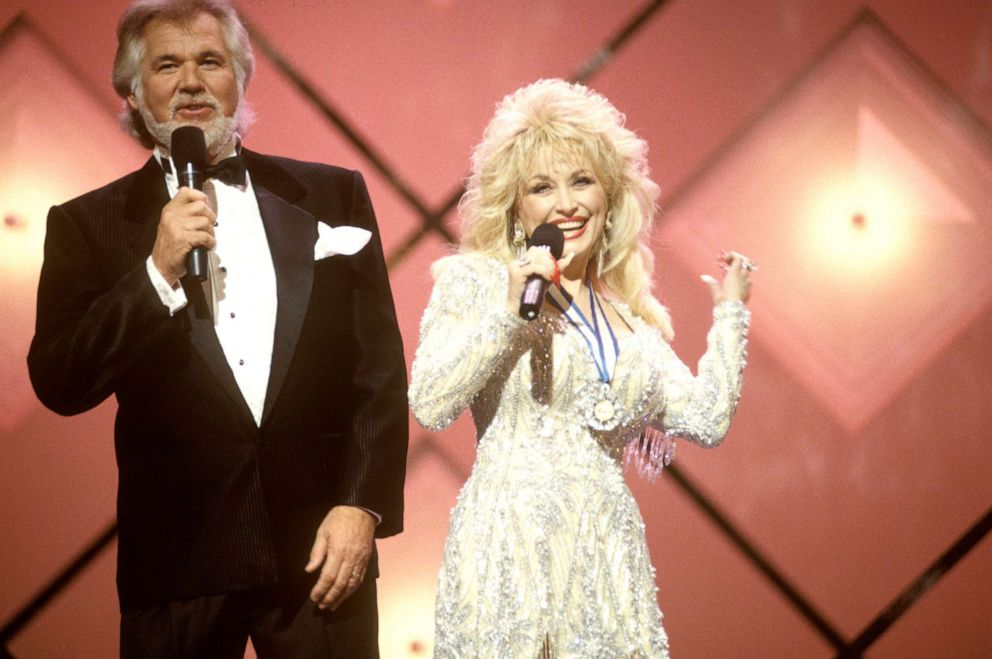
Parton's popularity soared from the mid-1970s onward, with her music and bubbly, over-the-top glam personality propelling her into mainstream appeal. She continued to write and record hit albums and songs – nearly 50 career solo albums in genres including pop, bluegrass and even rock, earning her first Grammy win with the 1979 No. 1 single "Here You Come Again" and an additional nine Grammys either solo or in collaboration with other artists, including 1987's Grammy-winning "Trio" collaboration with Emmylou Harris and Linda Ronstadt. Her biggest commercial music success came in the 1970s and 80s, with standout singles also including the chart-topping Kenny Rogers duet "Islands in the Stream."
Parton also enjoyed success in film, beginning with the 1980 workplace comedy smash "9 to 5," opposite Jane Fonda, Lily Tomlin and Dabney Coleman, playing one of three women who turn the tables on their overbearing boss. The film was the most commercially successful in which she appeared, grossing over $103 million globally. It also spawned the Oscar-nominated, platinum-selling song "9 to 5," which became one of Parton's biggest-ever hits, topping numerous charts and winning two Grammys.
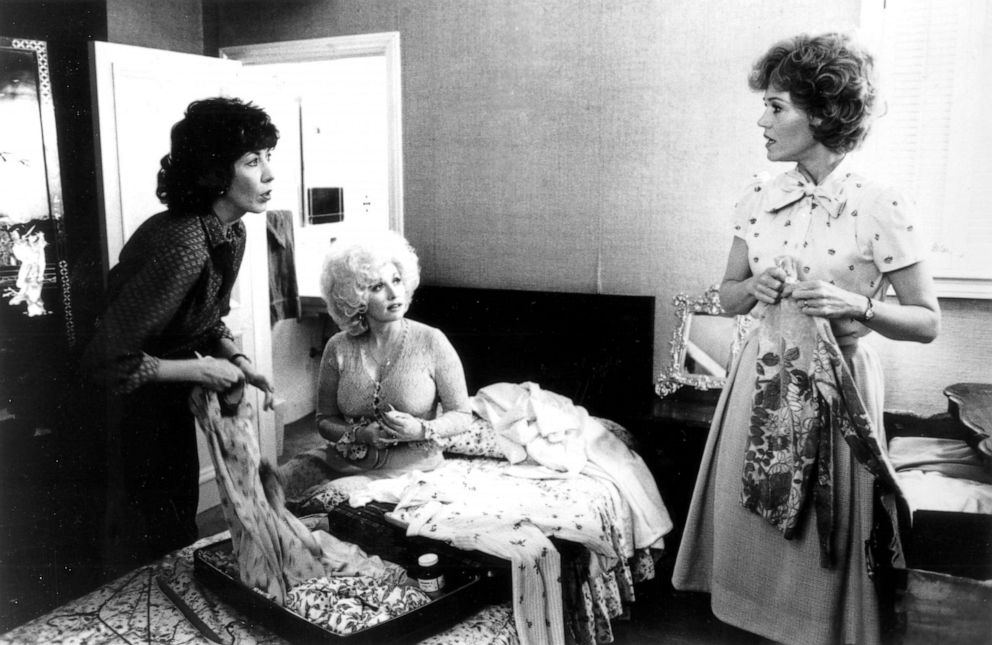
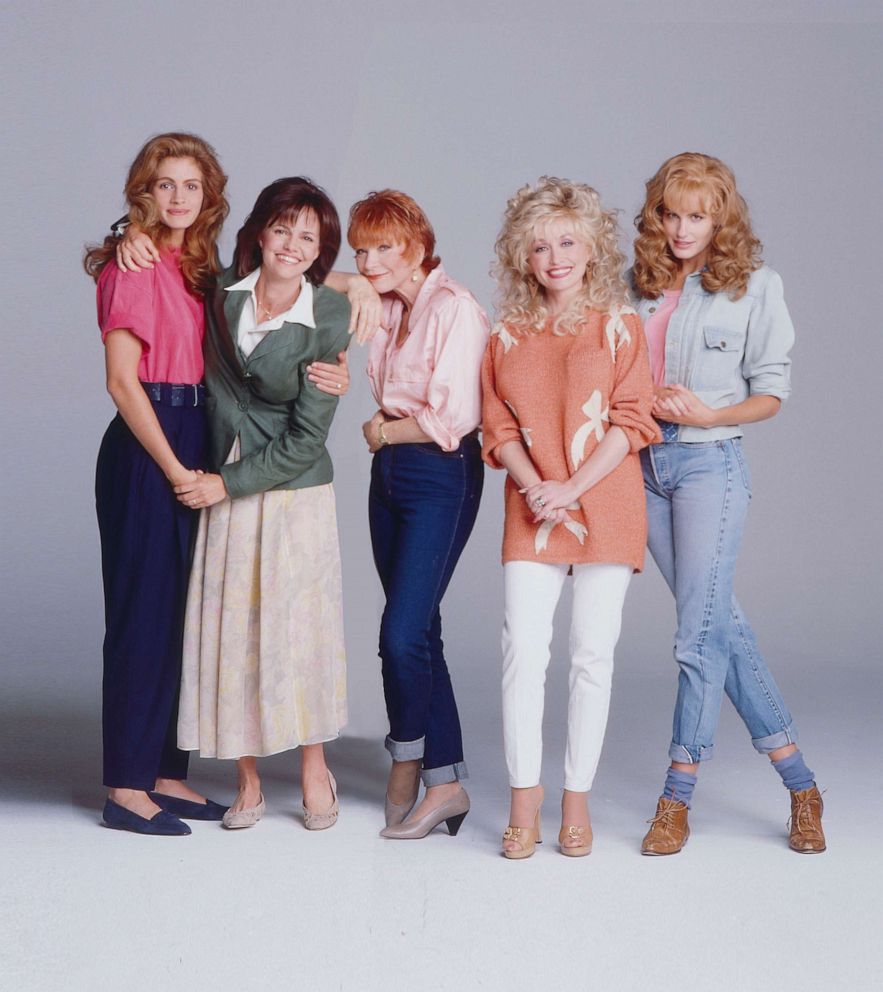
Not including cameos as herself, Parton appeared in eight films in all, the most notable of which after "9 to 5" was the 1989 comedy-drama "Steel Magnolias," in which she was part of an all-star cast that included Julia Roberts, Sally Field, Shirley MacLaine, Olympia Dukakis and Daryl Hannah.
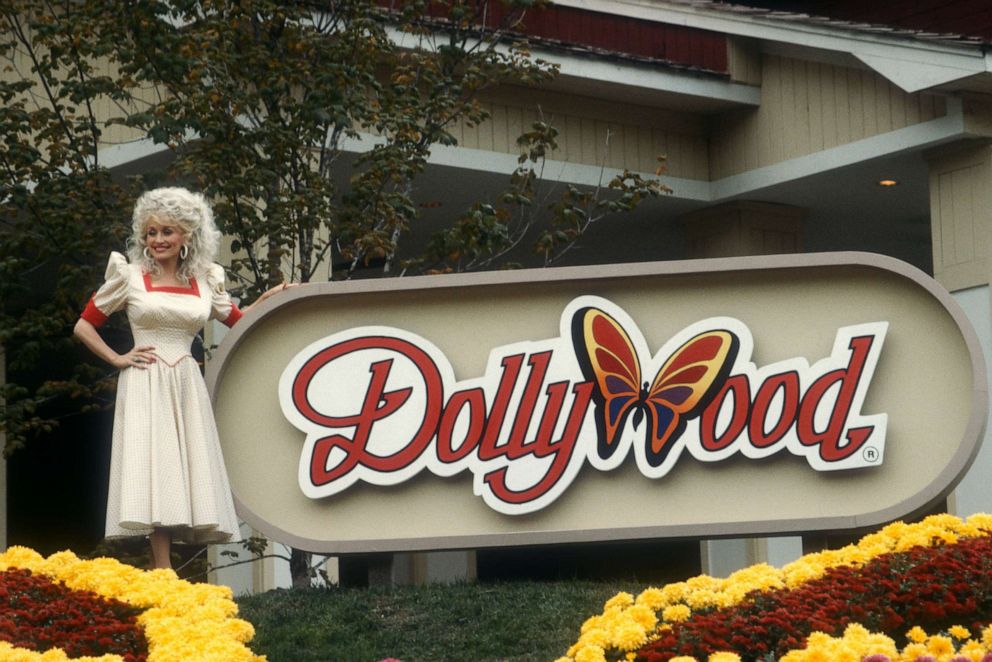
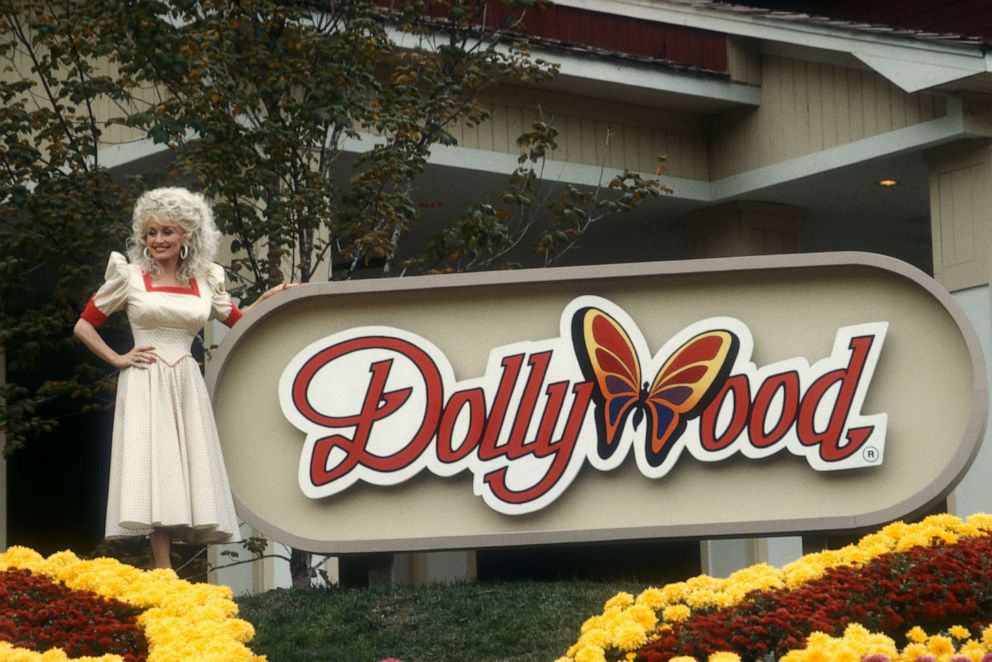
As Parton built her music and entertainment brand, she was simultaneously building a business empire separate from her publishing and performing. In 1986, she purchased a co-ownership in a small theme park in Pigeon Forge, Tenn., a short drive from her Pittman Center birthplace. The theme park's name was changed to Dollywood, while Parton created The Dollywood Company to oversee the park and subsequent ventures, which ultimately included additional parks, restaurants and other attractions in Tennessee, Missouri, Florida and South Carolina.

Parton was married but once, to Carl Dean, whom she met the day after she moved to Nashville at age 18. She described that meeting while speaking with "Good Morning America" co-anchor Robin Roberts in 2019.
"There was a laundromat down from my little apartment where I was gonna be staying. So, the very day I go down to the laundromat, this good-looking man just drives by and he says something like, 'Well, you're gonna get sunburned out here.' And I said something stupid like, 'Well, what's it to you?' We start talking and, two years later, we married and we're still married, and that was that."
Though Dean shunned the spotlight, electing to keep working at his asphalt-contracting business until his retirement, Parton said he was unfailingly supportive of her and her career throughout their nearly 60 years together. When he died March 3, 2025, at the age of 82, Parton's announcement was brief but heartfelt: "Carl and I spent many wonderful years together. Words can't do justice to the love we shared for over 60 years. Thank you for your prayers and sympathy."
A small, private service for Parton will be held for immediate family, according to her death announcement, with a request to make donations to Parton's Imagination Library in lieu of flowers.
Parton and Dean had no children together. She was godmother to singer Miley Cyrus.
Related Topics

Popular Reads
ABC News Live