Active ingredient in Ozempic, Wegovy shows early promise for treating alcohol use disorder among those with obesity: Study
Semaglutide cut heavy drinking days by about 41%, the study found.
The active ingredient found in popular weight-loss drugs used by millions of people may also help reduce alcohol use in those with obesity, a new study finds.
Researchers from Mental Health Center Copenhagen in Denmark examined 108 adults with both obesity and alcohol use disorder who were actively trying to cut back on their drinking.
The team randomly assigned half of the patients a weekly semaglutide shot and the other half a placebo for six months. All the participants also took part in therapy designed to help reduce drinking.
Semaglutide falls under a class of medications known as glucagon-like peptide-1 receptor agonists, or GLP-1s, which mimic the GLP-1 hormone produced in the gut after eating.
Often prescribed under brand names including Ozempic and Wegovy, it can help produce more insulin, which reduces blood sugar and therefore helps control type 2 diabetes.
It can also interact with the brain and signal a person to feel full, which -- when coupled with diet and exercise -- can help reduce weight in those who are overweight or obese.
Results showed that semaglutide cut heavy drinking days by about 41% after patients worked up to the full weekly dose compared to 26% for those taking the placebo, according to the study published Thursday in The Lancet. Alcohol intake levels were confirmed by blood tests.
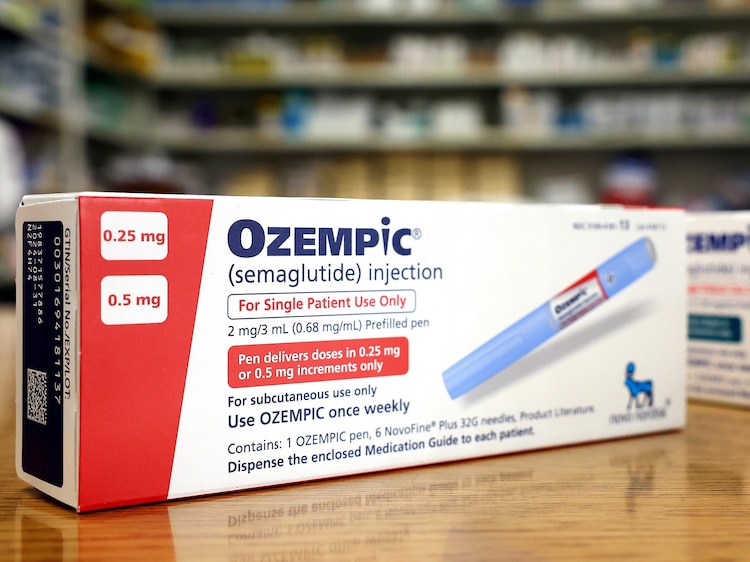
"What I found very interesting about this study is that semaglutide may be more effective than any of the current FDA-approved medications for alcohol use disorder," Dr. Pessah-Polluck, an endocrinologist at NYU Langone Health who was not involved in the study, told ABC News.
Alcohol use disorder causes about 5% of deaths worldwide, according to the World Health Organization. A 2023 study found an estimated 8 million adults -- approximately 3% of the U.S. adult population -- have obesity and report heavy alcohol use.
The combination of alcohol use disorder and obesity raises the risk for liver disease, according to the National Institute of Alcohol Abuse and Alcoholism.
Currently, there are only three medications approved in the U.S. to treat alcohol use disorder: naltrexone, acamprosate and disulfiram. This is the first randomized controlled trial to test GLP-1 drugs in people actively seeking treatment for alcohol use disorder, according to the researchers.
"There was also a strong reduction in the placebo group, which is probably linked to the psychotherapy," Dr. Anders Fink-Jensen, study author and board-certified psychiatrist, told ABC News. "I think it's important to offer therapy with medication because that is what we try to do in real life."



People taking the drug also had lower alcohol cravings and drank less overall. They also lost weight and showed improved blood sugar control, the study found.
The study, however, was relatively small; it included mostly white participants and focused only on people with obesity.
Side effects, including temporary mild-to-moderate gastrointestinal issues, were similar to those seen in GLP-1 use for other health conditions.
The researchers said they don't fully understand why GLP-1s improve drinking behavior. It could be that semaglutide helps regulate both metabolic and reward pathways in the same way it helps people lose weight, they speculated.
"We think it must be the reward center involved and probably dopamine, but it's more complicated than that. I think there's a lot of work that has to be done in order to figure out what the exact mechanism is in this population," Fink-Jensen said.

Fink-Jensen emphasized that the study's findings, although preliminary, are promising.
"It may be that these compounds could be effective against several drugs of abuse, not just alcohol, and not just in patients with obesity," he said.
Pessah-Polluck added that GLP-1s can be expensive in some cases, leading patients to turn to non-regulated forms of these drugs.
There are dangers that exist with non-FDA regulated, cheaper compounded formulations, she warned.
"[Patients] taking non-regulated GLP1s can run into issues in terms of dosing, impurities, additives ... you don't exactly know what you are getting," she said. "The data is only as good as our ability to distribute these medications to patients."
Grace Hagan M.D., is an internal medicine resident at Mayo Clinic and a member of the ABC News Medical Unit

Popular Reads

ABC News Live