Aid organization says trust is key in combatting Ebola outbreak as cases grow
Fear and mistrust of health officials can slow efforts to stop the outbreak.
As a deadly Ebola outbreak in the Democratic Republic of the Congo continues to spread, an aid organization says trust is key to beating back the virus.
At the time of publication, 363 cases of Ebola and 62 deaths have been confirmed, according to the Congo Ministry of Health and the Centers for Disease Control and Prevention (CDC), with more than 4,200 contacts under follow-up.
In neighboring Uganda, 16 cases and one death have been confirmed, according to the Ugandan Ministry of Health.
The Ebola outbreak in DRC has spread to Rimba, the 17th affected health zone in the Ituri province and the 25th nationwide, with health officials warning of active community transmission.
Officials say a burial team was attacked in the province of South Kivu while trying to safely bury an Ebola victim, forcing workers to abandon the coffin and allowing community members to handle the body.
Meanwhile, contact tracing remains a major challenge, with only 45.5% of contacts reached in the previous 24 hours. Dr. Tedros Adhanom Ghebreyesus, the director-general of the World Health Organization, said on Wednesday that this figure needs to increase to about 90%.

Public health specialists and humanitarian organizations have warned that fear, rumors and mistrust within communities are continuing to threaten and slow efforts to stop the spread.

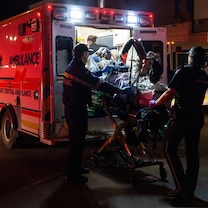

Doctors previously told ABC News that people in some communities do not believe the Ebola is real or have a mistrust of health officials responding to the outbreak.
Mercy Corps, an aid organization responding to the outbreak, said it is engaging community leaders, women's and youth groups, teachers and religious leaders to spread messaging about how dangerous Ebola can be and how people can keep themselves safe.
"The situation in Bunia and Ituri is deeply unsettling for communities and responders," Basile Rambaud, Mercy Corps emergency program director in DRC, speaking from Bunia, said in a press release. "Ebola is a traumatic disease that creates fear far beyond the people who are infected, deeply affecting families, health workers, and entire communities."
Rambaud said that messages alone are not enough and that people within communities need to hear from voices they trust who can listen and answer questions and teach people how to protect themselves.
"Trust can be the difference between someone seeking care early or staying away until it is too late," he said. "If people do not trust the response, they end up delaying to seek care, rejecting protective measures, or avoiding working with health teams, giving the virus more time to spread."

Popular Reads

ABC News Live