Amid US loss of measles elimination status, do you need a vaccine booster?
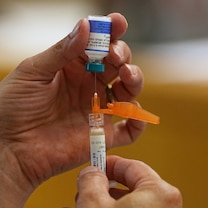
The CDC recommends two doses of the measles, mumps and rubella (MMR) vaccine.
In the wake of the U.S. losing its measles elimination status and as cases continue to spread, many vaccinated Americans may be asking themselves if they need a measles vaccine booster dose to provide further protection.
The Centers for Disease Control and Prevention (CDC) currently recommends that people receive two doses of the measles, mumps and rubella (MMR) vaccine – the first at ages 12 to 15 months and the second between 4 and 6 years old.
One dose is 93% effective against preventing measles infection and two doses are 97% effective, the CDC says. The recommendation for a second MMR dose for children was introduced in 1989.
Dr. Tara Narula, ABC News' chief medical correspondent, told "Good Morning America" on Tuesday that if Americans don't know their vaccination status or can't find a written record, they should consider getting a dose of the MMR vaccine.
Whether adults need a booster dose depends on when they were vaccinated.
If an individual received both recommended doses of the MMR vaccine after 1989, Narula said no booster is needed.

For those who received one dose before 1989, Narula said the CDC does not recommend a booster dose, but it might be worth speaking to your doctor about whether you should get one.
Dr. Paul Offit, director of the Vaccine Education Center and an attending physician in the division of infectious diseases at Children's Hospital of Philadelphia, told ABC News that a single dose of the MMR vaccine still offers a good level of protection to people who received it before 1989.

"It's an excellent vaccine," Offit said.
If someone was vaccinated between 1963 and 1967, they received a weakened form of the vaccine and may be eligible for a booster dose, Narula said. Fewer than 1 million people received an inactivated version of the measles vaccine between 1963 and 1967 and may be eligible for a dose of the current MMR vaccine, according to the CDC.
Offit said he is more worried about adults who have no measles immunity.
"All adults who aren't immune should be considered at risk of measles right now" if they haven't received a shot or have never been infected with measles, he said.
The CDC's guidance has not changed following the U.S. loss of measles elimination status, with the agency saying adults who have already received two doses of the MMR vaccine do not need a booster dose.
Among children, infants between 6 months and 11 months old may be eligible for an additional, earlier vaccine dose if they live in an outbreak setting or are traveling internationally, for a total of three doses by age 6, according to the CDC. Parents should speak with their pediatrician regarding whether their infant is eligible.
All people born before 1957 are considered immune to measles because the virus was widespread before vaccines became available, the CDC says.
ABC News' Youri Benadjaoud and Dr. Jade Cobern contributed to this report.
Related Topics

Popular Reads

ABC News Live