A pandemic of the novel coronavirus has now infected more than 75.5 million people worldwide and killed over 1.6 million of them, according to real-time data compiled by the Center for Systems Science and Engineering at Johns Hopkins University.
Here's how the news is developing today. All times Eastern.
Dec 17, 2020, 5:21 PM EST
FDA advisers recommend Moderna COVID-19 vaccine for emergency authorization
A panel of independent experts voted 20 to 0 to recommend Moderna's COVID-19 vaccine for emergency use authorization. One person abstained in Thursday's vote.
The U.S. Food and Drug Administration advisory committee voted yes on the following question: "Based on the totality of scientific evidence available, do the benefits of the Moderna COVID-19 Vaccine outweigh its risks for use in individuals 18 years of age and older?"
The committee's recommendation now goes back to the FDA, which will discuss any issues raised in the meeting and finalize a decision about emergency authorization.
If an EUA is issued, a Centers for Disease Control and Prevention advisory committee will meet Friday to discuss recommendations for who should take the Moderna vaccine.
The FDA authorized the first COVID-19 vaccine, from Pfizer-BioNTech, last Friday.
-ABC News' Stephanie Ebbs
Dec 17, 2020, 3:14 PM EST
Alaska health care worker suffers 'serious' allergic reaction to Pfizer/BioNTech vaccine
An Alaska health care worker was hospitalized Wednesday, shortly after receiving the Pfizer/BioNTech COVID-19 vaccine.
The unnamed staff member at Bartlett Regional Hospital in Juneau, Alaska, "showed signs of an anaphylactic reaction" 10 minutes after inoculation, "with increased heartbeat, shortness of breath and skin rash and redness," according to a press release.
"She was given epinephrine and Benadryl, admitted to the hospital, and put on an intravenous epinephrine drip," Bartlett Regional Hospital said in a statement Wednesday night. "Her reaction was serious but not life threatening."
The staff member, who had no known previous allergies or adverse reactions to vaccines, "is recovering and will remain another night in the hospital under observation," according to the press release. She was released from the hospital Thursday morning.
"She is still encouraging her colleagues to get the vaccine," the hospital said.
It's the first known adverse allergic reaction to the COVID-19 vaccine developed by U.S. pharmaceutical giant Pfizer and its German partner BioNTech, which was granted emergency-use authorization in the United States last Friday.
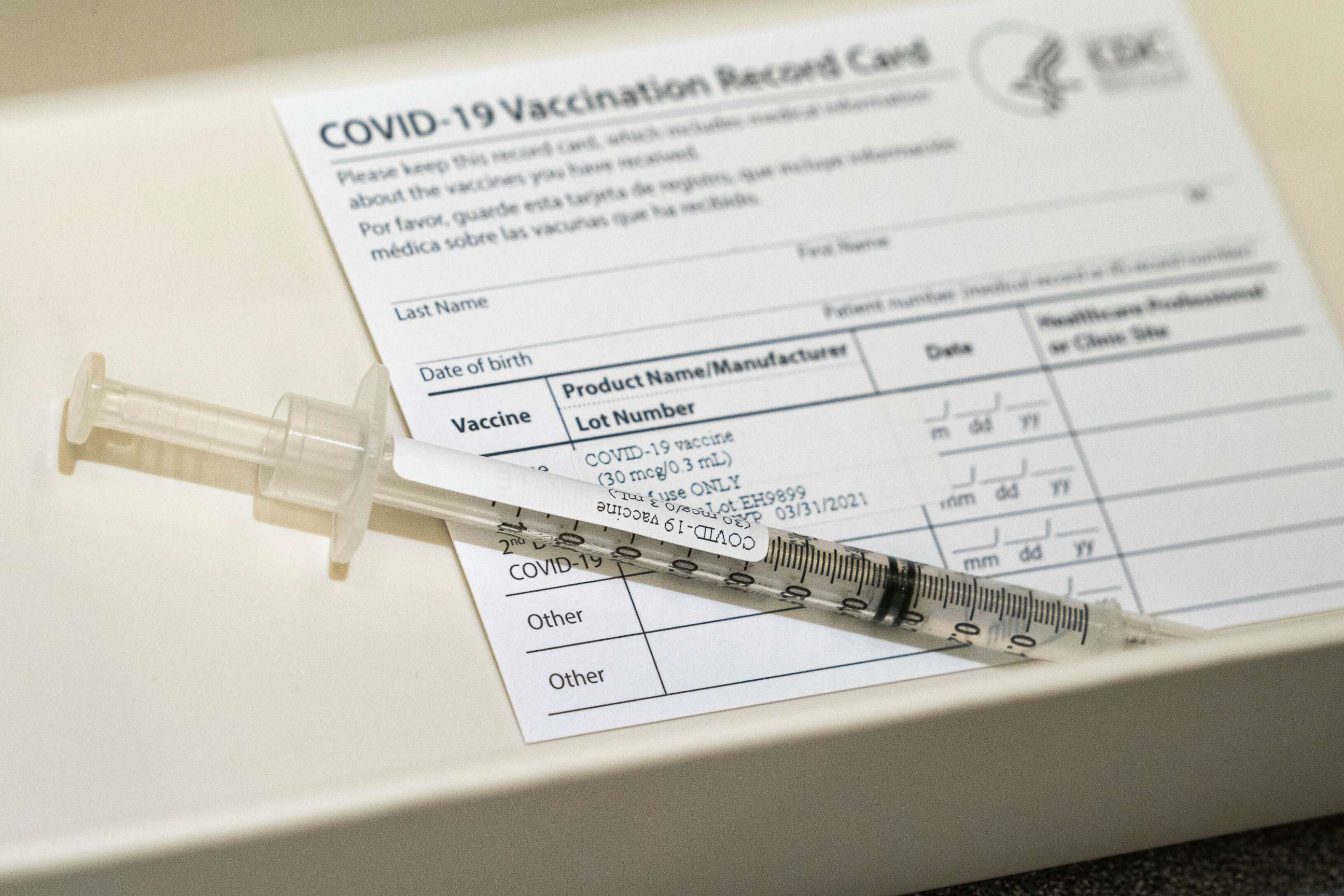
A syringe containing a dose of the Pfizer/BioNtech COVID-19 vaccine sits in a container during a vaccine clinic at Providence Alaska Medical Center in Anchorage, Alaska, on Dec. 16, 2020.
Loren Holmes/Anchorage Daily News via AP
A second staff member at Bartlett Regional Hospital "experienced eye puffiness, light headedness, and scratchy throat" 10 minutes after being injected with the Pfizer/BioNTech vaccine on Wednesday, according to the press release.
"His reaction was not considered anaphylaxis," Bartlett Regional Hospital said in the statement Wednesday night. "He was taken to the Emergency Department and administered epinephrine, Pepcid and Benadryl. He felt completely back to normal within an hour and was released."
"He too does not want his experience to have a negative impact on his colleagues lining up for the vaccine," the hospital added.
Both incidents were reported to the U.S. Centers for Disease Control and Prevention, which Bartlett Regional Hospital said "is providing guidance and support." The symptoms in each case were discovered during the 15-minute observation period after inoculation recommended by the CDC.
“We were expecting these things and we had all the right systems in place,” Charlee Gribbon, an infection control practitioner at Bartlett Regional Hospital, who is overseeing a mass operation to vaccinate as many staff as possible, said in a statement Wednesday night.
Alaska’s Chief Medical Officer Anne Zink said there are "no plans to change our vaccine schedule, dosing or regimen."
Dec 17, 2020, 3:02 PM EST
Southern California's ICU capacity down to 0%
Southern California's intensive care unit capacity fell to 0% on Thursday.
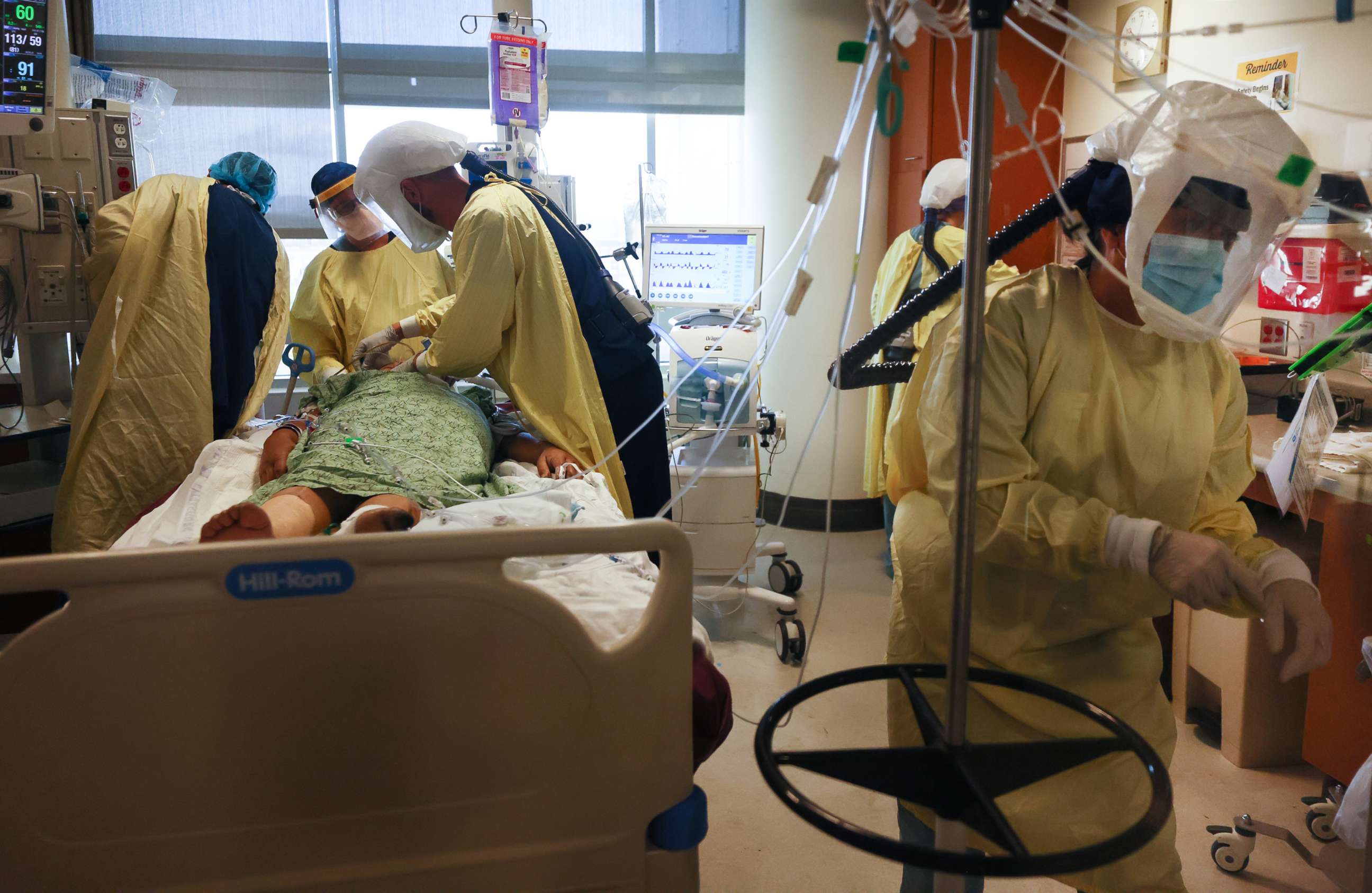
Clinicians care for a COVID-19 patient in the Intensive Care Unit at Sharp Grossmont Hospital on Dec. 14, 2020, in La Mesa, Calif.
Mario Tama/Getty Images
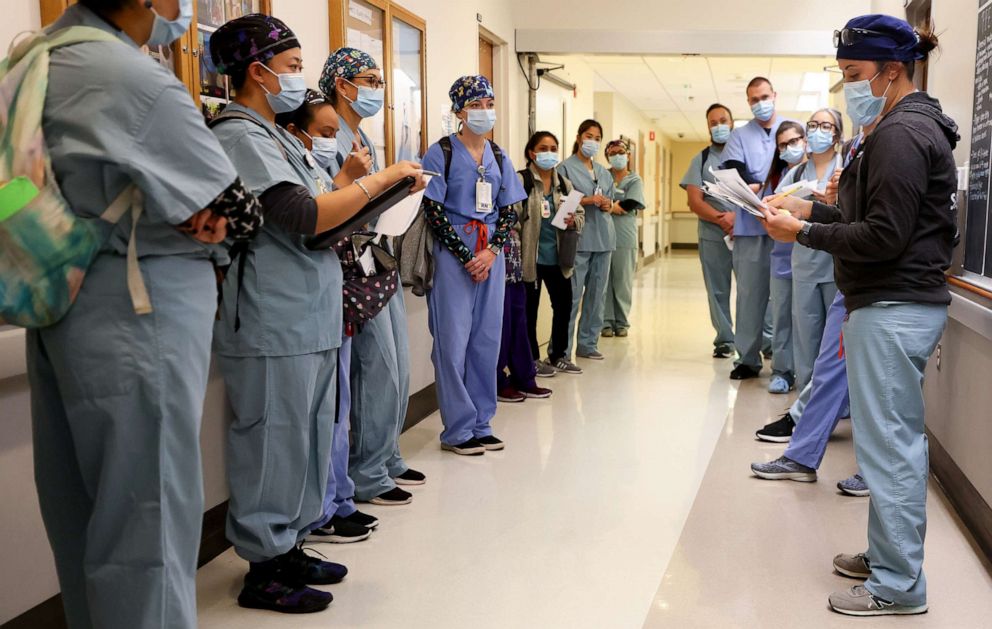
Clinicians attend a 'shift huddle' during shift change at the Intensive Care Unit at Sharp Grossmont Hospital on Dec. 14, 2020, in La Mesa, Calif.
Mario Tama/Getty Images
The state’s San Joaquin Valley region, which spent many days at 0.0%, is now reporting 0.7% ICU capacity.
California Gov. Gavin Newsom has ordered regions to issue a stay-at-home order for at least three weeks if their ICU capacity falls below 15%. The Bay Area’s ICU capacity has fallen to 13.1% and will begin its stay-at-home order Thursday. The Greater Sacramento area, where ICU capacity is at 11.3%, is also under a stay-at-home order. Northern California is the state’s only region not under the order.
California reported 52,281 new daily cases on Thursday, close to the record high set one day ago.
If California were a country, it would have more daily COVID-19 cases than the U.K., India, France, Italy, and Mexico.
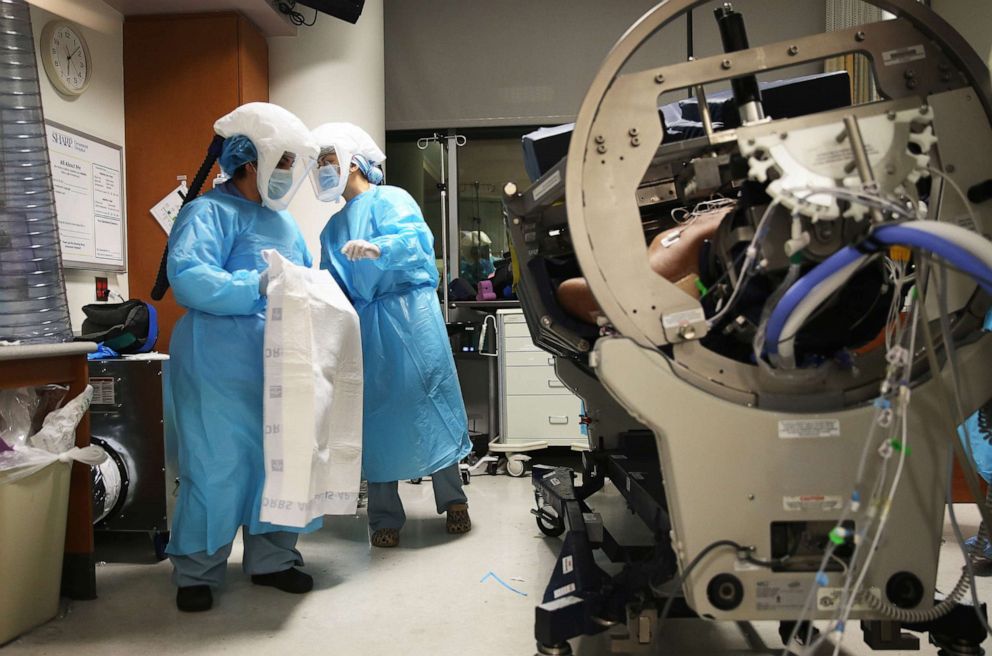
Registered nurse Jamey Booker, right, and healthcare partner Thelma Gonzalez work as a COVID-19 patient receives RotoProne therapy in the Intensive Care Unit (ICU) at Sharp Grossmont Hospital on Dec. 14, 2020 in La Mesa, Calif.
Mario Tama/Getty Images
On Wednesday, the Golden State reported a record 53,711 new cases.
ABC News' Bonnie Mclean and Matt Fuhrman contributed to this report.
Dec 17, 2020, 3:01 PM EST
’Winter surge’ enters 9th week as ‘many Americans’ ignore warnings, White House Task Force says
The White House Coronavirus Task Force’s weekly guidance for governors is urging state leaders to “warn about any gathering during the December holidays.”
“This current fall to winter surge continues to spread to every corner of the U.S., from small towns to large cities and from farms to beach communities,” read the briefing, dated Dec. 13. “The fall surge is merging with the post-Thanksgiving surge to create a winter surge with the most rapid increase in cases.”
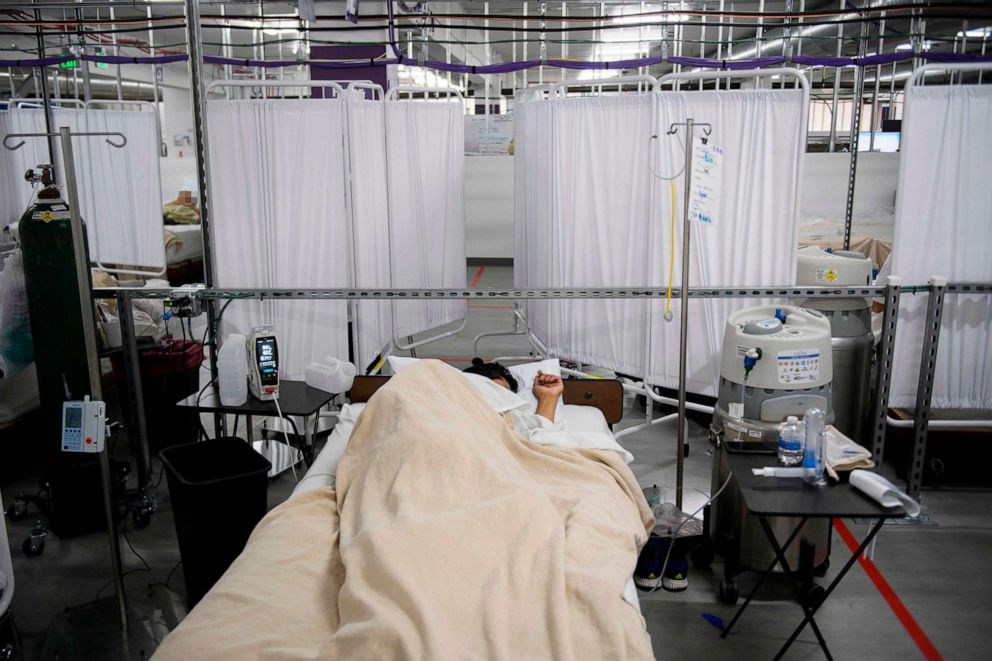
A patient rests in the Covid-19 alternative care site, built into a parking garage, at Renown Regional Medical Center, Dec. 16, 2020, in Reno, Nevada.
Patrick T. Fallon/AFP via Getty Images
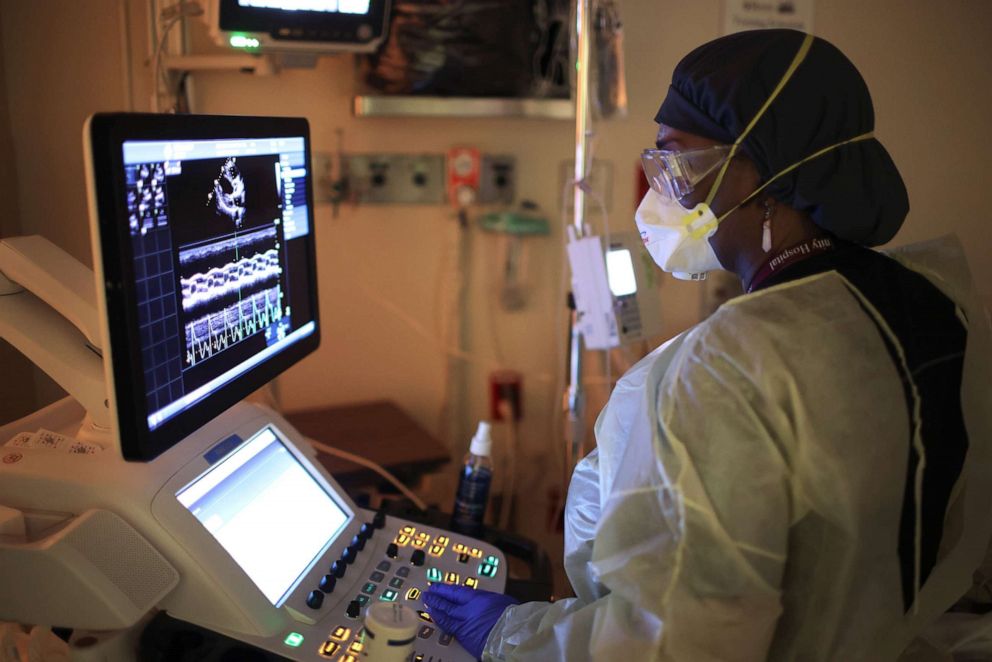
A health care worker performs an echocardiogram on a COVID-19 patient in the intensive care unit at Roseland Community Hospital on Dec. 16, 2020, in Chicago.
Scott Olson/Getty Images
As vaccinations begin, the report said that “immunization of individuals over 65 [years old] will have the greatest impact on hospitalizations and deaths. For those over 70 with COVID infection, 20% or more are admitted [to hospitals] and nearly 10% die.”
“Many Americans continue to gather indoors, creating private spreading events outside of public spaces,” the report said, asking governors to focus “on uniform behavioral change including masking, physical distancing, hand hygiene, no indoor gatherings outside of the immediate households, and ensuring every American understands the clear risks of ANY family or friend interactions outside of their immediate household indoors without masks.”
ABC News’ Josh Margolin and Brian Hartman contributed to this report.