A pandemic of the novel coronavirus has now infected more than 75.5 million people worldwide and killed over 1.6 million of them, according to real-time data compiled by the Center for Systems Science and Engineering at Johns Hopkins University.
Here's how the news is developing today. All times Eastern.
Dec 18, 2020, 1:05 PM EST
UK’s 1st vaccine vial to go on display at museum
The London Science Museum will display the vial and syringe that was used for the United Kingdom’s first Pfizer vaccination.
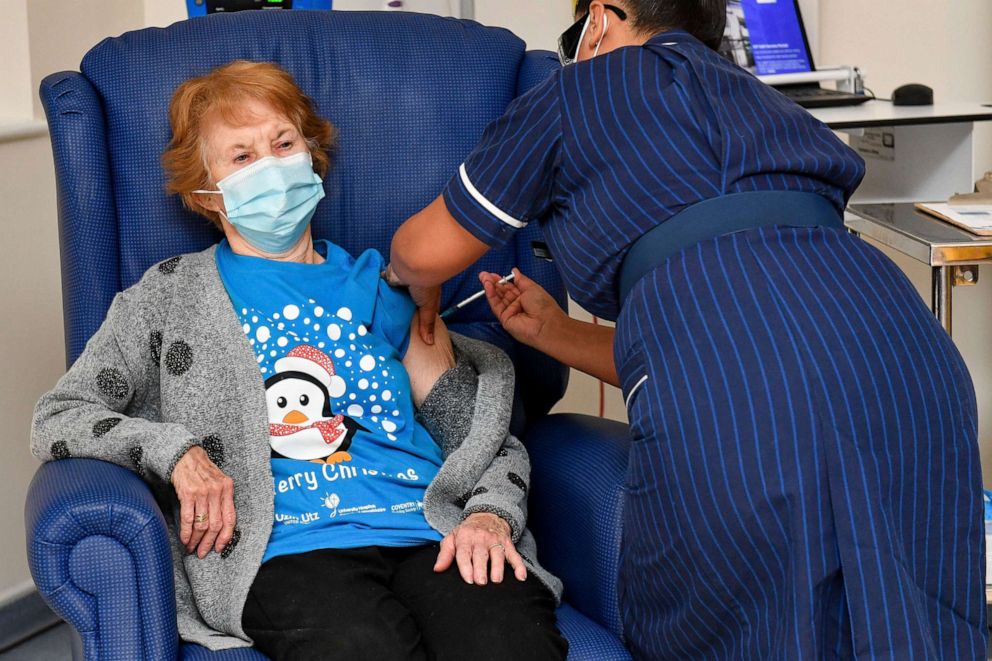
The first vaccine was administered on Dec. 8 to 90-year-old grandmother Margaret Keenan.
“The empty vial and syringe from Margaret’s historic immunisation will now join the Science Museum Group Collection, a highlight of our significant COVID-19 Collecting project,” the Science Museum Group said.
90 year old Margaret Keenan, the first patient in the UK to receive the Pfizer-BioNTech COVID-19 vaccine, administered by nurse May Parsons at University Hospital, Coventry, England, Dec. 8, 2020.
Jacob King/AP, FILE
ABC News’ Zoe Magee contributed to this report.
Dec 18, 2020, 12:11 PM EST
US sets weekly records in cases, deaths, hospitalizations
The U.S. has set new weekly records for number of deaths, cases and hospitalizations, according to ABC News’ analysis of data compiled by the COVID Tracking Project.
With the U.S. is now averaging 2,560 new coronavirus-related deaths a day, more Americans are dying from COVID-19 than ever before.
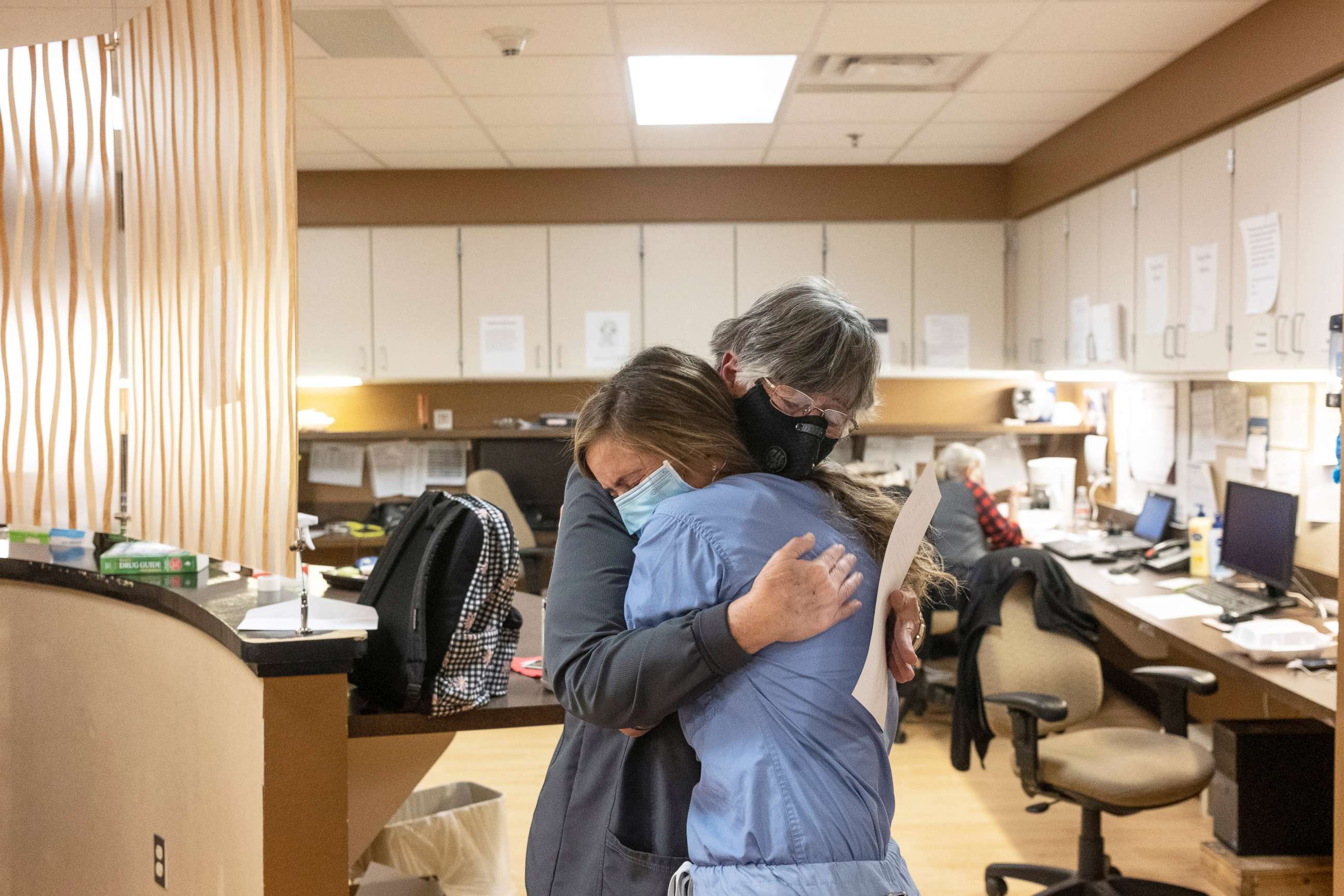
Dr. Eileen Sprys, front, and registered nurse Mary Bond, hug each other at Medical Arts Hospital in Lamesa, Texas, Dec. 17, 2020.
Go Nakamura/Reuters
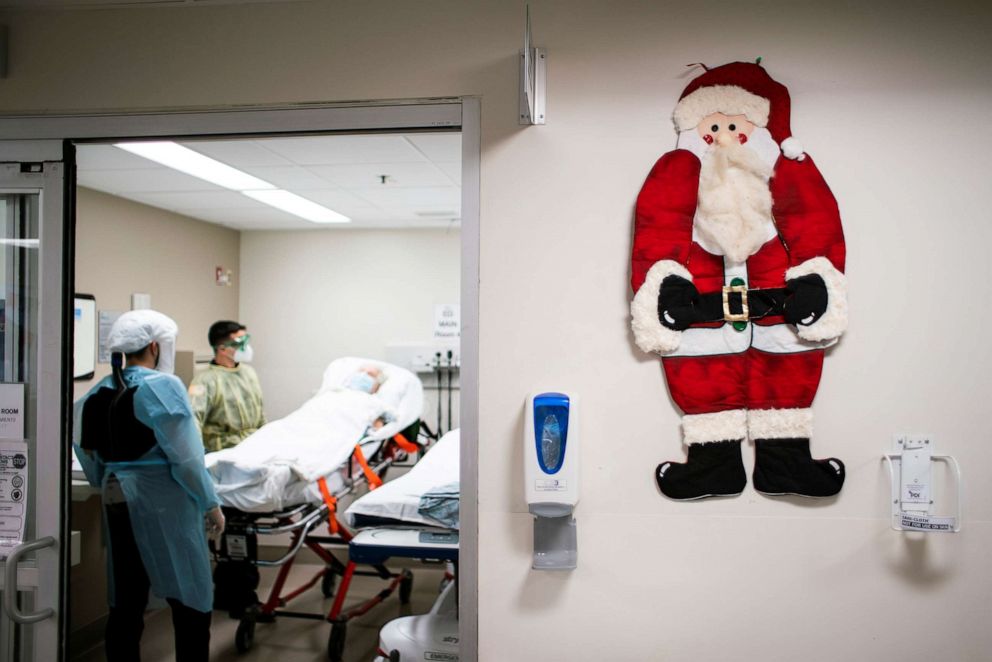
Christmas decorations are seen outside an emergency room while healthcare personnel transport a coronavirus disease positive patient, at Trinitas Regional Medical Center in Elizabeth, N.J., Dec. 16, 2020.
Eduardo Munoz/Reuters
Since Sunday, 19 states have reported a record number of patients hospitalized.
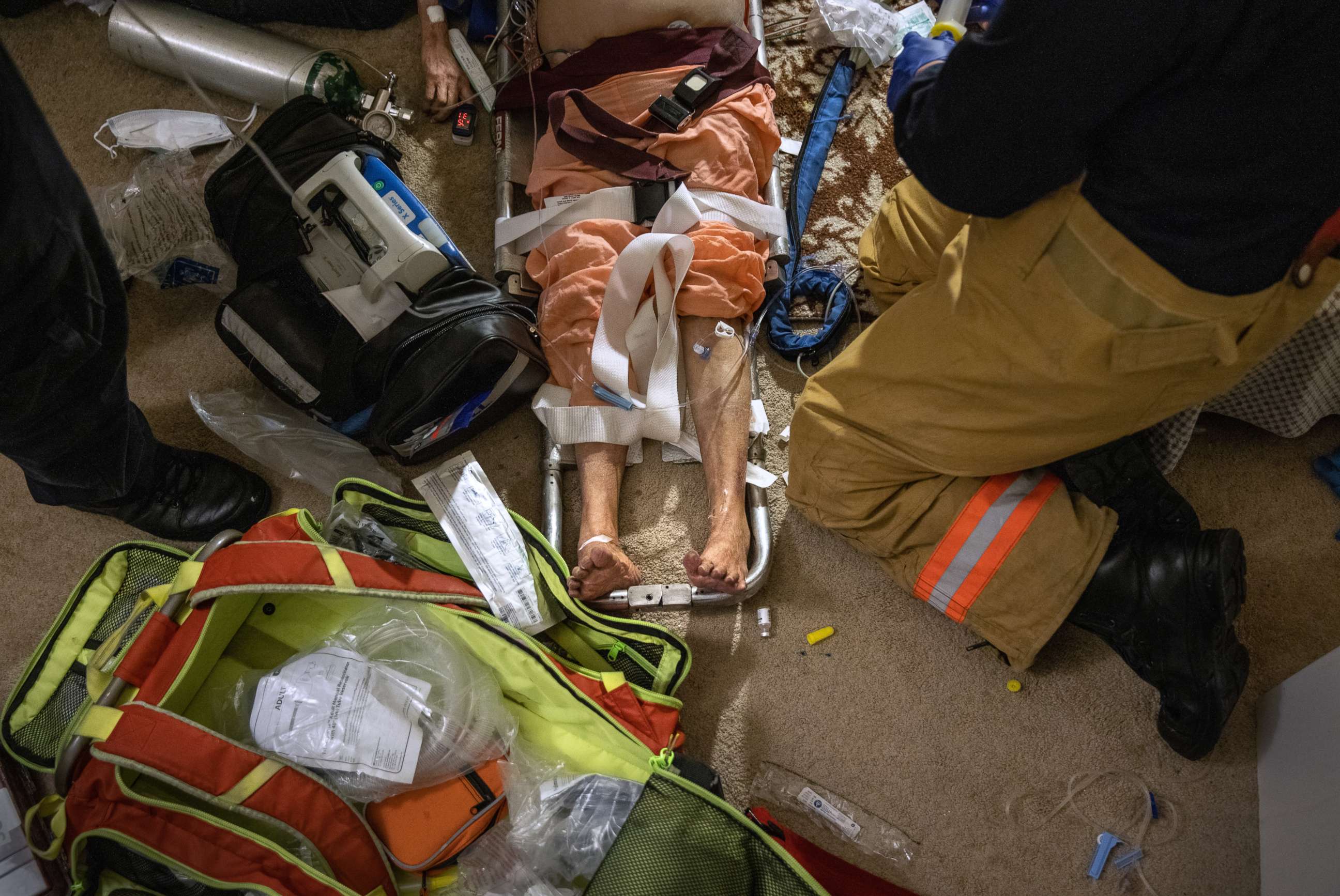
Medics work to save the life of a woman with possible COVID-19 symptoms and pre-existing conditions on Dec. 17, 2020, in Yonkers, N.Y.
John Moore/Getty Images
The U.S. is averaging 214,741 cases every day -- a record high. That is three times higher than the nation’s summer peak in July and nearly seven times higher than the country's record in April.
ABC News’ Arielle Mitropoulos contributed to this report.
Dec 18, 2020, 11:44 AM EST
COVAX secures nearly 2 billion doses of COVID-19 vaccines as UNICEF prepares for distribution
COVAX, the global initiative to ensure rapid and equitable access to COVID-19 vaccines for all countries regardless of income, announced Friday it now has supply agreements to provide nearly 2 billion doses of "several promising vaccine candidates" and could begin shipping them out in the first quarter of 2021, pending regulatory approvals.
There are 190 nations and territories participating in COVAX, which is coordinated by the World Health Organization, Gavi, The Vaccine Alliance, and the Coalition for Epidemic Preparedness Innovations. The new deals include supply agreements with AstraZeneca and Johnson & Johnson.
"The arrival of vaccines is giving all of us a glimpse of the light at the end of the tunnel," Dr. Tedros Adhanom Ghebreyesus, director-general of the WHO, said in a statement Friday. "But we will only truly end the pandemic if we end it everywhere at the same time, which means it’s essential to vaccinate some people in all countries, rather than all people in some countries."
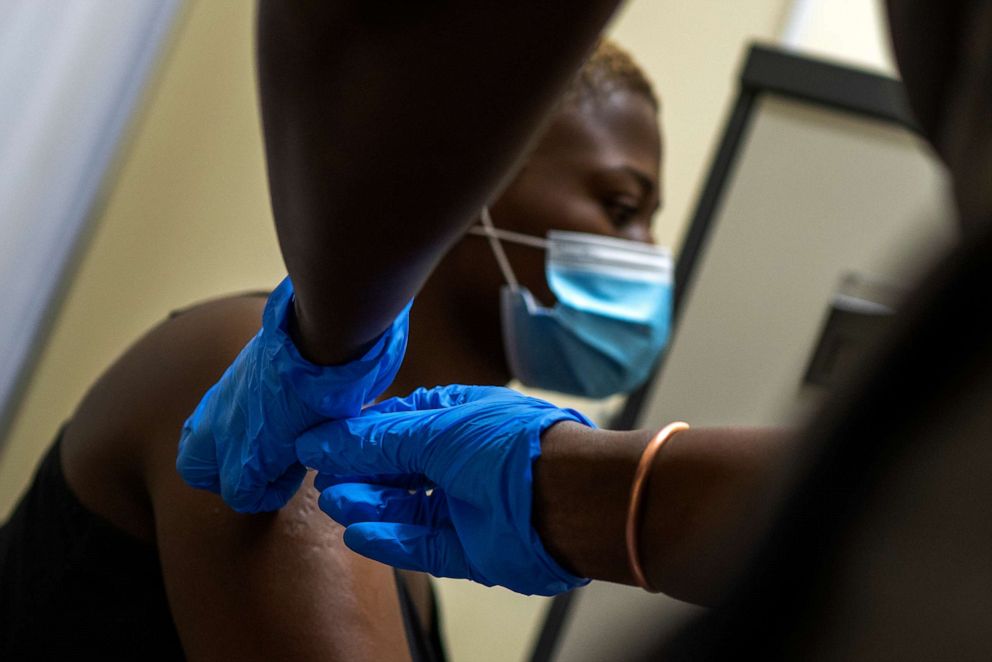
A volunteer receives her second shot of the AstraZeneca/Oxford COVID-19 vaccine at clinical trial facility for AstraZeneca at Chris Sani Baragwanath Hospital in Soweto township, outside Johannesburg, South Africa, on Nov. 30, 2020.
Jerome Delay/AP
Meanwhile, the United Nations International Children's Emergency Fund (UNICEF) announced Friday that it could potentially transport up to 850 tons of COVID-19 vaccines per month next year, should quantities become available. The humanitarian organization said commercial airlines will be able to deliver vaccines to almost all of the 92 low- and lower-middle-income countries participating in COVAX.
However, UNICEF estimates a funding gap of $133 million to cover on-the-ground logistics and the required equipment for vaccine storage in the world's poorest nations.
"The scale of the task is daunting, and the stakes have never been higher, but we are ready to take this on," Henrietta Fore, executive director of UNICEF, said in a statement Friday. "Countries need urgent technical and financial support to strengthen their capacities for cold and supply chains, to train health workers, and to work with communities in combatting misinformation and building trust in vaccines. Without urgent funding and support, many of the poorest countries still risk being left behind."
Dec 18, 2020, 9:38 AM EST
Walgreens begins administering Pfizer/BioNTech vaccine in long-term care facilities
Walgreens began administering the Pfizer/BioNTech COVID-19 vaccine to residents and staff at long-term care facilities in the United States on Friday.
It's the first time the U.S. pharmacy chain is offering vaccines in such facilities, like nursing homes.
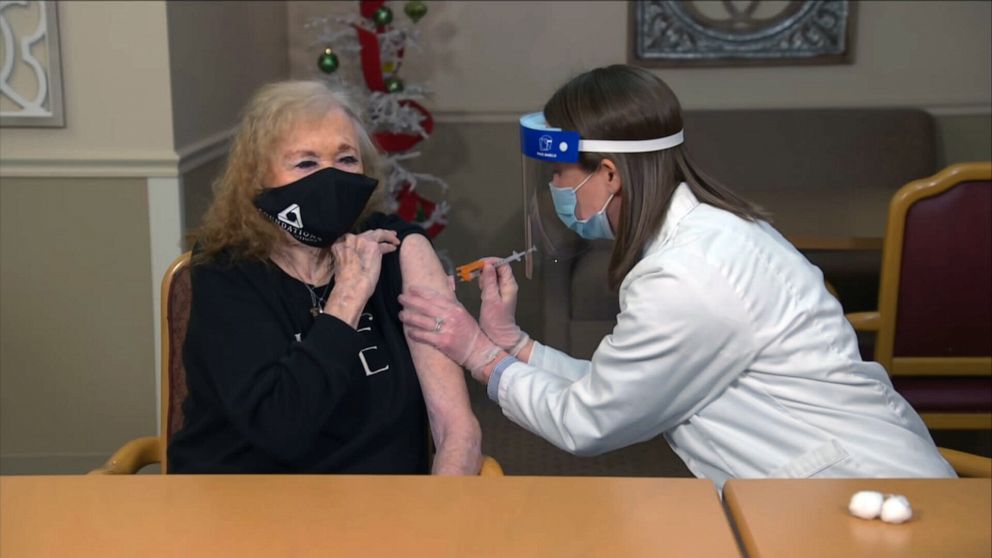
A Walgreens pharmacy team member administers the Pfizer/BioNTech vaccine to a resident at Crown Pointe Care Center in Columbus, Ohio on Dec. 18, 2020.
ABC News
Walgreens pharmacy teams members are currently providing the Pfizer/BioNTech vaccine at just 10 facilities in Connecticut, Ohio and Florida, including many in rural and urban medically-underserved areas. But the company will soon expand the vaccinations nationwide as more states finalize their distribution plans and receive vaccine allocations, according to Dr. Kevin Ban, Walgreens' chief medical officer.
"Next week, we'll be in 12 states in over 800 clinics. We're moving and ramping up to 35,000 clinics across the entire country, we're going to vaccinate more than 3 million people in these long-term care facilities," Ban told ABC News' Cecilia Vega in an interview Friday on "Good Morning America."
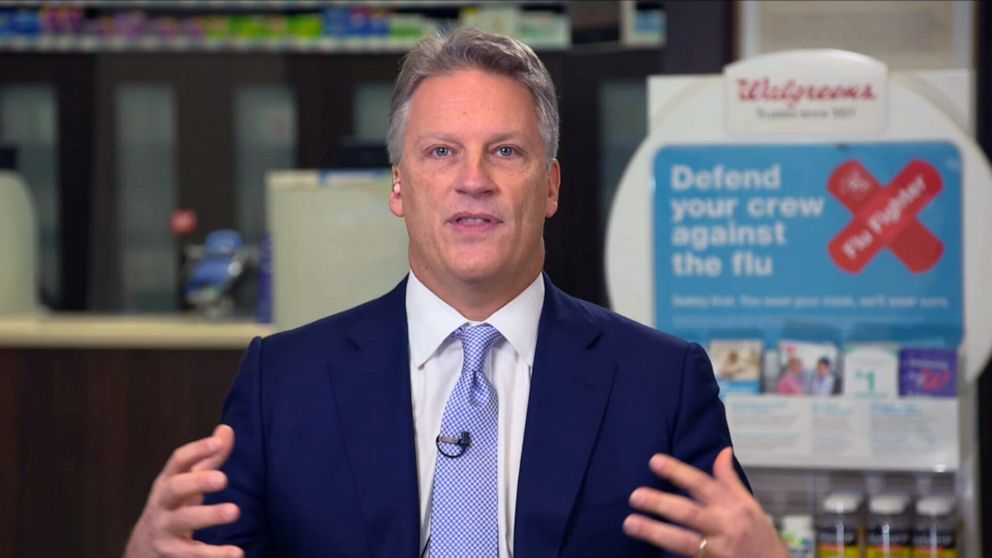
Dr. Kevin Ban, Walgreens Chief Medical Officer appears on "Good Morning America," Dec. 18, 2020.
ABC News
Ban said only people who are eligible to receive the COVID-19 vaccine under their state's Phase 1 distribution plan can get it. But once states move into Phase 2, residents and staff at long-term care facilities that have selected Walgreens as their vaccine provider will be able to make an appointment in advance.
"We're in the middle of a pandemic," he said, "and we don't want people all coming at once."