People over 75, front-line essential workers should get vaccine next, CDC panel says

Those groups would cover teachers and critical workers in high-risk settings.

Last Updated: December 21, 2020, 3:00 PM EST

A pandemic of the novel coronavirus has now infected more than 75.5 million people worldwide and killed over 1.6 million of them, according to real-time data compiled by the Center for Systems Science and Engineering at Johns Hopkins University.

Dec 17, 2020, 1:25 PM EST

FDA, CDC investigating anaphylactic reactions to Pfizer vaccine

At the Food and Drug Administration's Vaccines and Related Biological Products Advisory Committee Thursday on meeting about a potential recommendation of an emergency use authorization of Moderna’s vaccine, officials discussed concerns over anaphylactic reactions to Pfizer's vaccine.

Dr. Doran Fink, deputy director-clinical of the Division of Vaccines and Related Products Applications at the FDA, highlighted the two cases of allergic reactions -- one of which was anaphylaxis -- in health workers in Alaska on Wednesday.
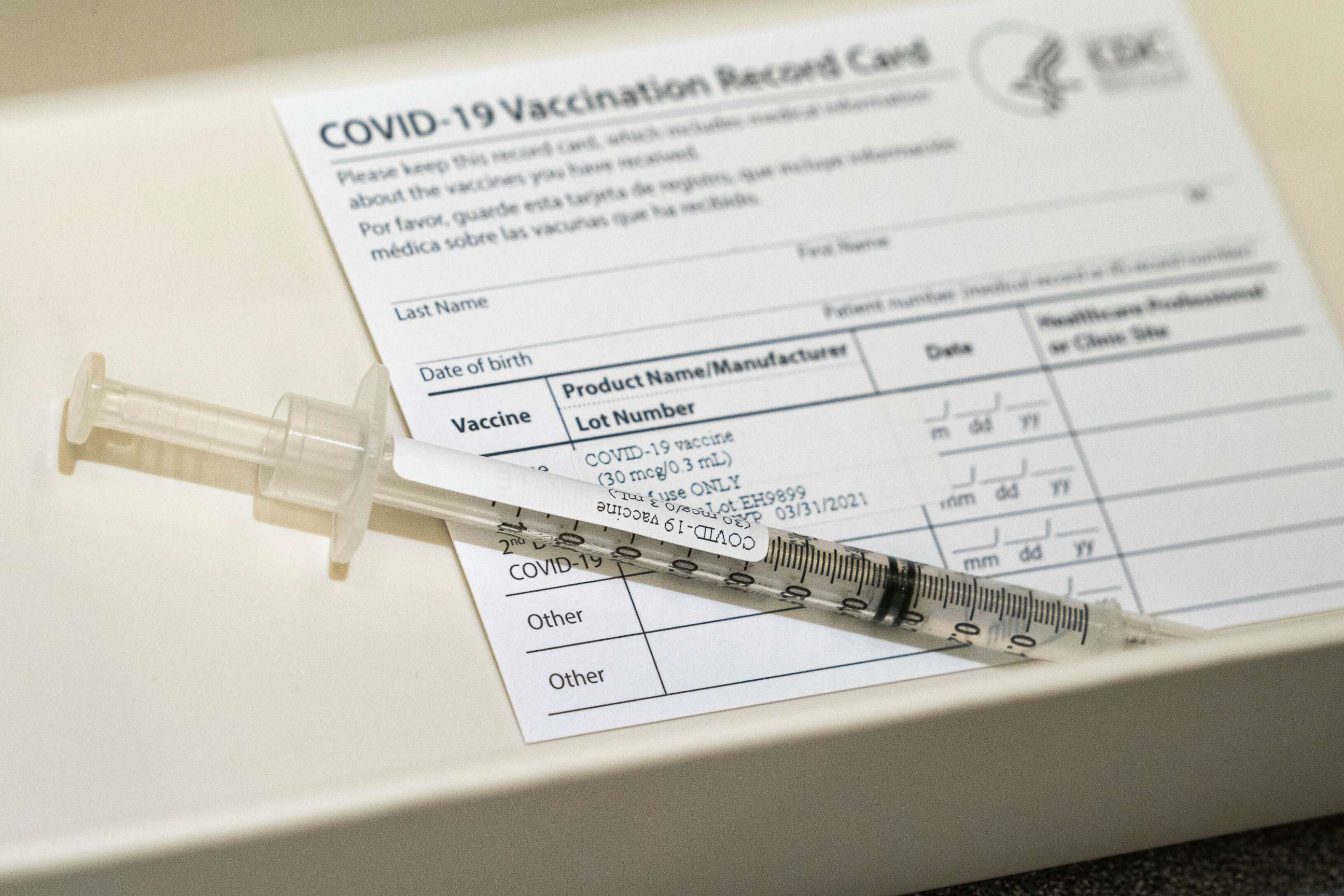
A syringe containing a dose of the Pfizer/BioNtech COVID-19 vaccine sits in a container during a vaccine clinic at Providence Alaska Medical Center in Anchorage, Alaska, on Dec. 16, 2020.
Loren Holmes/Anchorage Daily News via AP

Last week, in the U.K., there were also two cases of anaphylaxis after the Pfizer vaccine was administered. As a result, prior to emergency authorization, the FDA clarified its guidance, saying it is safe for people with any history of allergies, but not for those who might have a known history of severe allergic reaction to any “ingredient” of the vaccine.

Fink said the FDA anticipates there may be more reports of allergic reactions to the vaccines, and they will be investigated as they occur.

The FDA is coordinating with the Centers for Disease Control and Prevention to further investigate cases in the U.S. The FDA is also working with Pfizer to further revise the fact sheets and prescribing information for the vaccine to highlight CDC guidelines for post-vaccination monitoring and management of allergic reactions.

Fink noted that this “revision will be in addition to the information already included in the contraindications and warnings, including the facilities where vaccines are being administered should ensure that medical treatment for managing serious allergic reactions is immediately available.”

Fink said the same recommendations will be done for the Moderna vaccine, if it is authorized for use under an EUA.

ABC News’ Anne Flaherty, Stephanie Ebbs, Sophie Tatum and Arielle Mitropoulos contributed to this report.

Dec 17, 2020, 11:31 AM EST

Snowstorm delays some NJ vaccine deliveries

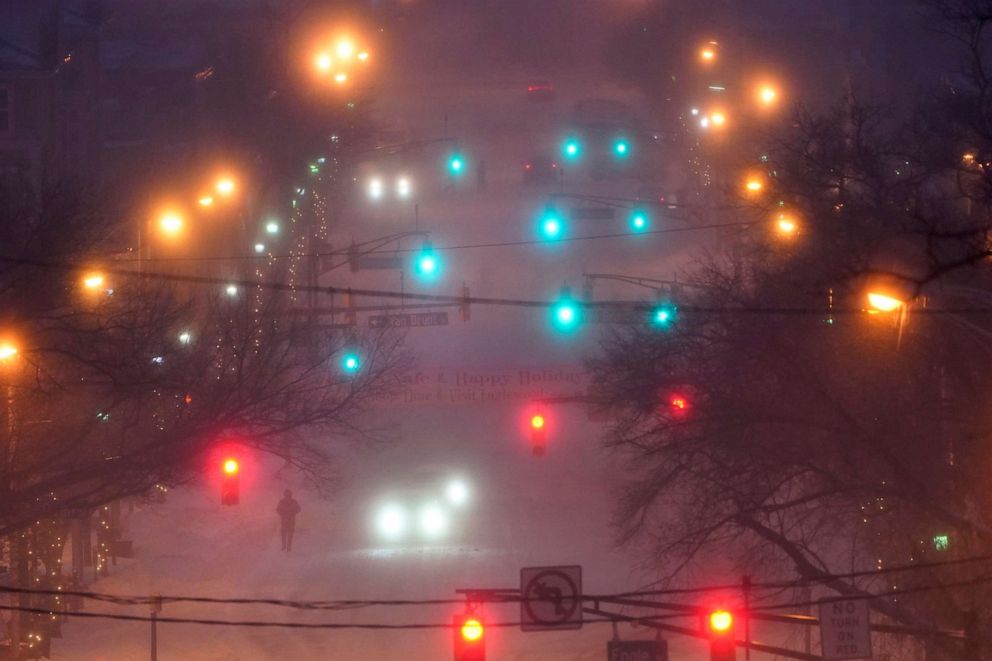
In New Jersey, Wednesday night’s snowstorm has delayed some vaccine deliveries, Gov. Phil Murphy said Thursday.

Only a few pedestrians and cars are out while snow falls in downtown Englewood, N.J., Dec. 17, 2020.
Seth Wenig/AP

Murphy said he was “not aware of any place that was expecting it that won’t get it” because of the storm. “It just may be a little later than otherwise expected."

Dec 17, 2020, 11:00 AM EST

COVID-19 likely leading cause of death in US

Based on early data, COVID-19 is now likely the leading cause of death in the U.S., ahead of heart disease and cancer, according to a research letter in The Journal of the American Medical Association.

Gabriel Cervera calls the family of a patient who died, as healthcare personnel work inside a COVID-19 unit at United Memorial Medical Center in Houston, Dec. 12, 2020.
Callaghan O'hare/Reuters

The official death statistics will not be available from the Centers for Disease Control and Prevention until next year.  

By October, “COVID-19 had become the third leading cause of death for persons aged 45 through 84 years and the second leading cause of death for those aged 85 years or older,” JAMA said. “Between November 1, 2020, and December 13, 2020, the 7-day moving average for daily COVID-19 deaths tripled, from 826 to 2430 deaths per day, and if this trend is unabated will soon surpass the daily rate observed at the height of the spring surge.”

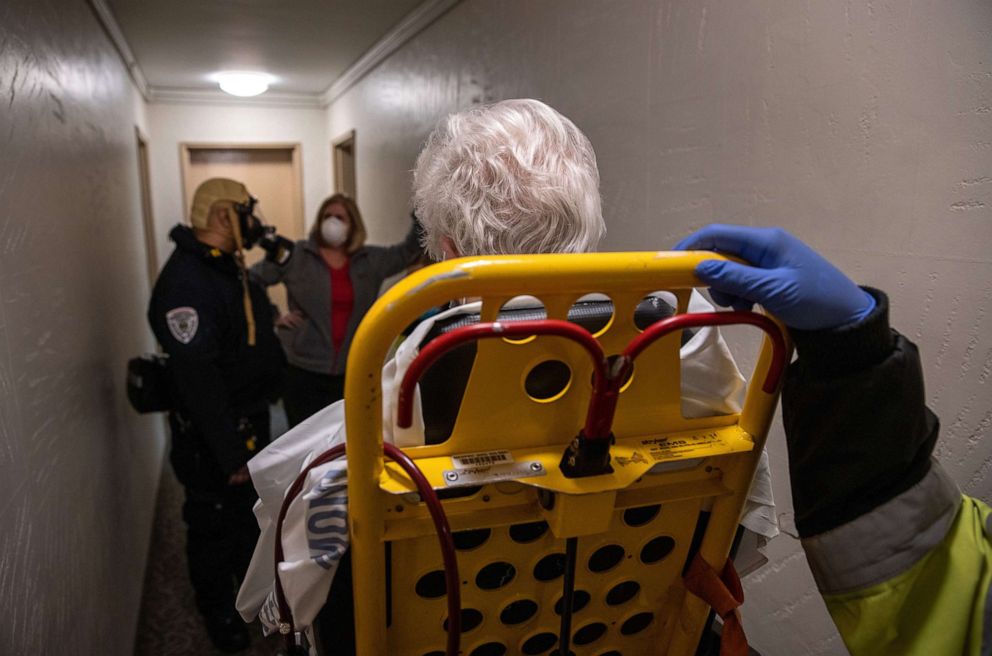
EMS medics transport a patient with possible COVID-19 symptoms to a hospital on Dec. 15, 2020, in Yonkers, New York.
John Moore/Getty Images

The letter concluded, “The need for the entire population to take the disease seriously—notably to wear masks and maintain social distance—could not be more urgent.”

ABC News’ Sony Salzman and Shiela Beroukhim Afrahimi contributed to this report.

Dec 17, 2020, 10:01 AM EST

Putin says he still hasn't received Russian vaccine

Russian President Vladimir Putin revealed Thursday that he still hasn't been inoculated with his country's COVID-19 vaccine because the shot is not yet permitted for people older than 60.

"For those like me, the vaccine hasn't reached us yet," Putin, 68, told reporters from the Novo-Ogaryovo state residence outside Moscow during his annual end-of-year press conference, which was held online due to the pandemic. "I am quite a law-abiding person, I listen to our specialists and so far haven't taken it."

However, Putin said he "definitely" will get the so-called Sputnik V vaccine once those over 60 are allowed to.

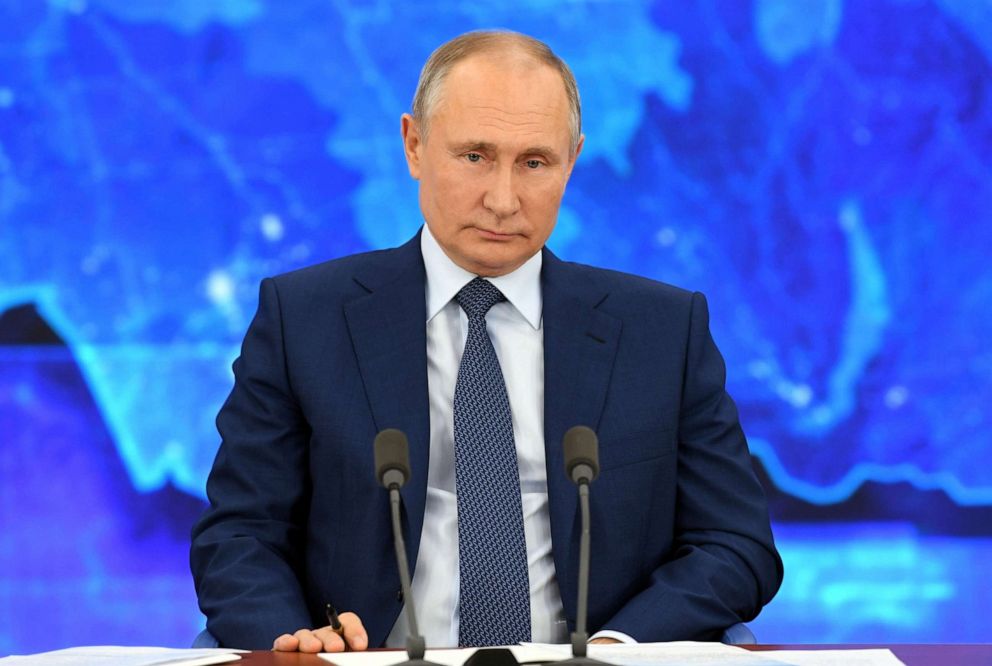
Russian President Vladimir Putin holds his annual end-of-year press conference at the Novo-Ogaryovo state residence outside Moscow, Russia, on Dec. 17, 2020. The event was held online in a video conference mode due to the coronavirus pandemic.
Sputnik/Alexei Nikolsky/Kremlin via Reuters

Russia controversially registered Sputnik V in August before starting crucial late-stage clinical trials, declaring itself the first country in the world to authorize a COVID-19 vaccine. The Russian government has said the trials so far show a vaccine efficacy of 91-95%.

Although key Phase 3 trials for Sputnik V are currently ongoing, the Russian government has already launched a mass vaccination program.

Putin told reporters that Russian scientists are looking into developing a "light" version of Sputnik V that would only require one dose instead of two, allowing for faster mass immunization. Putin noted the lighter version would be slightly less effective than the existing one but would produce antibodies faster.

"It will work quicker," he said. "The level of protection will be less, but all the same -- it'll get up to 85%."

ABC News' Patrick Reevell contributed to this report.

Related Topics

Sponsored Content by Taboola