People over 75, front-line essential workers should get vaccine next, CDC panel says

Those groups would cover teachers and critical workers in high-risk settings.

Last Updated: December 21, 2020, 3:00 PM EST

A pandemic of the novel coronavirus has now infected more than 75.5 million people worldwide and killed over 1.6 million of them, according to real-time data compiled by the Center for Systems Science and Engineering at Johns Hopkins University.

Dec 18, 2020, 11:44 AM EST

COVAX secures nearly 2 billion doses of COVID-19 vaccines as UNICEF prepares for distribution

COVAX, the global initiative to ensure rapid and equitable access to COVID-19 vaccines for all countries regardless of income, announced Friday it now has supply agreements to provide nearly 2 billion doses of "several promising vaccine candidates" and could begin shipping them out in the first quarter of 2021, pending regulatory approvals.

There are 190 nations and territories participating in COVAX, which is coordinated by the World Health Organization, Gavi, The Vaccine Alliance, and the Coalition for Epidemic Preparedness Innovations. The new deals include supply agreements with AstraZeneca and Johnson & Johnson.

"The arrival of vaccines is giving all of us a glimpse of the light at the end of the tunnel," Dr. Tedros Adhanom Ghebreyesus, director-general of the WHO, said in a statement Friday. "But we will only truly end the pandemic if we end it everywhere at the same time, which means it’s essential to vaccinate some people in all countries, rather than all people in some countries."
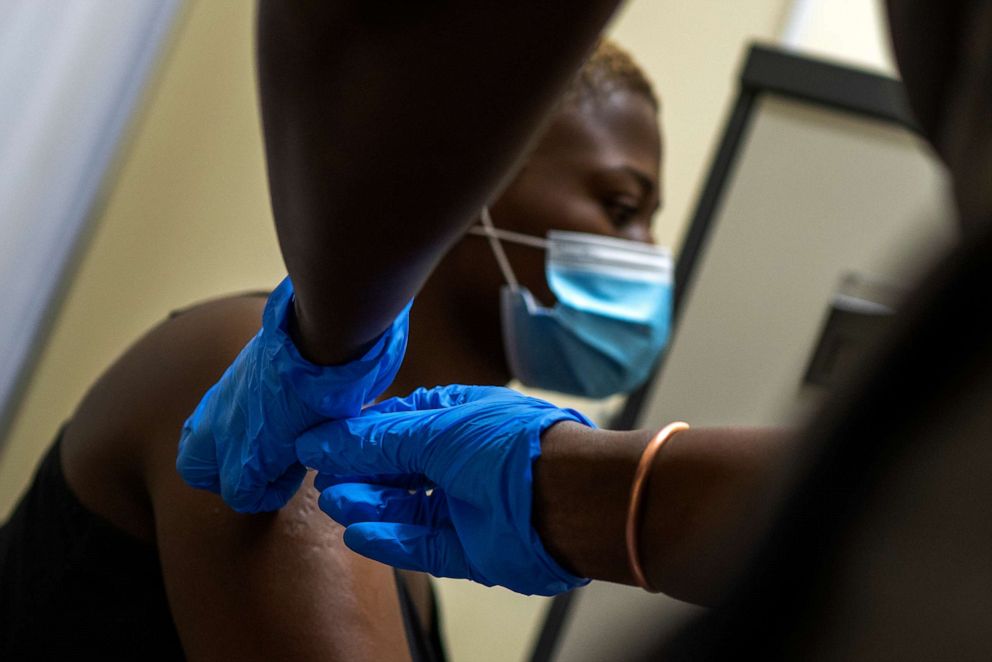
A volunteer receives her second shot of the AstraZeneca/Oxford COVID-19 vaccine at clinical trial facility for AstraZeneca at Chris Sani Baragwanath Hospital in Soweto township, outside Johannesburg, South Africa, on Nov. 30, 2020.
Jerome Delay/AP

Meanwhile, the United Nations International Children's Emergency Fund (UNICEF) announced Friday that it could potentially transport up to 850 tons of COVID-19 vaccines per month next year, should quantities become available. The humanitarian organization said commercial airlines will be able to deliver vaccines to almost all of the 92 low- and lower-middle-income countries participating in COVAX.

However, UNICEF estimates a funding gap of $133 million to cover on-the-ground logistics and the required equipment for vaccine storage in the world's poorest nations.

"The scale of the task is daunting, and the stakes have never been higher, but we are ready to take this on," Henrietta Fore, executive director of UNICEF, said in a statement Friday. "Countries need urgent technical and financial support to strengthen their capacities for cold and supply chains, to train health workers, and to work with communities in combatting misinformation and building trust in vaccines. Without urgent funding and support, many of the poorest countries still risk being left behind."

Dec 18, 2020, 9:38 AM EST

Walgreens begins administering Pfizer/BioNTech vaccine in long-term care facilities

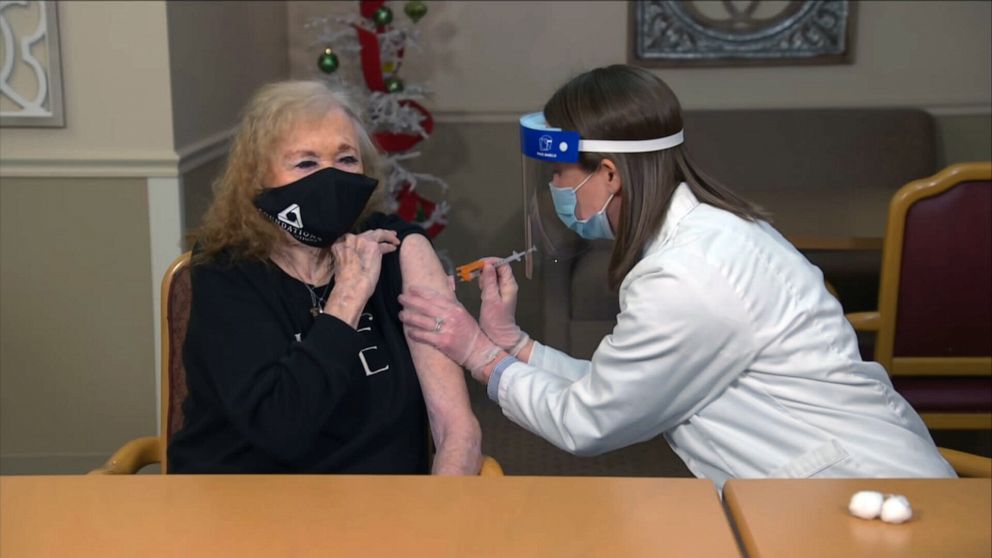
Walgreens began administering the Pfizer/BioNTech COVID-19 vaccine to residents and staff at long-term care facilities in the United States on Friday.

It's the first time the U.S. pharmacy chain is offering vaccines in such facilities, like nursing homes.

A Walgreens pharmacy team member administers the Pfizer/BioNTech vaccine to a resident at Crown Pointe Care Center in Columbus, Ohio on Dec. 18, 2020.
ABC News

Walgreens pharmacy teams members are currently providing the Pfizer/BioNTech vaccine at just 10 facilities in Connecticut, Ohio and Florida, including many in rural and urban medically-underserved areas. But the company will soon expand the vaccinations nationwide as more states finalize their distribution plans and receive vaccine allocations, according to Dr. Kevin Ban, Walgreens' chief medical officer.

"Next week, we'll be in 12 states in over 800 clinics. We're moving and ramping up to 35,000 clinics across the entire country, we're going to vaccinate more than 3 million people in these long-term care facilities," Ban told ABC News' Cecilia Vega in an interview Friday on "Good Morning America."

Dr. Kevin Ban, Walgreens Chief Medical Officer appears on "Good Morning America," Dec. 18, 2020.
ABC News

Ban said only people who are eligible to receive the COVID-19 vaccine under their state's Phase 1 distribution plan can get it. But once states move into Phase 2, residents and staff at long-term care facilities that have selected Walgreens as their vaccine provider will be able to make an appointment in advance.

"We're in the middle of a pandemic," he said, "and we don't want people all coming at once."

Dec 18, 2020, 8:04 AM EST

Moderna vaccine could be authorized in US 'as soon as today,' HHS secretary says

The U.S. Food and Drug Administration could grant emergency-use authorization for Moderna's COVID-19 vaccine "as soon as today," Secretary of Health and Human Services Alex Azar said Friday.

"The FDA has communicated to Moderna that we expect to grant their emergency-use authorisation. That could come as soon as today," Azar told ABC News chief anchor George Stephanopoulos in an interview Friday on "Good Morning America."

If the FDA does give the green light Friday, Azar said "trucks will roll, planes will fly this weekend," with "5.9 million doses of Moderna vaccine allocated for next week."

"This is an exceptionally safe vaccine," he said, "it's a shockingly effective vaccine -- the Moderna vaccine as well as the Pfizer vaccine."

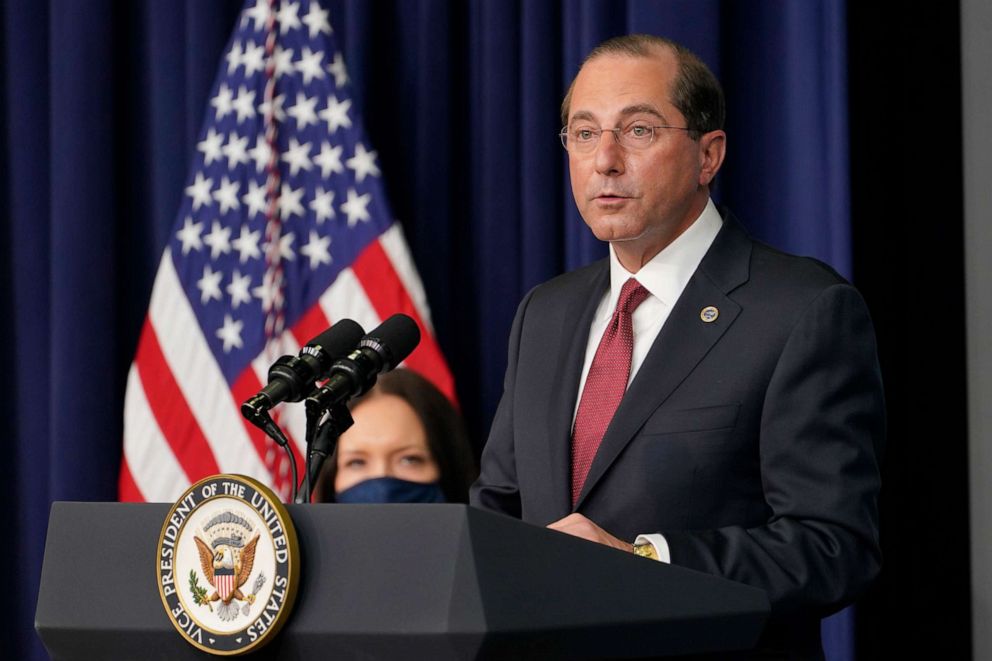
Health and Human Services Secretary Alex Azar speaks during a Life is Winning event in the South Court Auditorium on the White House complex, Dec. 16, 2020.
Susan Walsh/AP, FILE

Some 20 million doses of COVID-19 vaccines will be available across the United States for the month of December, according to Azar, who urged people to get the shot.

"All of us have complete confidence in the independence and quality of the FDA’s review process," he said. "That's why you're seeing the vice president, the second lady, the surgeon general today getting vaccinated."

Azar said a number of government officials and leaders will be inoculated against COVID-19 "over the coming weeks."

"I plan to get vaccinated next week as long as the White House physician says that it's appropriate to do so and do so on TV," he added. "We just want to make sure people know we have supreme confidence in the process and confidence in the safety and efficacy of the vaccine, and we wouldn't ask you to do something that we wouldn't do."

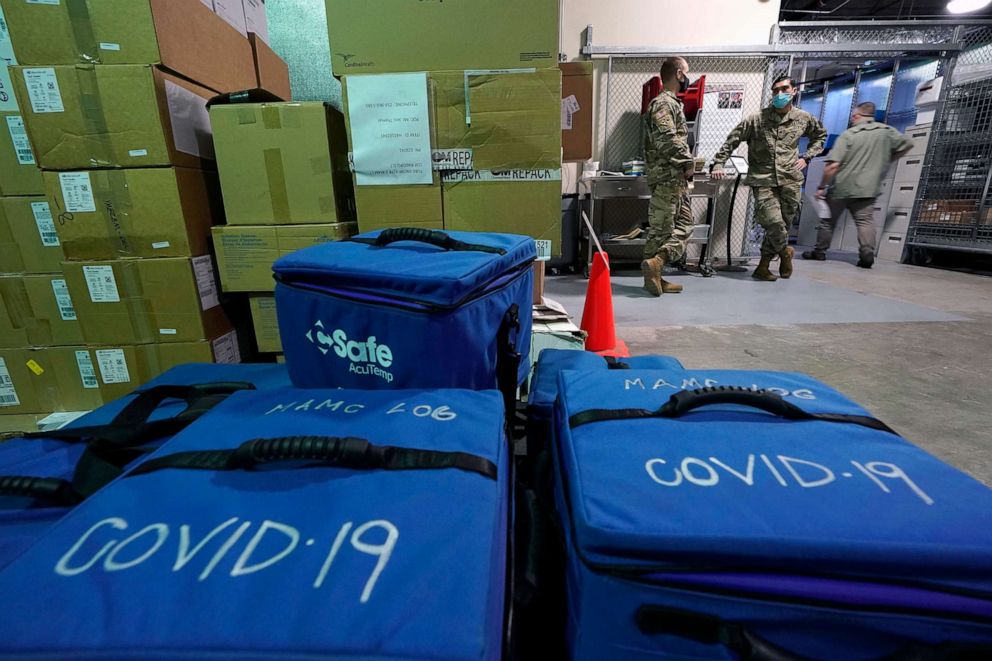
PHOTO:Soldiers working in a logistics area of Madigan Army Medical Center at Joint Base Lewis-McChord in Washington state stand, Dec. 15, 2020, near cooler bags that will be used to transport vials of the first shipment of the Pfizer vaccine for COVID-19.
Soldiers working in a logistics area of Madigan Army Medical Center at Joint Base Lewis-McChord in Washington state stand, Dec. 15, 2020, near cooler bags that will be used to transport vials of the first shipment of the Pfizer vaccine for COVID-19 to other locations.
Ted S. Warren/AP

With several governors saying that they have been told to expect far fewer doses of the Pfizer/BioNTech vaccine in the coming weeks, Azar cited "a miscommunication."

"There's nothing actually to fix. There was some misunderstanding," he said. "We had put into the planning tool some base scenarios just so they could do some rough work on planning. The allocations, though, are always what Pfizer tells us or Moderna now tells us is available and ready for shipment. We've always said this week that they would have 2 million doses of Pfizer available for next week for an allocation. We'll work to clear up any misunderstanding they've got, but it's really just a miscommunication between the governors and us."

Azar said his wife, Jennifer, is "doing very well" after recently testing positive for COVID-19, and that he tested negative himself "just minutes ago."

"We're following all the CDC protocols, I've talked directly to director Redfield as well as the White House physicians of doing exactly what they say to do," he said.

Dec 18, 2020, 4:01 AM EST

US reports over 233,000 new cases

There were 233,271 new cases of COVID-19 confirmed in the United States on Thursday, bringing the country's cumulative total soaring past 17 million, according to a real-time count kept by Johns Hopkins University.

It's the 45th straight day that the U.S. has reported more than 100,000 newly diagnosed infections, and the second straight day with over 200,000. Thursday's tally falls just under the country's all-time high of 247,403 new cases confirmed a day earlier, according to Johns Hopkins data.

An additional 3,270 deaths from the disease were also registered nationwide on Thursday, down from a peak of 3,656 fatalities recorded the previous day. It's only the fifth time since the pandemic began that the country has reported more than 3,000 COVID-19 deaths in a single day, according to Johns Hopkins data.

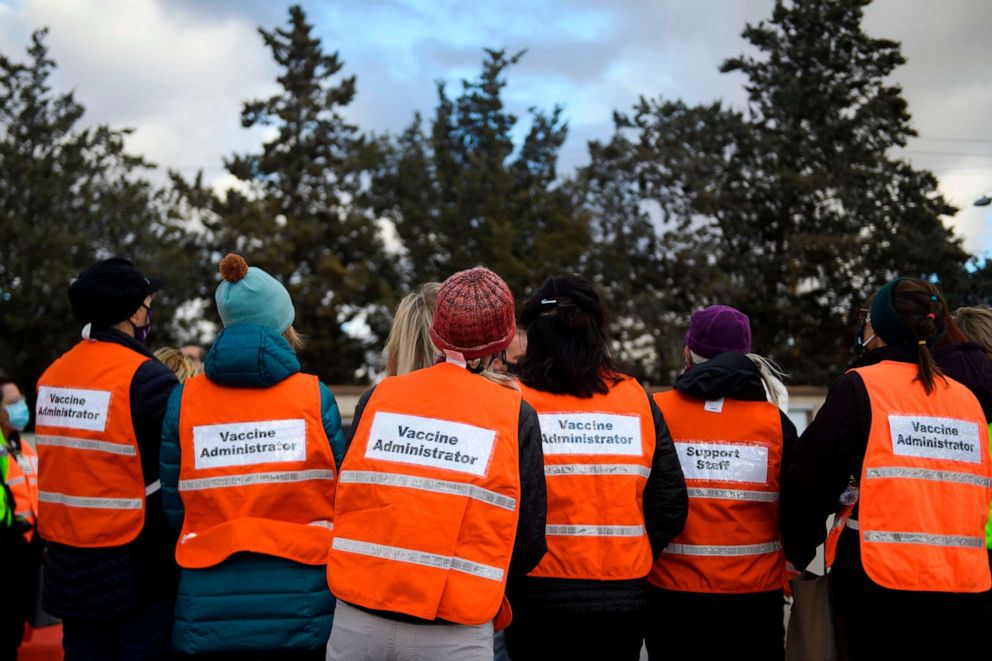
Vaccine administrators receive a briefing before front-line health care workers receive their first dose of the Pfizer/BioNTech COVID-19 vaccine at a drive-up vaccination site run by Renown Health in Reno, Nevada, on Dec. 17, 2020.
Patrick T. Fallon/AFP via Getty Images

A total of 17,212,496 people in the U.S. have been diagnosed with COVID-19 since the pandemic began, and at least 310,782 of them have died, according to Johns Hopkins data. The cases include people from all 50 U.S. states, Washington, D.C., and other U.S. territories as well as repatriated citizens.

Much of the country was under lockdown by the end of March as the first wave of pandemic hit. By May 20, all U.S. states had begun lifting stay-at-home orders and other restrictions put in place to curb the spread of the novel coronavirus. The day-to-day increase in the country's cases then hovered around 20,000 for a couple of weeks before shooting back up over the summer.

The numbers lingered around 40,000 to 50,000 from mid-August through early October before surging again to record levels, crossing 100,000 for the first time on Nov. 4 and reaching 200,000 for the first time on Nov. 27.

Related Topics

Sponsored Content by Taboola