Many people develop painful swelling after breast cancer treatment. What to know about lymphedema
Lymphedema may impact up to 30% of women after breast cancer treatment.
For many people with breast cancer, the journey from their diagnosis to treatment is just the beginning of the road to recovery.
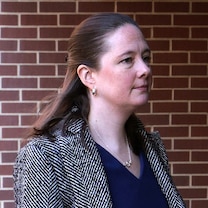
Sara Jager, a pediatrician, veteran and triathlete, was 46 years old when she was diagnosed with invasive ductal carcinoma, a type of breast cancer.
She began thinking proactively about how she'd be able to continue doing what she loves despite her diagnosis. In addition to treatment, a major concern for her was the risk of developing a condition called lymphedema.

"Breast cancer, to most people that don't have it, is the chemo and your hair falling out and the surgeries and the radiation. And that was all true for me," Jager said. "But then afterwards, it's the lymphedema. It's just one of the many constellation of symptoms and side effects that you have to deal with as a breast cancer patient."
What is lymphedema?
"[Lymphedema is] a disease in which a segment of the lymphatic system is not able to function at full capacity," Dr. Stanley Rockson, the Allan and Tina Neill professor of lymphatic research and medicine at Stanford University, told ABC News. "That results in a form of swelling in that part of the body."
Lymphedema can be common after several types of cancer treatment, including breast cancer, when lymph nodes are removed or after radiation, according to the National Cancer Institute (NCI).
This condition can be painful and visibly disfiguring for people impacted. Stages range from stage 0, which may not have visible symptoms, to stage 3, characterized by extreme swelling, with hard or thick skin and potentially decreased mobility, the NCI says.
Rockson said it's estimated that between 15% and 30% of women with breast cancer who have multiple lymph nodes removed from the armpit region may later develop lymphedema in their lifetime.

Charlotte de Brabandt has undergone years of cancer treatment and multiple surgeries after she was diagnosed with a rare form of triple negative, stage 3, inflammatory breast cancer in 2022 at the age of 35.
"When you hear the word cancer, your immediate focus is survival," de Brabandt said. "You're not thinking about the arm or the whole lymphatic system."
But when she began thinking of life beyond survival, she said she was afraid of developing lymphedema.
"To have to live with a big, big arm with lymphedema. I was so scared... Yet another thing to be to be fighting, as if cancer isn't enough," she said.
What are early warning signs and treatment options?
Dr. Xzabia A. Caliste, an associate professor of surgery at Albany Med in the division of vascular surgery and spokesperson for the Society for Vascular Surgery, told ABC News that early signs of lymphedema may be as subtle as rings fitting tighter or a feeling of heaviness in the chest or arm.
Caliste said common symptoms can overlap with other conditions including blood clots, so people should seek medical attention to get a proper diagnosis as soon as they notice symptoms.
If someone is diagnosed with lymphedema, there is no cure, but treatment is available and addressing the condition quickly can make a difference.
"The beauty about catching this entity early on is you can really mitigate some of these symptoms and ... stop it in its tracks," Caliste said. "Unfortunately, not a curative process. This is a management process and a mitigation process."


Treatments include compression, elevating the extremity, physical therapy and lymphatic drainage with massage, according to Caliste.
"It's really important to have a graded compression, the right amount of tightness of that compression garment, so that you can prevent consistent swelling," she said. "Wearing this garment with a level of consistency is also extremely important."
Both de Brabandt and Jager said it was important that they talked with their treatment team about lymphedema early, so they could try to minimize their risk and recognize those warning signs.

Jager said she met with a physical therapist to get a baseline assessment before undergoing treatment and continues to have a close relationship with them.
"I knew that I love swimming, I love being an athlete, and lymphedema would make a lot of those things really hard, especially in my professional life," Jager said.
Now, she has a compression sleeve, stretches and exercises to help keep her lymphedema at the lowest stage.
De Brabandt developed lymphedema despite having a surgery to try to help prevent it. Now she advocates for more people to speak up immediately about those early warning signs and continue to monitor changes in their body.
"One of my biggest lessons: to try to observe, monitor very closely, and find somebody who really understands lymphedema, and don't just wait for having major problems," de Brabandt said.

Now, she says keeping her lymphedema under control takes constant practice.
"I wear my compression day and night ... the compression garment isn't just a sleeve for me, but it's really part of my treatment and a big part of my aftercare now," de Brabandt said. "The cancer treatment, it may be finished right now, but the body is still recovering."
While there is currently no medication to treat lymphedema, Rockson and his research team are investigating a drug that had some promising results published earlier this year. The drug is designed to target a part of the inflammatory response that contributes to developing lymphedema, potentially helping reduce swelling and improve quality of life.
"Optimistically, if everything proceeds as it appears to be, I would hope that we may be as close as two to three years away from being able to have an approved drug that would be used as a chronic therapy for lymphedema," Rockson said.
Jade A. Cobern, MD, MPH, is a practicing physician, board-certified in pediatrics and general preventive medicine, and is a fellow of the ABC News Medical Unit.
Related Topics

Popular Reads

ABC News Live