Global health authorities are working to contain an outbreak of hantavirus aboard the MV Hondius cruise ship.
The total number of confirmed cases associated with the outbreak is increasing, health officials said. To date, three people who were aboard the ship are known to have died of the virus.
More than 100 passengers remain on the ship, and the World Health Organization is monitoring their health. Officials said that the "overall public health risk remains low" but that there may be some person-to-person spread.
Health officials in multiple states say they're monitoring some passengers who have returned to the U.S. after being aboard the ship for potential hantavirus infections.
A suspected hantavirus cluster aboard a cruise ship has raised concerns about the rare, rodent-borne disease.
Here's what you need to know about hantavirus including what it is, how it spreads, how it's treated and if there are any prevention methods:
What is hantavirus?
Hantaviruses are a family of viruses that can cause serious illnesses and death, according to the CDC.
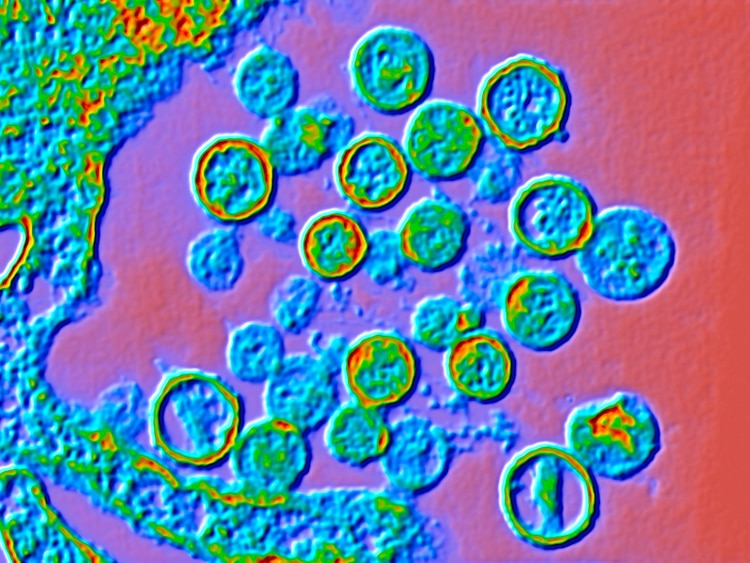
Stock photo of a colorized electron micrograph of the Hantavirus.
Alfred Pasieka/Science Photo Lib/STOCK PHOTO/Getty Images
How does hantavirus spread?
Hantaviruses are usually spread through rodents, including rats and mice, mostly from exposure to urine, droppings or saliva. Although the viruses can spread through a rodent bite or scratch, such infection is rare, the CDC says.
Hantaviruses may also spread from person to person, but that also is rare and only suspected for one subtype from South America, according to the WHO.
A woman in the Spanish province of Alicante has tested positive for a hantavirus infection, secretary of state for health, Javier Padilla, told reporters on Friday, according to Reuters.
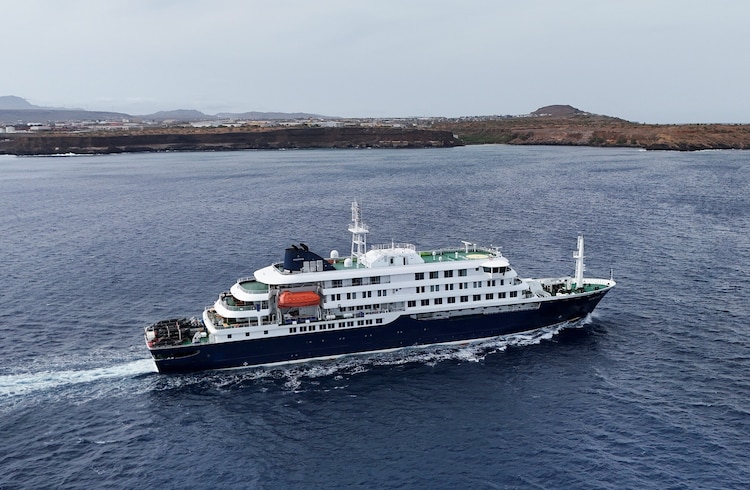
The cruise ship MV Hondius leaves Praia, Cape Verde, May 6, 2026.
Stringer/Reuters
The unidentified patient was a passenger on the same flight as the woman who died in South Africa after leaving the ship, according to Padilla.
-ABC News' Zoe Magee
6:24 AM EDT
MV Hondius expected to arrive at Granadilla Port on Sunday by noon
The MV Hondius is now expected to arrive at Granadilla Port on Sunday by 12 p.m. local time, but could be delayed depending on weather conditions, officials said.
The ship will not dock upon arrival but will be anchored, and all passengers will be wearing hazmat gear as they are transferred by boat to the port, according to a statement from the Canarias Region government.
The passengers will then be transferred by a bus that is escorted by authorities to the airport where they will begin boarding aircraft by nationality with 23 nationalities on board in total, officials said.
The ride between Granadilla Port and Tenerife South Airport is expected to last approximately 15 minutes and officials said that passengers, as well as the vessel, will be completely isolated from Canarian people and not affect any local infrastructure.
-ABC News' Aicha El Hammar Castano
4:42 AM EDT
UK says 'British national on Tristan da Cunha' tests positive
The United Kingdom's Health Security Agency (UKHSA) announced on Friday morning there is “an additional suspected case of a British national on Tristan da Cunha,” while a Dutch KLM flight attendant who was thought to have it has tested negative for Hantavirus, officials said.
The total case suspected count remains at 12 after these latest developments.
UKHSA also said that “All British passengers and crew on board the MV Hondius will be asked to isolate for 45 days upon returning to the UK and UKHSA will closely monitor these individuals, with testing as required.”
-ABC News' Zoe Magee
May 07, 2026, 11:07 PM EDT
CDC classifies outbreak as 'Level 3' emergency response -- lowest level of emergency activation
The U.S. Centers for Disease Control and Prevention (CDC) activated its Emergency Operations Centers and has classified the hantavirus outbreak as "Level 3," multiple sources told ABC News.
That's the lowest level of emergency activation and is typical for this stage. It signifies the risk to the general public remains low, but the situation is being actively monitored by the public health agency.
Activating the Emergency Operation Centers indicates that an emergency team has been set up to support a response. Epidemiologists, scientists and physicians may have been re-assigned from their typical roles to assist with the response.