Nearly 1,100 killed in Lebanon as strikes continue, Lebanese Ministry of Health says
At least 1,094 people were killed and 3,119 others were injured in Lebanon as Israeli strikes resume, according to the Lebanese Ministry of Health.

Pakistani Foreign Minister Ishaq Dar made the announcement on Sunday.
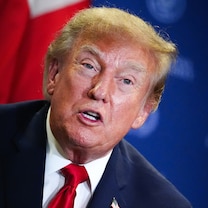
President Donald Trump announced "major combat operations" against Iran on Feb. 28, with massive joint U.S.-Israeli strikes attack targeting military and government sites, officials said.
Ayatollah Ali Khamenei was among those killed in Tehran on the first day of strikes, with his son Mojtaba Khamenei later chosen to succeed him. Iran has responded with missile and drone attacks targeting Israel, regional U.S. bases and multiple Gulf nations. Iran is also attempting to block some shipping traffic through the Strait of Hormuz.
Israel is also intensifying its long-running strike campaign against the Iran-backed Hezbollah militia in Lebanon and expanding its ground operations in the south of the country.
Watch special coverage on Nightline, "War with Iran," each night on ABC and streaming on Disney+ and Hulu.
At least 1,094 people were killed and 3,119 others were injured in Lebanon as Israeli strikes resume, according to the Lebanese Ministry of Health.

Iran has intelligence that its enemies, with help from a regional country, are planning to occupy an Iranian island, the speaker of Iran’s parliament, Mohammad-Bagher Ghalibaf, said in a post on X.
Ghalibaf warned the unspecified regional country that if this happens, "all the vital infrastructure of that regional country will, without restriction, become the target of relentless attacks.”
Egypt is ready to host any meetings related to the U.S.-Israeli war with Iran, as long as it serves de-escalation, Foreign Minister Badr Abdelatty said on Wednesday.
“The Egyptian leadership is working to bridge gaps, and we hope negotiations will lead to de-escalation,” Abdelatty said at a press conference.
Abdelatty added that Egypt supports President Donald Trump’s initiative to negotiate with Iran and is coordinating with several countries -- including Turkey, Pakistan, China, the European Union and Gulf states -- to ease tensions.
Following reports that Iran rejected Trump's 15-point plan to end the war, Abdelatty maintained that Egypt would continue efforts to bring the viewpoints of the warring parties closer, emphasizing that "military solutions are not the answer."
He said Cairo is in direct contact with both Washington and Tehran to open channels for negotiations to end the war. He also stressed that the security of Gulf countries is “an integral part of Arab and Egyptian national security.”
Press TV, Iran’s English language state media, is quoting an official saying Iran is rejecting the U.S.'s 15 point proposal to end the war.
"Iran will end the war when it decides to do so and when its own conditions are met," the official said.
Press TV says the “official outlined five specific conditions under which Iran would agree to end the war.”
According to Press TV, the conditions include a complete halt to "aggression and assassinations;" the establishment of concrete mechanisms to ensure that the war is not reimposed on Iran; guaranteed and clearly defined payment of war damages and reparations; and the conclusion of the war across all fronts and for all resistance groups involved throughout the region.
Iran also wants recognition over its sovereignty over the Strait of Hormuz and assurance that it will remain Iran's natural and legal right, and it constitutes a guarantee for the implementation of the other party's commitments, according to Press TV.