UNICEF calls for strengthened measures to protect children fleeing Ukraine from human trafficking, exploitation
The United Nations Children's fund warned Saturday that children fleeing the war in Ukraine are at an increased risk of human trafficking and exploitation.
"Traffickers often seek to exploit the chaos of large scale population movements, and with more than 1.5 million children having fled Ukraine as refugees since [Feb.24], and countless others displaced by violence inside the country, the threat facing children is real and growing," UNICEF said.
According to an analysis conducted by UNICEF and the Inter-Agency Coordination Group against Trafficking, 28% of identified victims of trafficking globally are children.
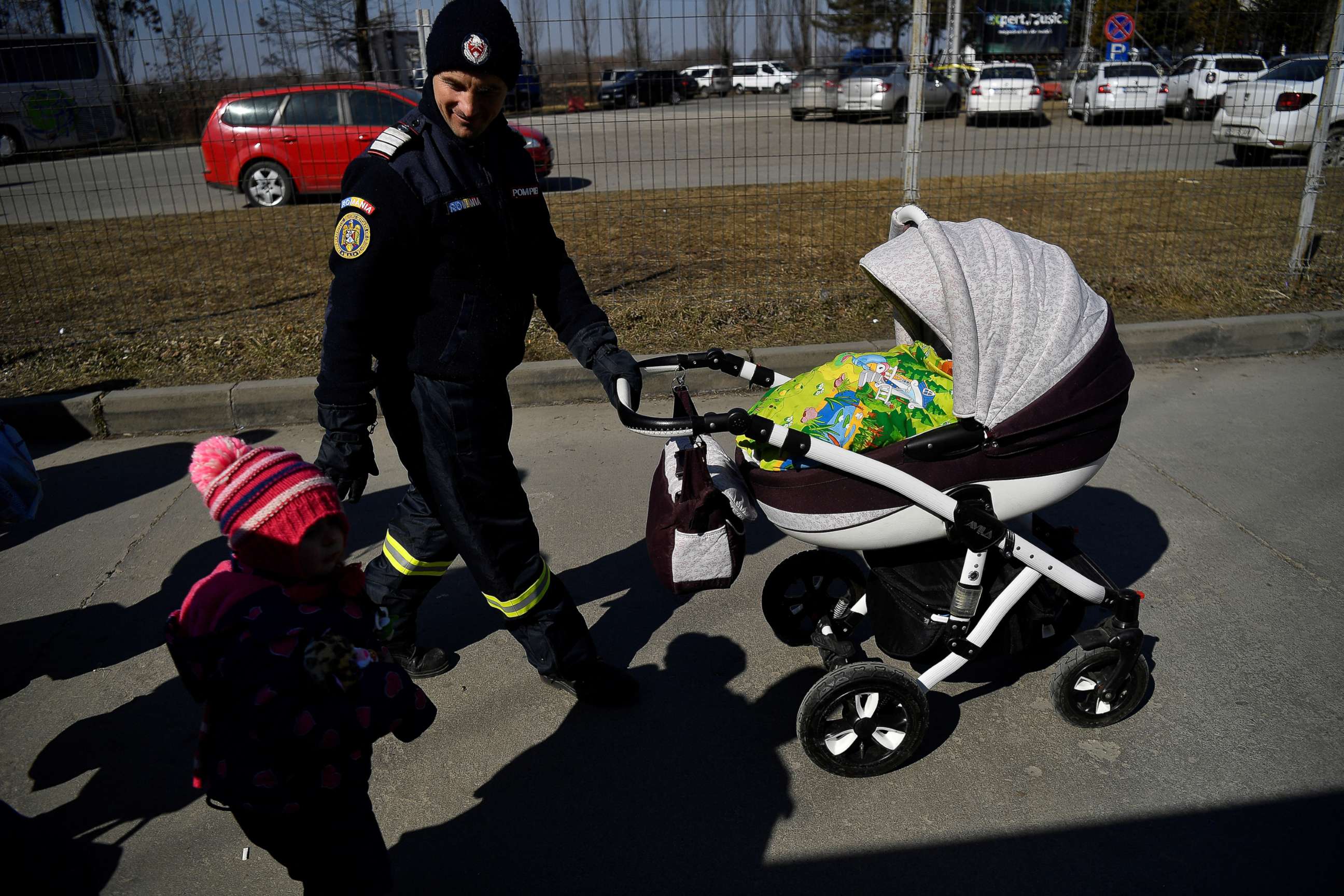
"In the context of Ukraine, UNICEF child protection experts believe that children would likely account for an even higher proportion of potential trafficking victims given that children and women represent nearly all of the refugees who have fled the country so far," UNICEF said.
According to UNICEF, more than 500 unaccompanied children were identified crossing the Ukrainian border into Romania between Feb. 24 and March 17. It also estimates that the true number of separated children who have fled Ukraine is likely much higher.
"Displaced children are extremely vulnerable to being separated from their families, exploited, and trafficked. They need governments in the region to step up and put measures in place to keep them safe," said Afshan Khan, UNICEF’s regional director for Europe and Central Asia.
Khan said children need to be screened for their vulnerability as they cross the border into another country.
"UNICEF is calling on governments to improve cross-border collaboration and knowledge exchange between and among border control, law enforcement and child protection authorities and to quickly identify separated children, implement family tracing and reunification procedures for children deprived of parental care," UNICEF said.
UNICEF also said additional screening for protection risks should be implemented in shelters, large urban train stations and other locations where refugees gather or pass through.