Russian President Vladimir Putin's "special military operation" into neighboring Ukraine began on Feb. 24, with Russian forces invading from Belarus, to the north, and Russia, to the east. Ukrainian troops have offered "stiff resistance," according to U.S. officials.
The Russian military has since launched a full-scale ground offensive in eastern Ukraine's disputed Donbas region, capturing the strategic port city of Mariupol and securing a coastal corridor to the Moscow-annexed Crimean Peninsula.
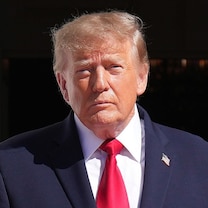
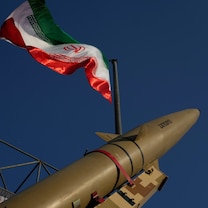
A look at the two leaders at the center of the war in Ukraine and how they both rose to power, the difference in their leadership and what led to this moment in history.
Here's how the news is developing. All times Eastern.
Apr 20, 2022, 3:59 PM EDT
UN chief seeks peace talks with Putin, Zelenskyy
United Nations Secretary-General António Guterres wrote separate letters to Russian President Vladimir Putin and Ukrainian President Volodymyr Zelenskyy on Tuesday asking to meet "to discuss urgent steps to bring about peace in Ukraine," a UN spokesperson said on Wednesday.
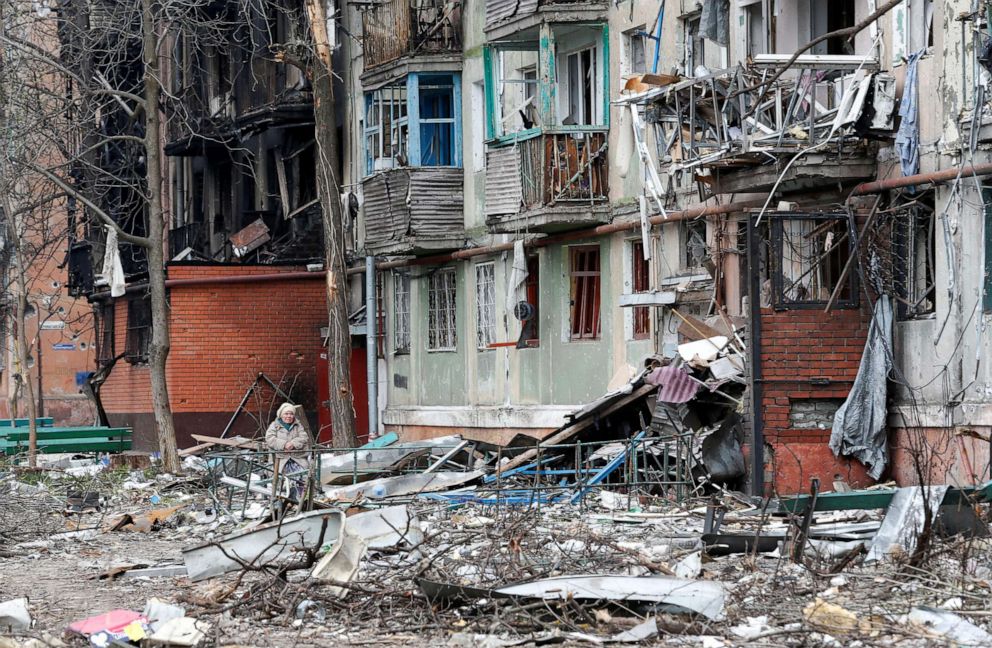
A local resident sits on a bench in a courtyard damaged during Ukraine-Russia conflict in the southern port city of Mariupol, Ukraine, April 18, 2022.
Alexander Ermochenko/Reuters
Mykhailo Podoliak, adviser to the head of the president's office, tweeted that Ukraine is ready to hold a special round of negotiations in Mariupol.
Apr 20, 2022, 3:25 PM EDT
Thousands more Russians enter Donbas: US official
Four more Russian battalions, each made up of roughly 800 to 1,000 troops, have crossed into Ukraine over the last 24 hours, a senior U.S. defense official said Wednesday. Three of those battalions -- or up to 3,000 troops -- moved to the disputed Donbas region in eastern Ukraine, the official said.
Four flights carrying military aid, including artillery, from the Biden administration's most recent $800 million package arrived in Ukraine over the last 24 hours, the official said. More supplies are set to arrive over the next day, the official said.
When ABC News asked why the U.S. decided to send artillery, the official responded: "We're mindful of the importance of artillery in the fight that they're in right now and in the fighting in the days to come because of the terrain, and because of what we think they're going to be up against with Russian forces."
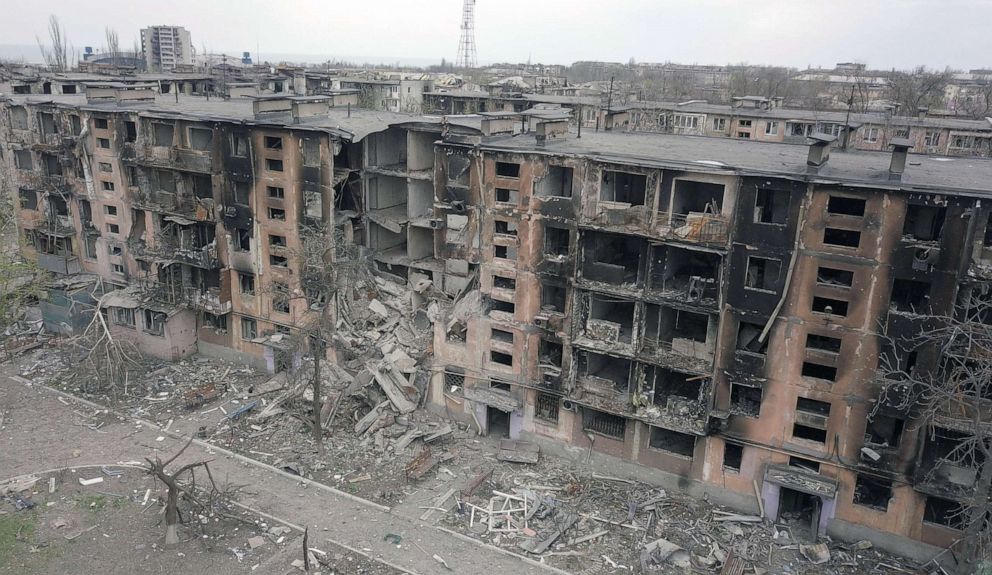
An aerial view shows a residential building destroyed during Ukraine-Russia conflict in the southern port city of Mariupol, Ukraine, April 18, 2022.
Pavel Klimov/Reuters
Another reason was "the fact that it wouldn't require an onerous amount of training for the Ukrainians to know how to use them" and the ability to ship them quickly, according to the official.
-ABC News' Matt Seyler
Apr 20, 2022, 2:12 PM EDT
Humanitarian corridor from Mariupol didn't work as planned Wednesday
Ukraine's Deputy Prime Minister Iryna Vereshchuk said Wednesday's humanitarian corridor from Mariupol didn't work as planned but evacuation efforts will continue Thursday morning.
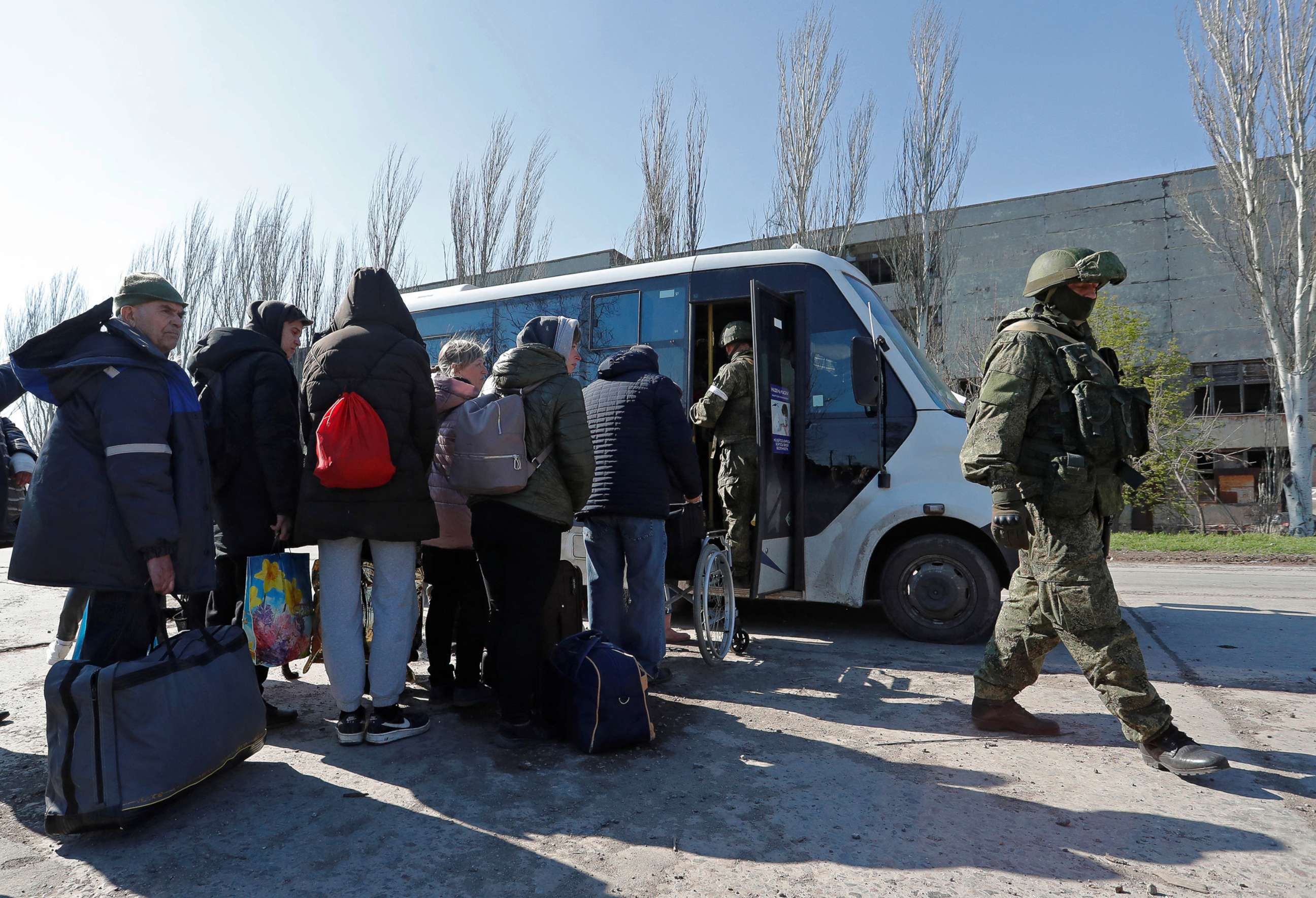
Evacuees board a bus to leave the city during Ukraine-Russia conflict in the southern port of Mariupol, Ukraine, April 20, 2022.
Alexander Ermochenko/Reuters
"Due to the lack of control over their own military on the ground, the occupiers were unable to ensure a proper ceasefire," Vereshchuk said in a statement.
There also wasn't "timely transportation of people to the point where dozens of our buses and ambulances were waiting," Vereshchuk said.
-ABC News' Alex Faul
Apr 20, 2022, 1:45 PM EDT
Blinken warns atrocities in Mariupol 'far worse' than Bucha
Secretary of State Antony Blinken warned Wednesday that he thinks the atrocities in the port city of Mariupol will show to be "far worse" than in Bucha, where, after Russian troops retreated, there were found to be scores of civilians killed, and in some cases, tortured.
"We can only anticipate that when this tide also at some point recedes from Mariupol, we're going to see far worse -- if that's possible to imagine," Blinken said during a press conference in Panama.
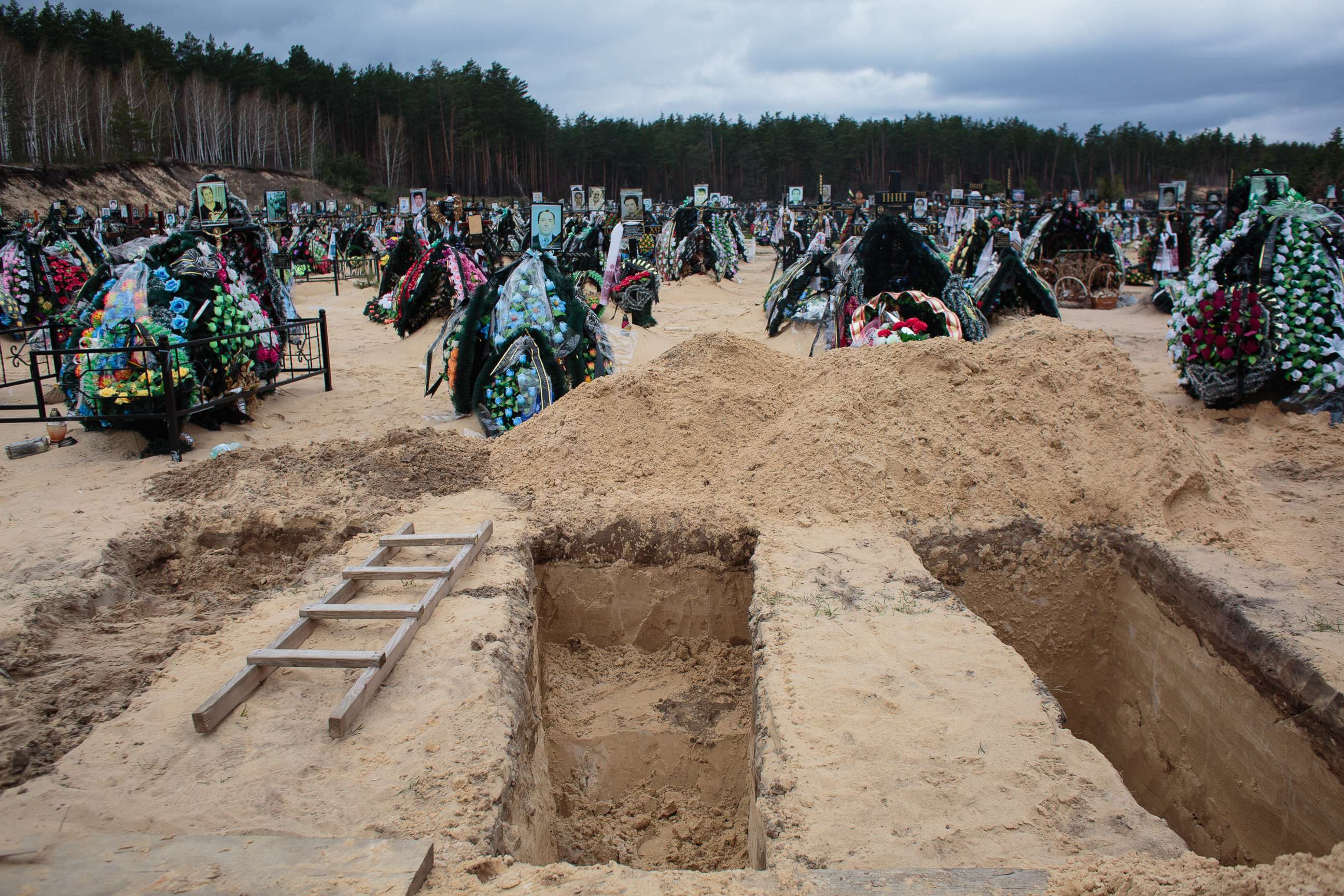
A view of fresh graves, April 18, 2022, at the cemetery in Bucha, Ukraine. The Russian retreat from Ukrainian towns and cities has revealed scores of civilian deaths.
Anastasia Vlasova/Getty Images
Blinken expressed some doubts about Russia's offer of humanitarian corridors for Ukrainian civilians and service members to leave Mariupol.
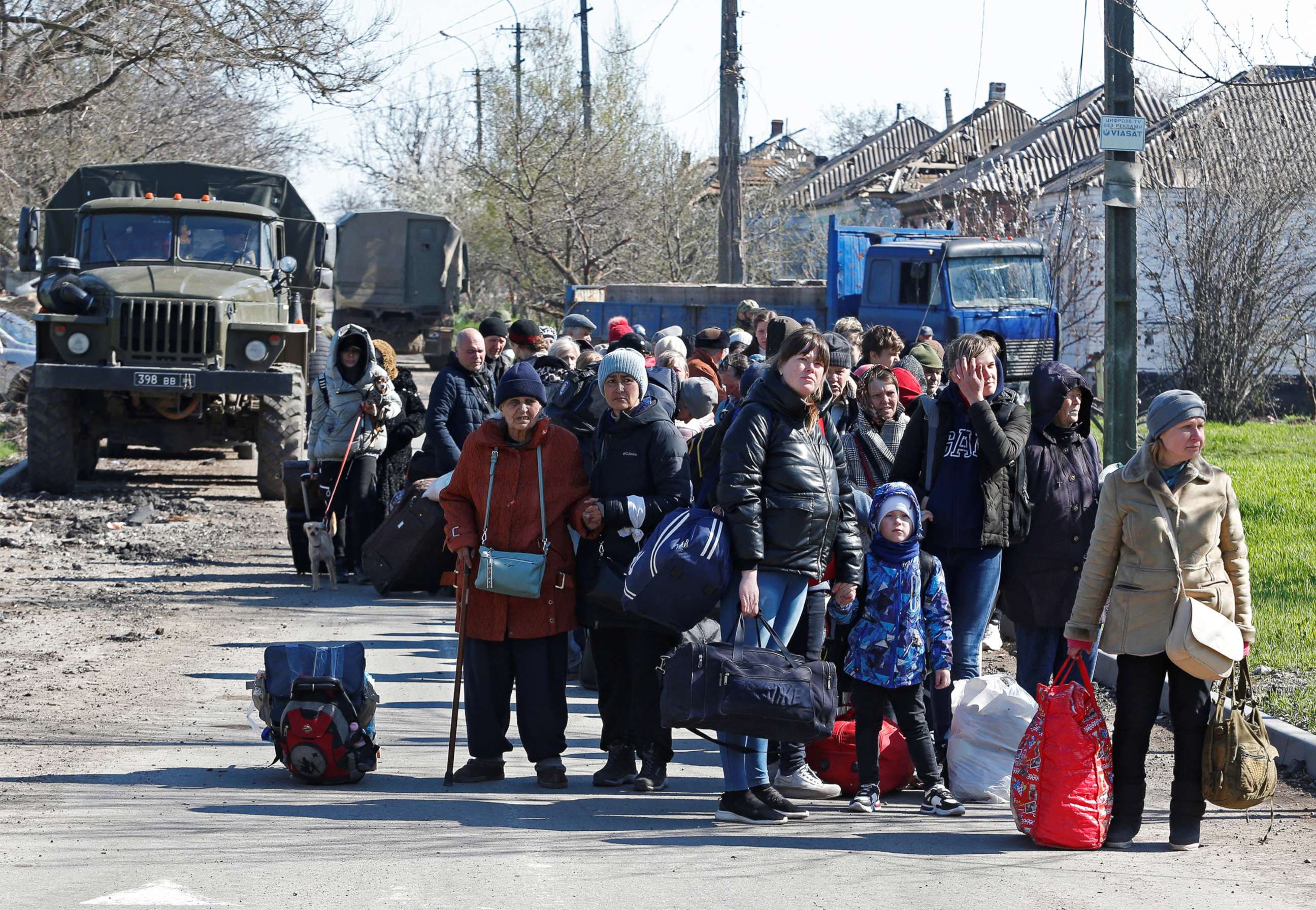
Evacuees wait before boarding a bus to leave the city during Ukraine-Russia conflict in the southern port of Mariupol, Ukraine, April 20, 2022.
Alexander Ermochenko/Reuters
"Of course, we want to see people who are in harm's way, if they're able to, leave it safely and securely," he said. "The judgment on whether the humanitarian corridor established to do that from Mariupol is safe and secure is one ultimately that the Ukrainian government is going to make … and ultimately, the decision to leave is going to be a burden on the people themselves to make that very difficult decision."
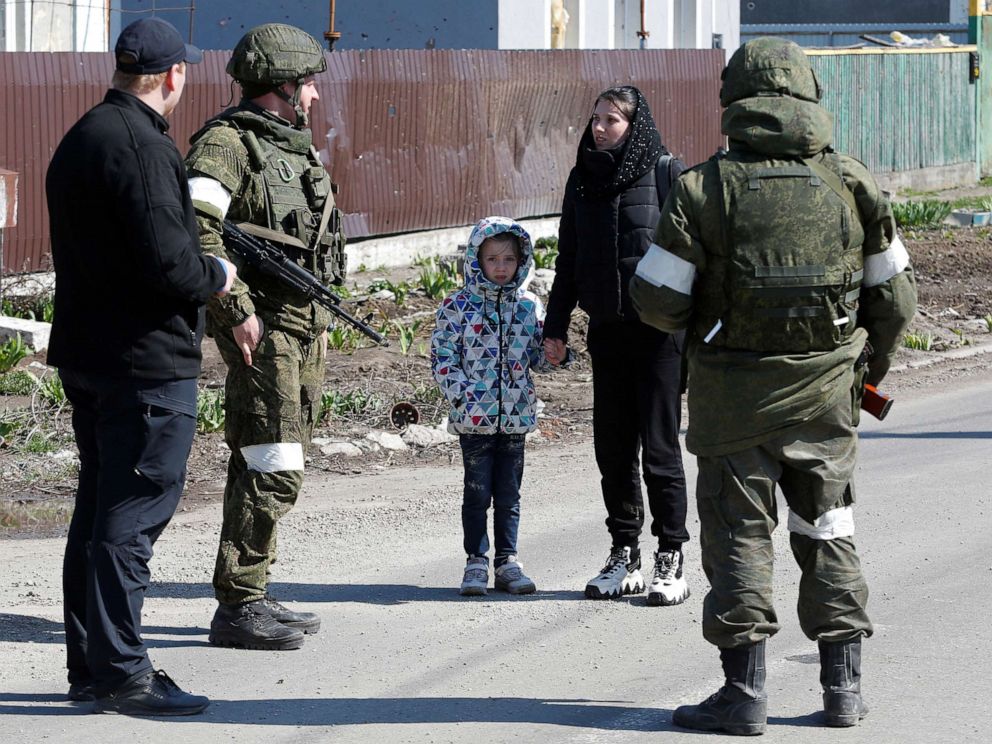
A woman with a child talks to service members of pro-Russian troops as evacuees board buses to leave the city during Ukraine-Russia conflict in the southern port of Mariupol, Ukraine, April 20, 2022.
Alexander Ermochenko/Reuters
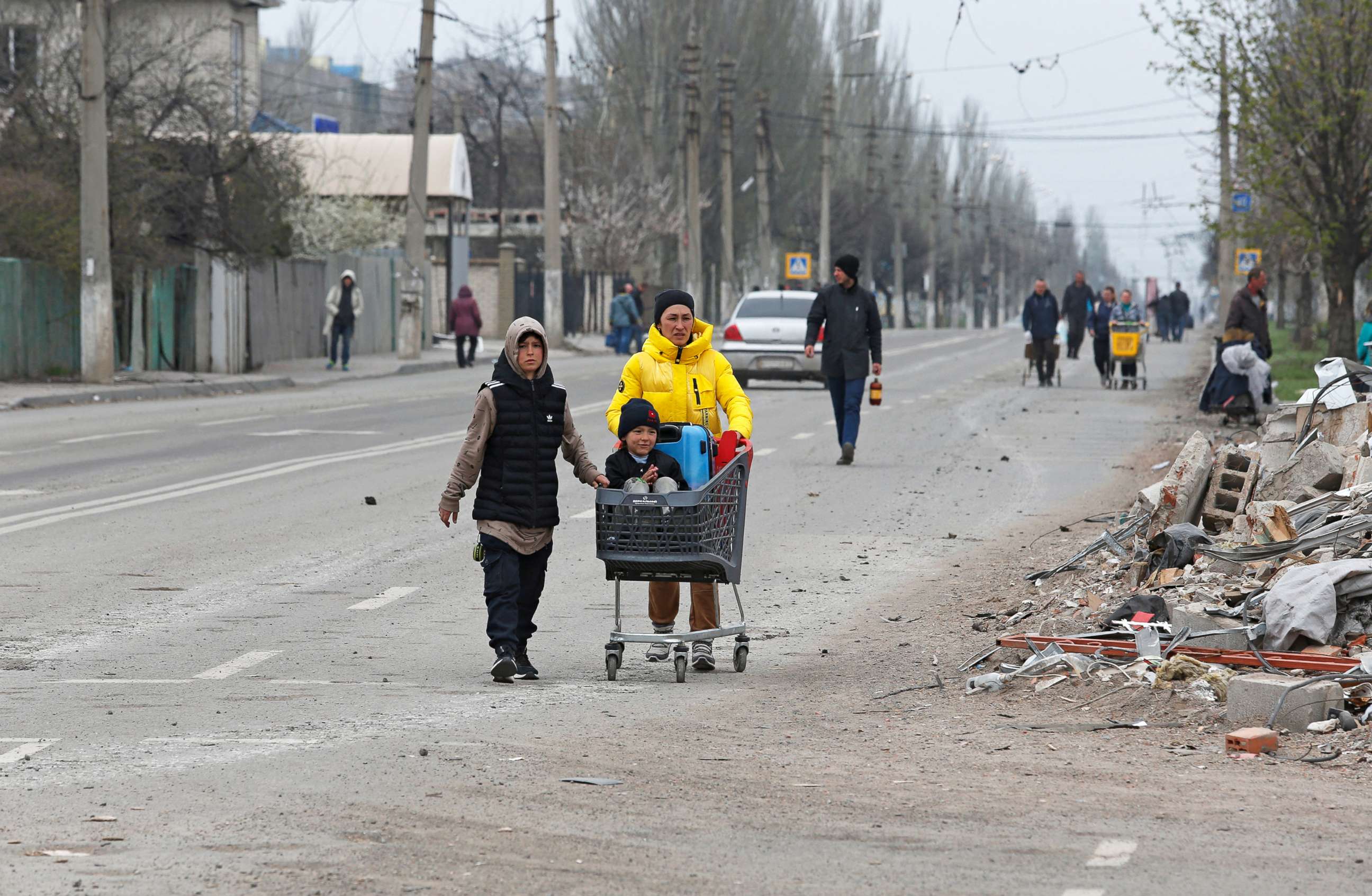
Local residents walk along a street damaged during Ukraine-Russia conflict in the southern port city of Mariupol, Ukraine, April 19, 2022.
Alexander Ermochenko/Reuters
He said the U.S. is "certainly assisting" by giving its evaluations and assessments of the situation to the Ukrainian government.
But Blinken warned: "What gives pause is the fact that there have been agreements on humanitarian corridors established before that have fallen apart very, very quickly - if not immediately - principally because the security has been violated by Russian forces."