Russian missile strike kills at least 23 in Vinnytsia
Russian missiles hit the heart of the central Ukrainian city of Vinnytsia on Thursday morning, killing at least 23 people and wounding dozens, according to Ukraine's State Emergency Service.
Three children were among the dead, the agency said.
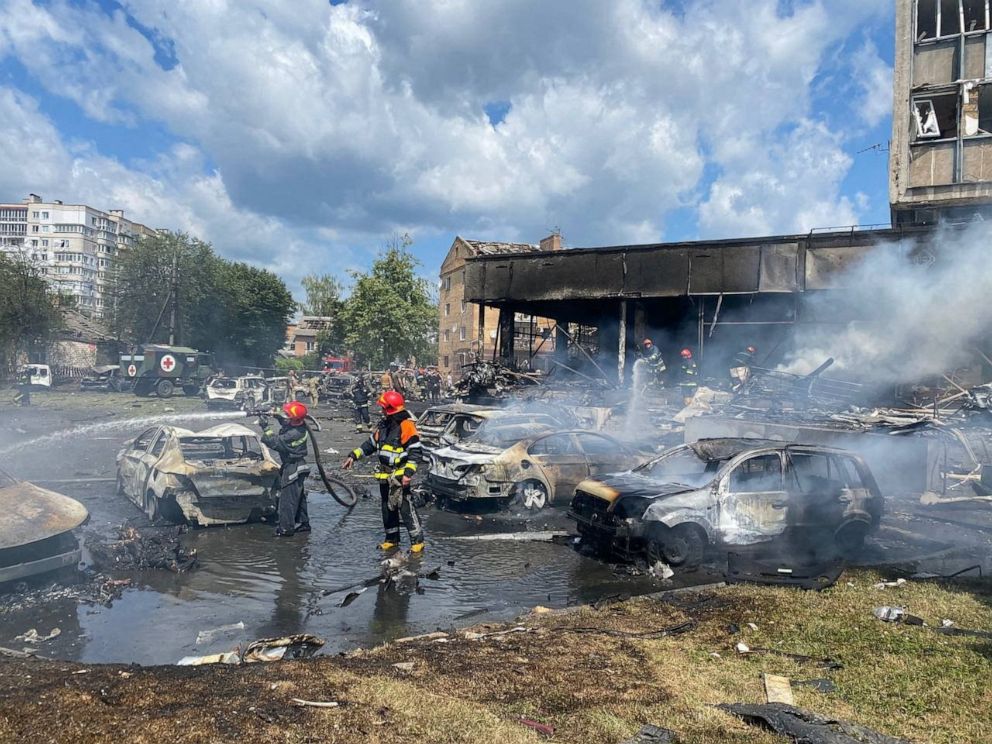
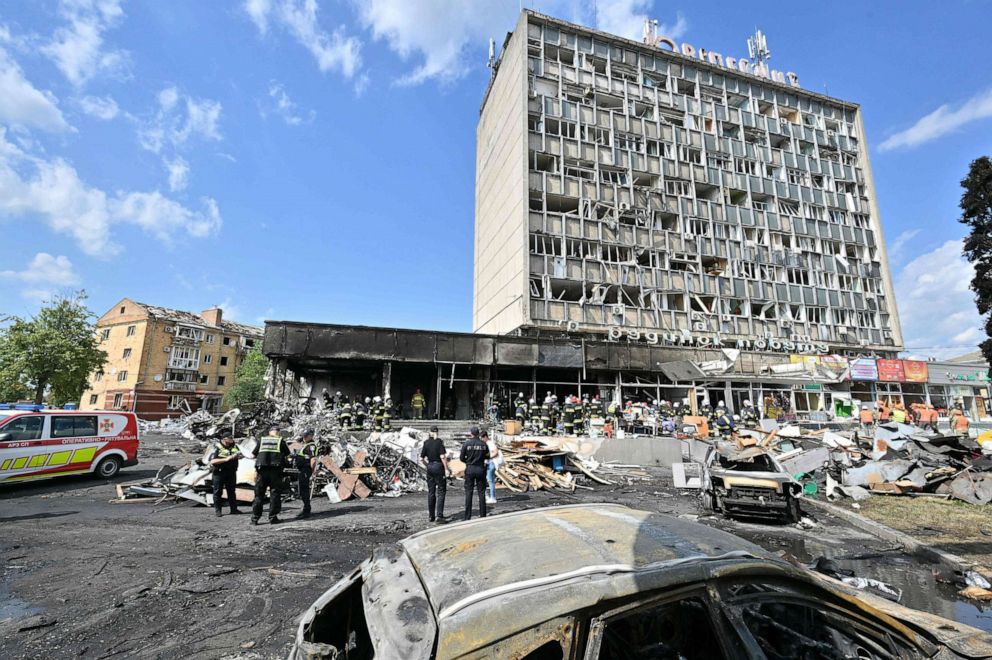
The missiles struck an office building and damaged nearby residential buildings in Vinnytsia, located about 155 miles southwest of the Ukrainian capital, Kyiv. The strike also ignited a massive fire that engulfed 50 cars in an adjacent parking lot, according to the National Police of Ukraine. Burned-out vehicles are peppered with holes from the missiles.
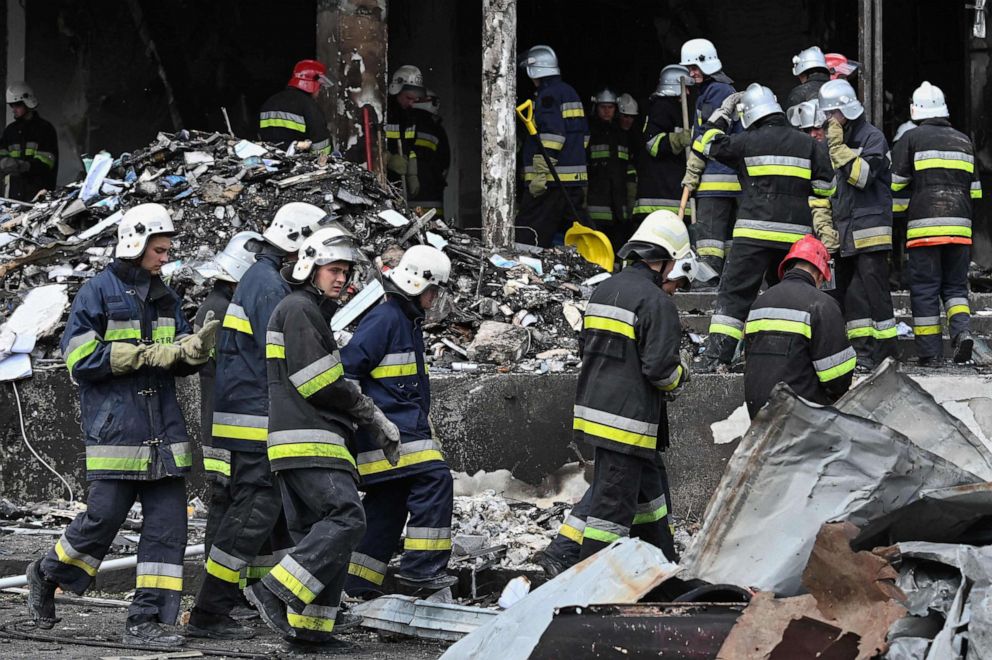
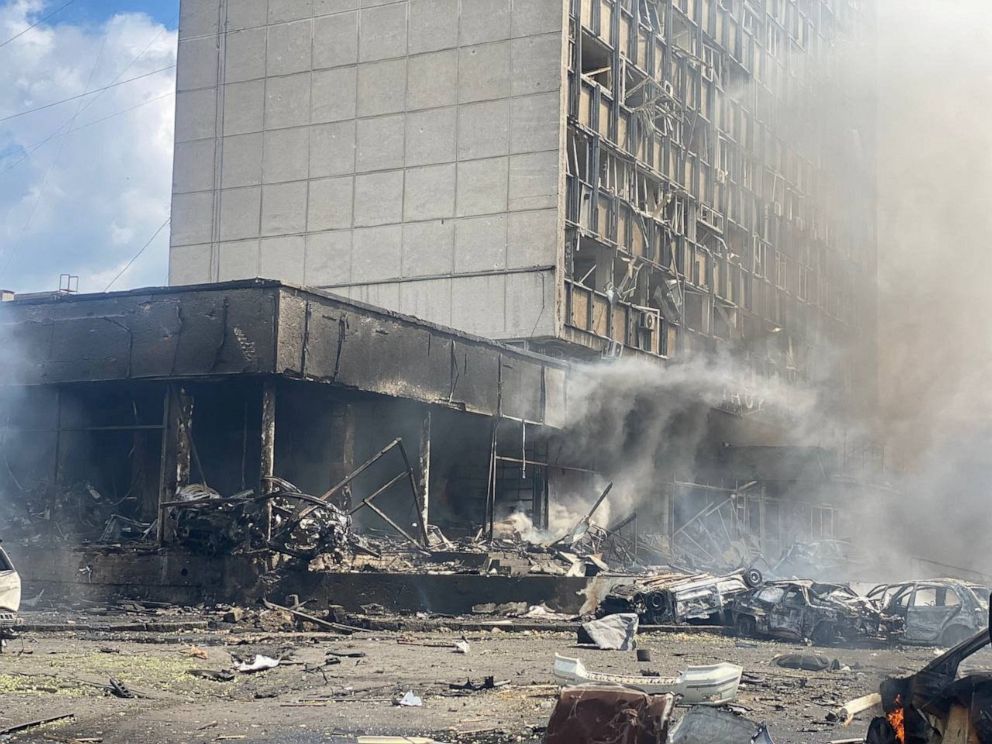
The State Emergency Service said about 115 victims in Vinnytsia needed medical attention, with 64 people hospitalized -- including 34 in severe condition and five in critical.
Forty-two people are listed as missing, the agency said.
Many Ukrainians moved to Vinnytsia, a city southwest of Kyiv, to get away from the fighting in eastern Ukraine. Until now, Vinnytsia had been seen as a city of relative safety.
Ukrainian President Volodymyr Zelenskyy called the attack "an open act of terrorism" on civilians.
"Every day Russia is destroying the civilian population, killing Ukrainian children, directing missiles at civilian objects. Where there is no military (targets). What is it if not an open act of terrorism?” Zelenskyy said in a statement via Telegram on Thursday.
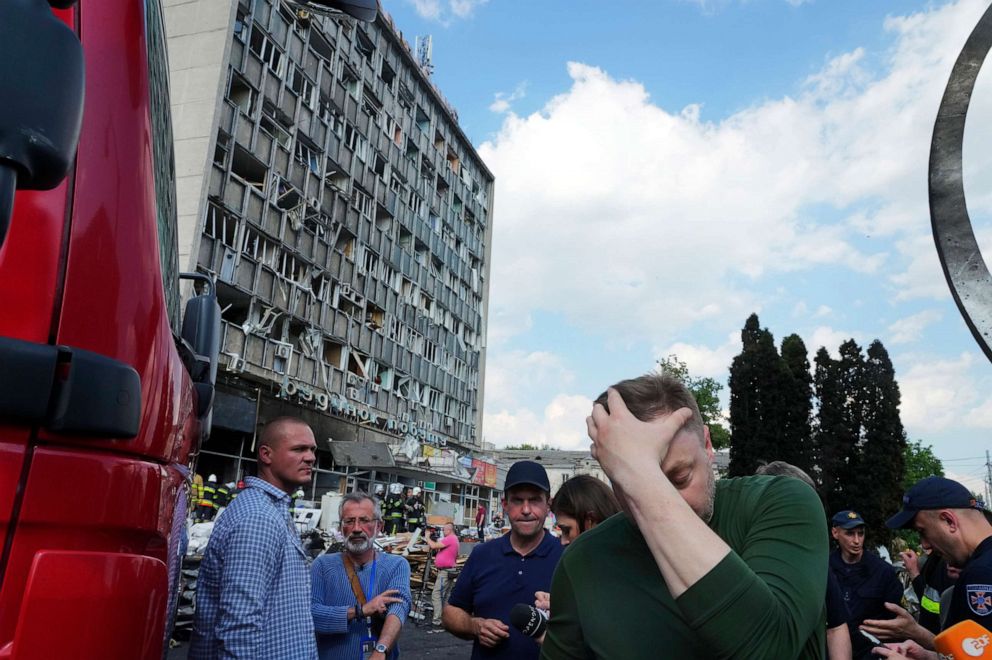
War crimes investigators are at the scene studying missile fragments.
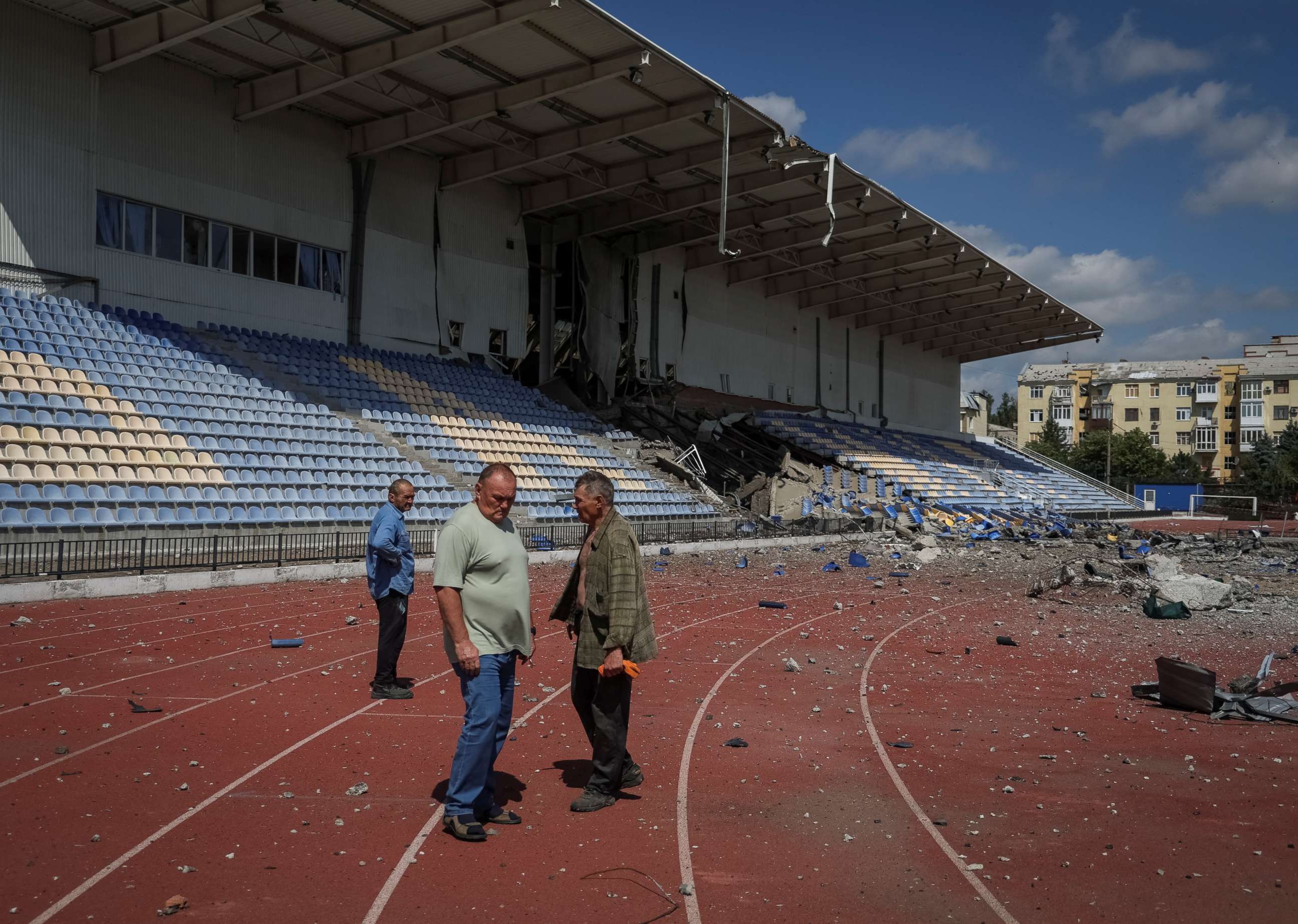
Russian missile strikes targeted several other Ukrainian cities on Wednesday and early Thursday, including Kharkiv, Zaporizhia and Mykolaiv.
At least 12 people died in the Zaporizhia strike, which hit two industrial workshops on Wednesday, according to local authorities.
At least five civilians were killed and 30 others injured in Mykolaiv on Wednesday after Russian missiles destroyed a hotel and a shopping mall, the local mayor said. The southern Ukrainian city was shelled again on Thursday morning, but no casualties were immediately reported.
-ABC News' Edward Szekeres, Fidel Pavlenko, Max Uzol, and Yulia Drozd