US-South Korea military drills to end early after Trump order, Seoul says
Trump described the exercise as "inappropriate and hostile" toward North Korea.
LONDON -- South Korea's Joint Chiefs of Staff (JCS) confirmed that ongoing joint military drills with U.S. forces would end early, following President Donald Trump's announcement Sunday that he had ordered the Pentagon to "substantially reduce" the exercises.
The annual U.S.-South Korea Ulchi Freedom Shield began Monday. On Wednesday, South Korea's Joint Chiefs of Staff said in a statement that, in response to a U.S. proposal, "the allies agreed to adjust parts of the exercise, including its duration and scale."
The drills will now end Aug. 21, six days earlier than originally planned. The two sides also agreed to scale back some combined field training exercises, the details of which are still under discussion, the JCS said.
"Going forward, South Korea and the United States will discuss and implement various measures to achieve the objectives of the UFS exercise and maintain a strong combined defense posture," the statement added.
A Pentagon official told ABC News that the exercise had been "substantially reduced" on "direction from the president and secretary of war."
"The exercise will conclude on Aug. 21, one week earlier than scheduled. Associated live-training events have been reduced, with certain events canceled or converted to simulations," the official said. "These adjustments preserve essential readiness and training objectives. There will be no degradation to U.S. training objectives."

Trump ordered the drills scaled back, citing his "very good" relationship with North Korea's Supreme Leader Kim Jong Un. Pyongyang routinely protests joint U.S.-South Korean exercises, framing their military cooperation as undermining stability on the Korean Peninsula.
This week, Pyongyang described Ulchi Freedom Shield as an "open threat" to North Korea.
On Sunday, Trump criticized the annual military exercise as "inappropriate and hostile" toward North Korea, a country he said has been "unthreatening and respectful" toward the United States during his presidency.

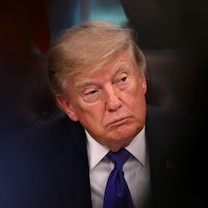
"Based on my very good relationship with Kim Jong Un, of North Korea, I am not happy with the fact that the United States has, long ago, agreed to participate in Joint Military Exercises with South Korea," Trump wrote on his social media platform.
"Therefore, and based on the fact that it is too late to cancel, I have instructed Secretary of War, Pete Hegseth, to substantially reduce the Joint Military Exercises!" he said.
South Korea is a longtime U.S. ally and hosts roughly 28,500 U.S. troops. The U.S. presence on the peninsula has traditionally been intended to prevent a resumption of cross-border hostilities, with the Korean War of 1950-53 having never officially ended.
In 2006, North Korea tested its first nuclear weapon and has since been expanding its atomic weapons stockpile -- despite international condemnation and sanctions led by successive U.S. administrations -- alongside a ballistic missile research program which has produced munitions capable of reaching the continental U.S.
In recent decades, the U.S. presence in South Korea has also become an important point of leverage in the strategic contest between Washington and Beijing, the latter having long served as Pyongyang's prime patron.

ABC News' Joohee Cho, Desiree Adib, Will Gretsky and Steve Beynon contributed to this report.
Related Topics

Popular Reads

ABC News Live