Xi tells Trump US must do 'the right thing' over Taiwan to avoid 'great turbulence'
He warned in May that the U.S. and China could "come into conflict" over Taiwan.
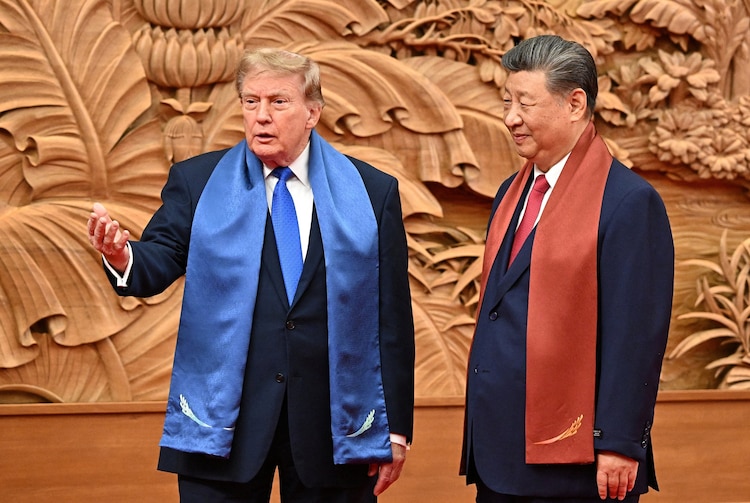
LONDON and HONG KONG -- Chinese President Xi Jinping used his meeting with President Donald Trump in Shenzhen on Thursday to urge bilateral cooperation on issues including AI, but also warned against the creation of "turbulence" over the issue of Taiwan.
Xi and Trump met on the sidelines of the Asia-Pacific Economic Cooperation summit in southwestern China, first privately and then as part of a trilateral sit down with Russian President Vladimir Putin.
According to a readout of the meeting between Xi and Trump, the state-run Xinhua News Agency said the Chinese leader suggested areas of cooperation including AI, while cautioning that divergence over the fate of Taiwan could undermine bilateral relations.
"On the Taiwan issue, the United States must keep doing the right thing to avoid the emergence of great turbulence in the China-U.S. relationship," Xi said, as quoted by Xinhua.
During their meeting in May, Xi warned Trump that China and the U.S. could "come into conflict" if the issue of Taiwan is handled "improperly."
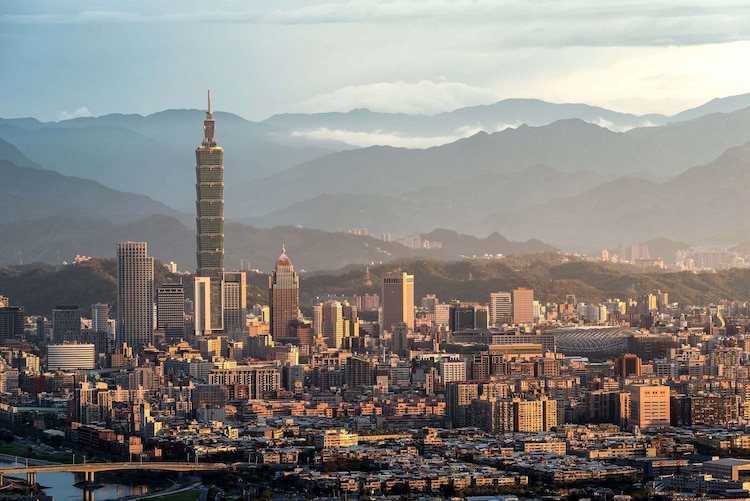
Taiwan is an independent island nation that Beijing considers a wayward Chinese province. During the Chinese Civil War -- which took place intermittently between 1927 and 1949 -- nationalist forces retreated to the island while the Chinese Communist Party took control of the Chinese mainland.
Ever since, Chinese leaders -- with Xi among them since his rise to power -- have vowed to take control of Taiwan, whether through diplomatic or military means.
American backing for Taiwan is a longtime grievance for Beijing. Though Washington does not officially recognize Taiwan as an independent state, U.S. administrations have traditionally backed the maintenance of the status quo and provided significant military, diplomatic and economic backing for Taipei.
Xi has been pushing for the U.S. to curtail its arms sales to Taiwan, including a proposed $14 billion deal that would include American missiles, anti-drone weapons and air-defense systems.
The arms package for Taiwan was approved by the US Congress in January but has been held up by the White House, awaiting final approval from the president. Trump has previously said the deal could serve as a "negotiating chip" in talks with Beijing.
Speaking to media in Taipei, Taiwanese Deputy Minister of Foreign Affairs Chen Ming-chi highlighted U.S. Secretary of State Marco Rubio's comments, reported by The Hill in September, that military sales to anyone require the same careful consideration.

"Taiwan faces a severe situation in the Taiwan Strait. Even though China's economy is declining, it continues investing more resources into building military capacity. Under this context, the U.S. very much understands our defense needs," he said. "We do continuously communicate with them, and we believe the U.S. understands the situation we face and our determination on defense investment completely."
China regularly conducts large-scale military drills around Taiwan, with daily air and naval patrols around the island maintaining pressure on Taipei.
From Wednesday into Thursday, Taiwan's Defense Ministry reported one sortie of Chinese military aircraft plus the presence of seven Chinese naval vessels and two other "official ships" around Taiwan.
The ministry also reported that two Russian Tu-95 bombers flew into the island's air defense identification zone on Thursday.
The joint China-U.S.-Russia statement released by the Xinhua also endorses "the principle of state consent," which holds that countries cannot be bound by international courts without their agreement, the New York Times reported. China has invoked this principle to reject a 2016 international tribunal ruling against its South China Sea claims, according to the Times.
Related Topics

Popular Reads
ABC News Live