Arizona congressional candidate said she felt like a 'hypocrite' for not reporting rape
Bernadette Greene-Placentia said is speaking out for sexual assault survivors.
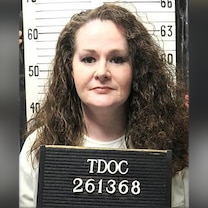
Bernadette Greene-Placentia, a Democratic candidate for Congress who said she was raped while fixing a campaign sign in August, told ABC News on Thursday that she was motivated to speak up because of the arguments she was making on the campaign trail.
"I was talking to some seniors about fighting for reinstating and funding the [Veterans Administration] and fixing Social Security, actually addressing the issues" amid federal government cuts or healthcare changes that impacted them, Greene-Placentia told ABC News Live anchor Kyra Phillips.
"It just crossed my mind at that point -- like, wow, I'm kind of being a hypocrite because I'm saying I'm going to fight for Arizonans. I'm going to fight for these folks, but I'm not fighting for women who've been victims of sexual assault, and that's just not how I was raised," she said. "So afterwards, I told my husband and my team, I was like, this is really going to suck, but I have to speak up."

Greene-Placentia, a former truck driver who is running in the state's 8th District to try to unseat Republican Rep. Abe Hamadeh, told Phoenix New Times, a local news outlet, in a story published Wednesday that she was attacked around 2 a.m. as she was walking toward a campaign sign in a parking lot north of Phoenix. She said she had been subdued and then woke up to find that she was being raped by an unknown assailant.
Greene-Placentia told the news outlet she reported the assault to the Maricopa County Sheriff's Office, which confirmed to ABC News that a report was filed on Aug. 31 and that there is an ongoing investigation, but said the office could not comment further on the investigation.
She told ABC News on Thursday that she thinks it was a "crime of opportunity" and that she was not necessarily targeted, but she mentioned that her face is on campaign signs and "I'm pretty sure they knew who I was. Whether it was for political reasons or whatever, I mean, it was an attack on a woman, and no woman should be targeted, regardless of whether it's for political reasons or just because they're predators."
It hadn't initially worried her to go out so late to fix campaign signs.
"I mean, I have about 4 million miles across the country, and, you know, I've learned how to take care of myself ... it's just easier to do it [fix signs] at night. And usually I would go out with my husband or a staffer or a volunteer. But if I saw one that was just hanging by the rebar or somethin. ... I never heard [the attacker] coming," she said.
"And it's frustrating to me because I like to think I have pretty good situational awareness, but obviously when someone deliberately sneaking up on you, it's hard to defend yourself."
Greene-Placentia said she does not remember coming home and has little memory of the next day, although said there is video of her landlord in the driveway.
"She saw me standing out there, and I guess I was just literally, like, staring off into space or something. And she's like, Bernadette, Bernadette, are you Ok? Are you Ok? And I just looked, you know, horrible."

She said she did not say anything to her campaign staff at first, and took a few days before she told her husband.
Asked what she wants voters to know about her in addition to her taking her story to Capitol Hill, Green-Placentia told ABC News she wants voters, including survivors of sexual assault, to know she was going to "fight" for them.
"I want people to know that I'm going to stand up. I'm going to fight for you. I'm going to fight for everybody because -- I got into politics, I gave up a career I loved, because I felt like there weren't people like me, like the average American," she said.
"Our voices were not being represented, and that's from the working class. That's from women that have been victims of sexual assault. That's our seniors, our veterans, our teachers, and they need to know that they have somebody that lives the same life they do, that has shared experiences, and will take that to D.C. and represent them fairly, transparently."
She also said she understands where women who don't speak up about being assaulted are coming from, even though she used to be someone who was more judgmental of people who shared their stories.
She brought up the 2018 hearings where professor Christine Blasey Ford accused then-Supreme Court nominee Brett Kavanaugh of sexual assault. Kavanaugh emphatically denied the allegations and was eventually confirmed to the court.
"I am a little ashamed to admit that I was one of those people. You know, like during the Kavanaugh hearings, for example, I was like, 'Why did she wait so long? If he was out doing this to her, he's going to do it to somebody else.' But let me tell you, that is so hard to acknowledge to yourself that somebody took your power away from you, that they stripped you of your bodily autonomy, and you know overpowered you with physical strength, and you don't want to admit that."
She added, "I was a truck driver. I was tough. I was in a male-dominated industry as an owner-operator and built up a small fleet. You know, how could I let this happen to me? I didn't want anybody to know. I just wanted to move on, and I can certainly understand why women don't want to tell that their story or what happened. But I also realized that as long as I don't say anything, then they maintain what -- they took that from me, and I wanted to take it back. And speaking out and speaking up for other women -- that is me taking it back."

Popular Reads
ABC News Live