Energy secretary forecasts more price declines, says oil traffic through strait already back to 'normal'
Vice President JD Vance is in Switzerland for talks with Iranians officials.
Secretary of Energy Chris Wright said Sunday that oil traffic through the Strait of Hormuz is "already back to normal" after the U.S. and Iran signed a preliminary agreement to reopen the critical waterway while negotiators spend the next two months trying to work out yet-to-be-resolved nuclear issues.
"I'm long out of the business of predicting oil or gasoline prices, but they will continue to head down. Flows of oil and natural gas through the straits have already returned to normal, and they will continue that way whatever happens with the negotiations with the Iranians," Wright said on ABC News' "This Week." "We've got growing American production, surging production in Venezuela. We've got cooperation with all the other energy producers of the world. So, I think Americans can expect continued declines in energy prices."

U.S. and Iranian leaders signed a memorandum of understanding last week that appears to have broken the months-long stalemate in the Strait of Hormuz, a waterway in the Gulf region through which around 20% of the global oil supply normally transits to enter the market. Energy prices spiked in May, with U.S. gas prices averaging $4.56 per gallon over the month, according to Gas Buddy. Prices had been falling before the agreement was reached, and have fallen more since, averaging $3.88 per gallon as of Sunday morning.
It's unclear if traffic has resumed to its pre-war level as Wright claimed. U.S. Central Command said on Saturday, "55 merchant ships transited [that strait], moving large amounts of cargo and more than 17 million barrels of oil to global markets."
Throughout February, before the war, between 50 and 100 shipments of crude oil and liquefied natural gas passed through the strait each day, according to the World Trade Organization.
Maritime intelligence firm Kpler said Thursday there has been a "notable increase in daily maritime traffic" with 25 vessels passing through the strait in both directions that day, including Saudi-flagged tankers carrying 6 million barrels of crude oil. According to the Washington Post, Kpler said only 20 ships had crossed the strait on Saturday, a significantly lower number than what CENTCOM reported.
Vice President JD Vance, along with U.S. special envoy Steve Witkoff and the president's son-in-law Jared Kushner, is currently in Lucerne, Switzerland, for the first negotiations with Iranian officials since the memo's signing.
Immediately upon signing the memorandum, the U.S. agreed to waive sanctions on Iran's oil industry, giving Iran the ability to sell oil to the global market without any significant restrictions for the first time in over a decade.
Wright downplayed the significance in his interview with "This Week" co-anchor Jonathan Karl.
"Oh, Iranians have been selling oil most of the last 47 years," he said. "That's all they're getting, is the ability to yet sell their oil again. We proved to them for two months we could cease them from selling a drop of oil, and that's important leverage. Now that's going to return back to where it was, but they're not going to get any of the other funds released, their own frozen funds released, unless there's progress, meaningful and provable progress in the nuclear talks."
On the negotiations underway Sunday, Wright said the "candid dialogue will set out what the Iranian goals are and what they think the tradeoffs they might have to make are."

"They don't have the leverage they've always had in talks before," Wright said of the Iranians.
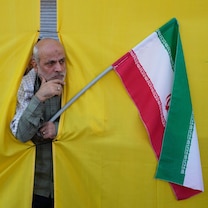
But the strait may still be a point of leverage for the Iranians. While President Donald Trump has said definitively that Iran will not impose tolls in the Strait of Hormuz -- even beyond the 60-day period explicitly specified in the initial agreement -- Iranian officials have talked about new "fees" that it says it has the right to impose under the memorandum.
Trump said Wednesday that he "didn't want to see economic catastrophe" if the chokehold in the waterway continued, prompting energy costs to likely skyrocket more as global supply dwindled.
"The one president I did not want to be was the late, great Herbert Hoover. I didn't want that and who knows what would have happened," Trump said, referring to the president who was in office when the Great Depression began in 1929.
Wright said on "This Week" that Trump understood the impact the war would have on the global energy market.
"Look, the president has been advised all along, despite the media proclamations, that there was enormous risk to energy flows to engage the Iran’s -- the Iranians on their nuclear program in a military fashion. But he simply was unwilling to leave to his successor in nuclear-armed Iran. That's just, there's just no greater risk to energy prices, to the economy of the world, than in nuclear-armed Iran," Wright said. "He knew he was going to drive up energy prices in the short run. He had the courage to take the action anyway, to destroy their air force, their navy, most of their nuclear program, and a lot of their military-industrial complex."
When he announced the initial strikes against Iran on Feb. 28, Trump said the U.S. was "going to destroy their missiles and raze their missile industry to the ground." On Wednesday, he appears to change his mind, saying: "A ballistic missile is not the same thing as what we're talking about, what we talked to earlier. But if Saudi Arabia and Qatar, and they all have some, I would say in relative proportion, I think, it's okay."
"How did we go from saying that the objective of the war was to destroy their missile program to saying that they've got a right to have missiles? Why the change?" Karl pressed.
"Well, look, I think it's a matter of degrees. We've probably degraded their ability to make missiles by 90%. That is a massive -- I think you could call that an obliteration of their missile-making industry. But the president recognizes, if they have -- if they become a normal nation, and they become a citizen of the Gulf community, for them to have a modest amount of missiles, as he said, proportional to their neighbors, that’s not -- that's not an unreasonable end to aim for," Wright said.
Related Topics

Popular Reads

ABC News Live