How Flock cameras are becoming an issue in the midterm elections
Automated license plate readers are collecting enemies across party lines.
Controversial automatic license plate readers -- and their most common camera type, Flock -- have become an emerging political flashpoint in midterm races across the country with candidates in key races weighing in on their use.
Flock is the largest brand of a type of camera called an Automated License Plate Reader (ALPR), used by governments across the country as part of law enforcement for everything from catching speeding to tracking the location of suspects in criminal cases. Flock Safety says their cameras helped authorities locate more than 10,000 missing people last year and aided roughly 1 million criminal investigations.

They have come under fire from privacy advocates and have been implicated in dozens of allegations of misconduct by police officers across the country who are accused of accessing the cameras for improper uses.
Flock says that they have responded with reforms focused on "strengthening privacy, accountability, and security." But critics argue those changes do not go far enough.
In Michigan, Democratic Senate candidate Abdul El-Sayed has an ad blaming his Republican opponent Mike Rogers, a former member of the House, for the proliferation of Flock cameras, saying they are part of a "regime pushed" by Rogers.
The ad uses video of Rogers defending surveillance from his time as chairman of the House Select Committee on Intelligence. Rogers left federal office before Flock cameras were created.
A spokesperson for Rogers' campaign said that Rogers "vehemently opposes unchecked use of Flock cameras to track law-abiding citizens. Security and liberty aren’t enemies. Good government protects both."

In a key House race in Michigan, the Democratic candidate in the state's 7th Congressional District, William Lawrence has been increasingly vocal on Flock cameras. He spoke at a Lansing City Council meeting on Aug. 26 in favor of ending Flock contracts, saying that "as the surveillance network becomes denser, the potential for abuse will grow even greater."
Last week, the Lansing City Council adopted a resolution to end all contracts with Flock safety and cease use of its 26 cameras in the city. The mayor must now approve any change.
Lawrence's Republican opponent, Rep. Tom Barrett, has "serious concerns" about the way governments have utilized technology to surveil citizens, according to a statement from Barrett's spokesman.
"State and local governments should engage with their residents on those decisions but that should include full transparency. The federal government should not be making these decisions for local communities," the spokesman said in the statement.
Barrett subsequently announced his support for legislation that would bar federal agencies from purchasing these license plate-reading systems.
The issue has also emerged in neighboring Wisconsin, with both candidates in the highly competitive gubernatorial race saying they oppose the use of Flock cameras.

Democratic candidate Milwaukee County Executive David Crowley issued a directive on Tuesday to limit camera operations in the county. His campaign said that as governor, he would work to "implement strict transparency and accountability laws that ensure Wisconsinites are not spied on."
His Republican opponent, Rep. Tom Tiffany, criticized Crowley’s response as insufficient. In a statement to ABC News, Tiffany's campaign said Crowley's "answer has always been to give government more power to watch you." Tiffany also vowed to pause all state funding to Flock cameras if elected and conduct a "task force to establish stronger privacy protections" and "penalties for misuse."
In deep-red Texas, Democratic governor candidate Gina Hinojosa released an ad attacking the state's Republican Gov. Greg Abbott for approving a state budget that allocated funds to the Texas Department of Public Safety to purchase Flock cameras. Three days later, Abbott ordered that no state funds be used to purchase Flock cameras.
Abbot spoke about the public backlash to the cameras on a podcast the day of the announcement, citing incidents of misuse of the technology and saying that the cameras are "going to be required to be used responsibly if they’re used at all."

There appears to be an appetite for regulation of the cameras on a federal level. Independent Sen. Bernie Sanders said that he will soon introduce legislation to "stop Flock and AI mass surveillance."
"We cannot allow America to become a surveillance state where a handful of AI oligarchs profit by giving the government the power to track our every movement," Sanders said last month.
Axios reported GOP Sen. Josh Hawley, the chair of the Judiciary Subcommittee on Crime and Counterterrorism, wrote a letter to the CEO of Flock Safety Garrett Langley that Congress "never authorized the network your industry has built."
In the House, several bills have been introduced to defund or restrict the use of federal funds for the cameras including the "Flock-Off Act."
Asked about the backlash against their cameras and the prospect of government regulation, a Flock spokesperson told ABC News, "Flock’s technology is an important public safety tool for law enforcement agencies across America, helping officers solve serious crimes and find missing people. We support thoughtful, bipartisan legislation that puts strong privacy, transparency, and accountability guardrails in place while preserving law enforcement’s ability to use technology responsibly to keep people safe."
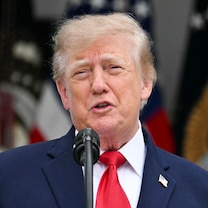
Asked about Flock cameras on Aug. 18, President Donald Trump said he was "studying" the issue and the administration would "have an answer as to our views on it over the next couple of weeks." When asked to clarify, the White House had no new comment on the issue.
Tech privacy experts have been challenging the use of these cameras in court for nearly a decade. Karen Gullo, senior writer for free speech and privacy at Electronic Frontier Foundation, a nonprofit advocating for digital rights and internet civil liberties, argued that the indiscriminate nature of the cameras has contributed to their unpopularity.
Gullo said "camera networks are mass surveillance, and so you know they're not only trained on certain people; they're trained on everyone, and it doesn't matter your ideological bent."
The public outcry against the cameras comes as backlash against big tech has become a rallying cry across the political spectrum -- from widespread opposition to data center construction to lawsuits against major social media companies for alleged harms to children.
A Gallup poll released in July found that 20% of Americans are confident in large technology companies -- a record low dating back to 2020. That same poll found that public faith in Congress fared even worse -- with only 9% of Americans expressing confidence.

Popular Reads
ABC News Live