Iran war has become political baggage for Vance: ANALYSIS
The vice president is the face for talks in a war he didn't initially support.
The U.S. war in Iran may put Vice President JD Vance, viewed by many as the MAGA heir apparent, in a politically tough position if he decides to run for president in 2028 as he is now the face for negotiations of a conflict he did not initially support and one that has become unpopular with Americans.
Vance has long opposed U.S. foreign intervention, one of his most notable stances being that the U.S. should stop providing aid to Ukraine in its war against Russia.

Prior to the initial strikes on Iran in late February, Vance made his reservations about the strikes known internally within the administration, ABC News reported.
During the 2024 presidential election, then-vice-presidential candidate Vance campaigned on President Donald Trump not starting any new wars.
Vance said on the "Tim Dillon Show" in October 2024 that going to war with Iran would not be in the interest of the U.S. and that it would be "massively expensive." Even before he became Trump's running mate, Vance wrote a Wall Street Journal op-ed that asserted that Trump's best foreign policy was not starting any wars.
When asked last month about the resignation of top counterterrorism official, Joe Kent, over opposition to the Iran war, Vance said those who serve the administration should support the president's decisions or resign.
"If you are on the team and you can't help implement the decisions of his administration, he has the right to make those decisions, then it's a good thing for you to resign. And I think that's exactly right," Vance said in Michigan on March 18 -- a day after Kent's resignation. "It's fine and discreet, but once the president makes a decision, it's up to everybody who serves in his administration to make it as successful as possible. That's how I do my job, and I think that's how everybody in the administration should do their job too."
In addition to being tasked with leading peace talks for a war he did not initially support, Vance has also traveled to different parts of the country, justifying the war as it continues to be unpopular with voters, especially those in the MAGA base.
Vance addressed how the war in Iran has split the Republican Party during a recent Turning Point USA event at the University of Georgia, saying he recognizes "that a lot of young voters don't love the policy that we have in the Middle East."
Referencing the midterm elections, Vance said that voters should not "disengage" when they don't agree with the administration over one issue. He was even heckled at different points about the war.
"I'm not saying you have to agree with me on every issue. What I'm saying is don't get disengaged because you disagree with the administration on one topic. Get more involved. Make your voice heard even more. That's how we ultimately take the country back," Vance said.
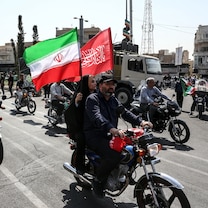

A recent Ipsos poll found that 51% of Americans say that the decision to take military action in Iran has not been worth it while only 24% say that it was.

Even before the Iran war, Vance was trying to handle another hot-button political issue: Soothing Americans' economic concerns, while Trump had downplayed them. Just a few days before the strikes in February, Vance said he believed Americans were about to get over the "hump" in the economy.
Trump has downplayed the war's impact on the economy, saying last Thursday that the economy was doing well and claiming that the U.S. was suffering from "fake inflation" due to rising oil prices. Americans are now paying, on average, $4 a gallon for gas -- up significantly since the start of the war.
The Iran war also opened the doorway to the back-and-forth saga of Trump attacking Pope Leo, who has criticized the war and called for peace. The situation led Vance to defend his boss and rebuke the pontiff over his criticisms of U.S. foreign policy, at one point, saying that the pontiff should "be careful when he talks about matters of theology."
"If you're going to opine on matters of theology, you've got to be careful, you've got to be sure it's anchored in the truth and that's one of the things that I try to do and that's certainly something I would expect from the clergy," Vance, who converted to Catholicism in 2019, said at the University of Georgia last Tuesday.
The situation led the U.S. Conference of Catholic Bishops to speak out against Vance's comments.
All of this will become political baggage for Vance that he will have to explain to Americans if he decides to run for president.
Vance has not yet officially said whether he will run in 2028.
Vance was tasked with leading the U.S. delegation in Islamabad for the first round of peace talks earlier this month, but despite marathon negotiations, the U.S. ultimately failed to secure a deal with Iran.
In a split-screen moment, it was Vance in Pakistan who had to announce that no deal had been struck with Iran, while Trump was in Miami, Florida, with Secretary of State Marco Rubio watching the UFC 327 match.
"The president told us, you need to come here in good faith and make your best effort to get a deal. We did that, and unfortunately, we weren't able to make -- make any headway," Vance said at the time.

Popular Reads
ABC News Live