Judge says court will investigate government officials in DC golf course case
The judge wants to know if lawyers tried to mislead her over Trump's plans.
A federal judge in Washington said Friday the court will investigate whether government attorneys committed ethical violations before the court in the case about the dispute over the East Potomac Golf Course, the public course in Washington, D.C., that President Donald Trump wants to close and renovate.
"The court will open a formal inquiry into whether agency officials and employees, including agency attorneys and [Justice Department] attorneys, have made misrepresentations to the court and otherwise violated applicable ethical rules," Judge Ana Reyes said from the bench. Reyes said she intends to appoint a special master to assist in the inquiry.

The case involves a lawsuit filed in February by the DC Preservation League to prevent the Interior Department from closing the historic golf course on the Potomac River and replacing it with a championship-style course favored by Trump. While that litigation was ongoing, the government agreed in court it would give notice to the DC Preservation League about any efforts to permanently alter the course.
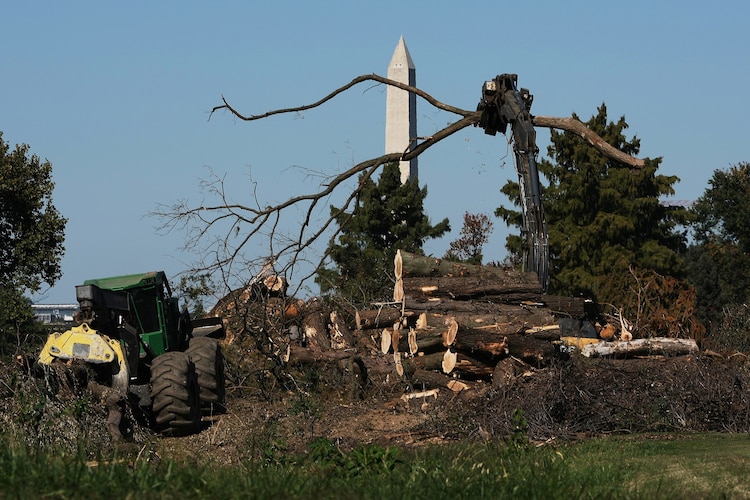
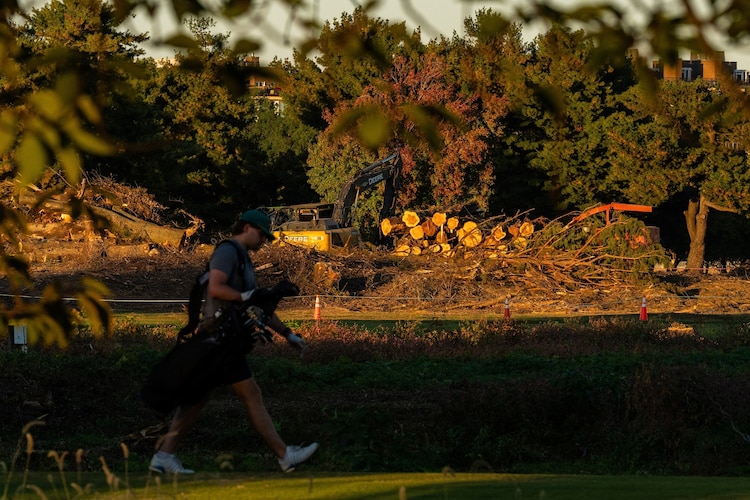
The government gave notice at 4:55 p.m. on the Friday before the Columbus Day/Indigenous Peoples Day three-day weekend that it would commence cutting trees at the course over weekend. It began work early the next morning, cutting down more than 400 trees and drawing the ire of Reyes and sparking a flurry of court activity to determine if the government has misled the court.
Reyes began Friday's motions hearing by reading the D.C. Bar rules of professional conduct, which govern the duty of lawyers appearing before the court to be truthful and to correct any false statements or fact or law that they make. She soon turned to Associate Attorney General Stanley Woodward, peppering him with questions about the government's representations about its plans to close the golf course on Nov. 15.
At issue was Woodward's Oct. 19 appearance in an evidentiary hearing in which he stated that "[w]ith regard to the November 15th date ... there is no plan to close the course."
But a week later, Trump posted on his social media platform that "We are closing the East Potomac Golf Course Site as scheduled on November 15th in order to renovate and rebuild for Competitive (with other such projects!), Safety, Modernization, and Aesthetic reasons."
Friday's hearing was scheduled to reconcile what Woodward told the court and whether any false statements were made to the court.

On Tuesday, Reyes issued a sharply worded 70-page ruling that criticized the administration over its plans for the golf course and concluded the administration likely violated environmental laws in the process.
"Rarely, if ever, has the United States Department of Justice urged a federal court not to believe the sitting President," Reyes wrote. "Not to believe him that a cabinet secretary has 'developed' a federal land project. Not to believe him that the secretary's agency will destroy a historic golf course already on the land. Not to believe him that 'Restoration work' will begin 'IMMEDIATELY!' Not to believe him that the course 'will be closed' for over a year. Not to believe what the President has repeatedly told the American public. And yet, here we are."
The judge ordered the administration to give the court 10 business days' written notice before making any irreparable modification to the course and East Potomac Park, where it is located.
Under withering questioning from Reyes on Friday, Woodward insisted as a legal matter no plan has been finalized.
Woodward had previously filed a motion to disqualify Reyes on the grounds that she was not impartial. That filing was rejected by Reyes.
The special master, who has yet to be appointed, will have a mandate to investigate whether government lawyers, which could potentially include top Justice Department officials, were involved in making false statements, withholding information from the court, failing to correct false testimony or interfering with the accuracy of written testimony.
The government will have an opportunity to object to the appointment.
Related Topics

Popular Reads
ABC News Live