Blinken calls on Moscow to commit to not invading, meet next week
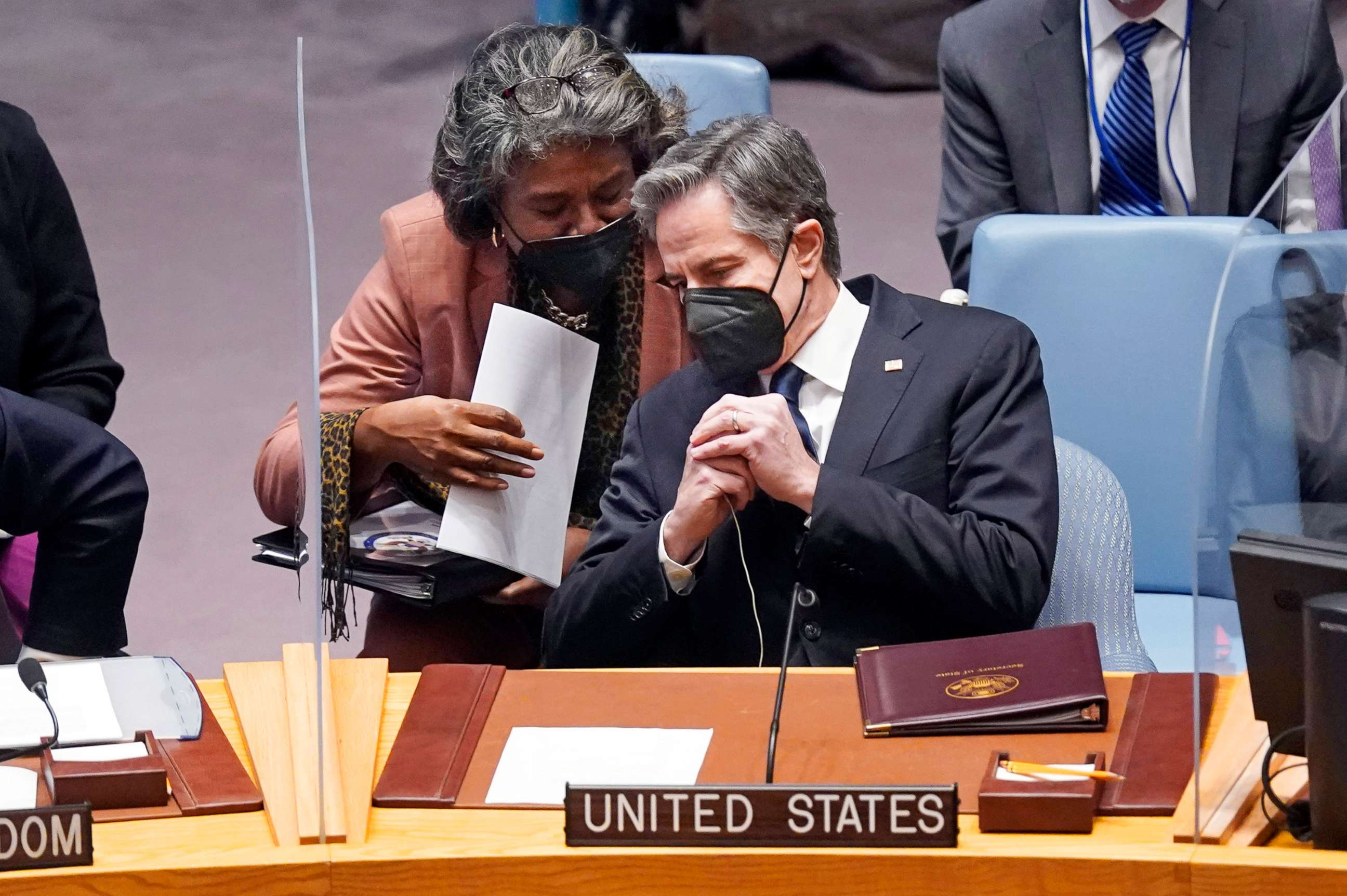
Secretary of State Antony Blinken closed his remarks to the U.N. Security Council meeting by challenging the Russian Federation to "announce today -- with no qualification of equivocation or deflection -- that Russia will not invade Ukraine, stated clearly stated plainly, to the world."
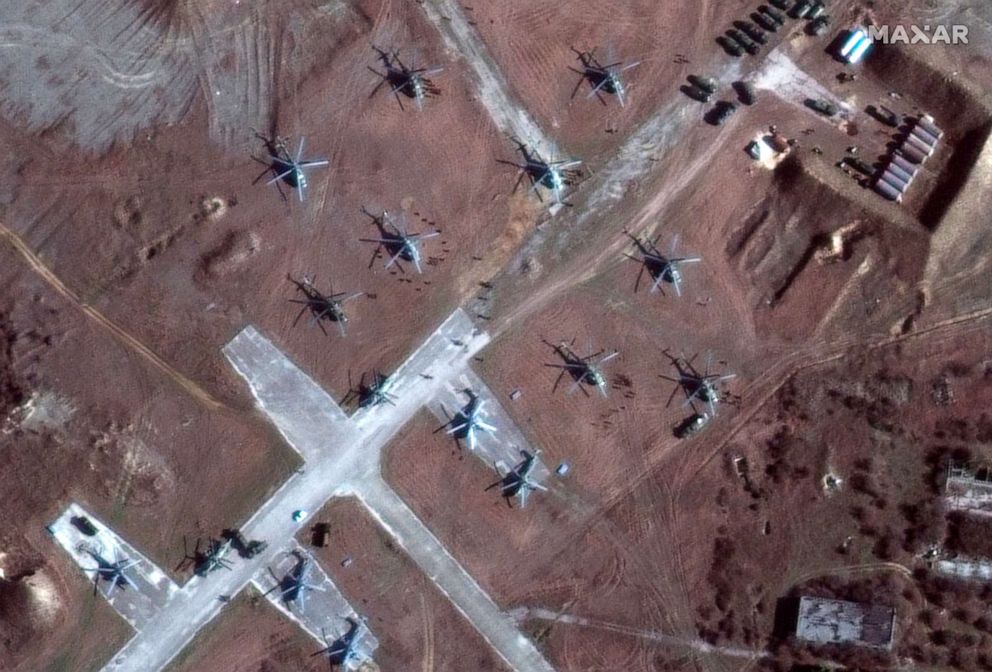
"And then demonstrate it by sending your troops, your tanks, your planes back to their various can hangars and sending your diplomats to the negotiating table," he added.
Blinken laid out how the U.S. believes Russia will attack Ukraine -- but said he would welcome being wrong and for Russia to withdraw.
"Now, I'm mindful that some have called into question our information, recalling previous instances where intelligence ultimately did not bear out," he said, apparently referring to a similar address then-Secretary of State Colin Powell famously made to the Security Council presenting U.S. intelligence to justify the Iraq War. "But let me be clear, I am here today not to start a war, but to prevent one," he said, citing allies that agree with U.S. assessments.
"If Russia doesn't invade Ukraine, then we will be relieved that Russia changed course and proved our predictions wrong. That would be a far better outcome in the course we're currently on. And we'll gladly accept any criticism that anyone directs at us," Blinken said.
He continued, "Russia can still make if there's any truth to his claim that is committed to diplomacy. Diplomacy is the only responsible way to resolve this crisis"
Blinken also said that he sent a letter to Russia's Foreign Minister Sergei Lavrov earlier Thursday proposing that they meet next week in Europe following their talks in recent weeks "to discuss the steps that we can take to resolve this crisis without conflict" and that U.S. is also proposing meetings at the NATO Russia Council and the OSC Permanent Council.
"These meetings can pave the way for a summit with key leaders in the context of de-escalation to reach understandings on our mutual security concerns," he added.