Trump admin updates: EU will buy $750 billion worth of U.S. energy under deal

The deal would impose a 15% tariff on most goods.

Last Updated: July 27, 2025, 4:52 PM EDT

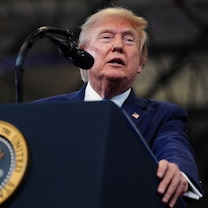
President Donald Trump and European Commission President Ursula von der Leyen announced on Sunday the U.S. and the EU had reached a deal that would impose a 15% tariff on most goods.

Under the deal, the EU will purchase $750 billion worth of energy from the U.S. and invest $600 billion more than it's already is.

Meanwhile, Trump's health secretary, Robert F. Kennedy Jr., plans to oust all 16 members of a task force that recommends which preventive health services, such as cancer screenings, must be covered by insurance.

Latest headlines:

Here's how the news is developing.
Jul 23, 2025, 10:57 AM EDT

Rubio announces investigation into Harvard’s eligibility for Exchange Visitor Program

The State Department is opening an investigation into Harvard's eligibility as a sponsor for its Exchange Visitor Program, Secretary of State Marco Rubio announced on Wednesday morning.

"To maintain their privilege to sponsor exchange visitors, sponsors must comply with all regulations, including conducting their programs in a manner that does not undermine the foreign policy objectives or compromise the national security interests of the United States," the statement read. "The American people have the right to expect their universities to uphold national security, comply with the law, and provide safe environments for all students. The investigation will ensure that State Department programs do not run contrary to our nation’s interests."

The Exchange Visitor Program offers visas for a range of educational or cultural programs, including for students, researchers, interns and au pairs.

Secretary of State Marco Rubio attends a meeting between the US president and the Philippine president in the Oval Office at the White House in Washington, July 22, 2025.
Yuri Gripas/Pool/EPA/Shutterstock

-ABC News' Shannon Kingston

Jul 23, 2025, 10:07 AM EDT

FEMA search and rescue chief resigns, following deadly Texas floods

The head of FEMA's Urban Search and Rescue branch, Ken Pagurek, resigned on Monday, multiple sources told ABC News.

Pagurek told colleagues he was frustrated by the Department of Homeland Security's efforts to dismantle FEMA and by new hurdles that slowed the agency's response to the catastrophic flooding in central Texas, according to sources familiar with the matter.

Sources said he pointed to a new DHS policy requiring all spending over $100,000 to be personally approved by Secretary Kristi Noem as a key factor behind the delays and ultimately his decision to step down.

Pagurek, who did not respond for a request for comment, had worked with FEMA's search and rescue operations for more than a decade and had served as chief for the past year.

CNN first reported his departure.

A spokeswoman for the Department of Homeland Security dismissed the allegations made by Pagurek.

"The attempt to spin a personal career decision into some big scandal is ridiculous. It is laughable that a career public employee, who claims to serve the American people, would choose to resign over our refusal to hastily approve a six-figure deployment contract without basic financial oversight," Tricia McLaughlin said in a statement. "If anyone is upset by the end of unchecked, blank-check spending under President Trump's administration, that says more about them than it does about us."

Members of the FEMA Urban Search and Rescue Task Force search a flood damaged area with a search canine in the aftermath of Hurricane Helene along the Swannanoa River, Oct. 4, 2024 in Asheville, North Carolina.
Mario Tama/Getty Images, Files

-ABC News' Will Steakin

Jul 23, 2025, 9:38 AM EDT

Bessent celebrates 'innovative' Japan trade deal, downplays consumer impact from tariffs

During an interview on "Morning Joe" Tuesday, Treasury Secretary Scott Bessent discussed the trade framework agreed upon with Japan.

He said the administration's negotiations lasted 75 minutes in the Oval Office with the president.

When asked if Trump realizes the consumer pays the tariffs, Bessent disagreed.

Treasury Secretary Scott Bessent attends a meeting between President Donald Trump and Philippine President Ferdinand Marcos Jr., in the Oval Office at the White House in Washington, July 22, 2025.
Kent Nishimura/Reuters

"Who pays the tariffs is the choice. And what we've seen thus far is that the manufacturers are eating a substantial portion of the tariff and taking it into their profit margins. So you might see, for instance, Toyota hasn't raised prices and they may choose to go for market share rather than raising prices," Bessent claimed.

When asked whether Americans will feel any impact from tariffs, particularly holiday goods, Bessent reaffirmed that manufacturers have largely absorbed the costs.

“I think what we've seen so far is that the manufacturers have been eating it a lot, or the exporters have been taking a lot of the price or the tariff adjustment. I think we're also seeing a lot of the retailers do it,” he said.

-ABC News' Kelsey Walsh

Jul 23, 2025, 6:12 AM EDT

Japanese leader reacts to US tariff deal, calling it a win-win

Shigeru Ishiba, Japan's embattled prime minister, is playing up the agreement between Tokyo and Washington as a win-win.

"With the national interests of both countries in mind, we were able to reach an agreement at this time," Ishiba said.

He touted that despite Japan having a trade surplus with the U.S., the tariff was cut to an unparalleled level, 15 percent. Ishiba assured his countrymen that key strategic sectors like semiconductors and pharmaceuticals were now covered by a clause ensuring Japan would not be treated less favorably than other trade partners in the event of future tariff hikes.

Japan's Prime Minister Shigeru Ishiba explains the contents of the Japan-US tariff agreement to reporters, at the prime minister's office in Tokyo on July 23, 2025.
JIJI Press/AFP via Getty Images

Ishiba painted a picture of a stronger partnership ahead.

"Japan will invest in the United States across key sectors vital to economic security, such as semiconductors, pharma, steel, shipbuilding, critical minerals, aviation, energy, autos, AI, and quantum tech," he said.

Japan's chief negotiator, Economic Revitalization Minister Ryosei Akazawa, had been working on a deal since April. He's made eight trips to Washington, pressing the case in person. After the deal news broke, he tweeted a photo of himself at the White House: "Mission complete. Sincere thanks to all involved."

In this file photo, President Donald Trump waves as he greets Japanese Prime Minister Shigeru Ishiba upon arrival outside the West Wing of the White House in Washington, DC, on Feb. 7, 2025.
Mandel Ngan/AFP via Getty Images

Shares rallied. Tokyo's benchmark Nikkei 225 index went up 3% after news of the deal.

While touting the deal as a diplomatic success, the prime minister faces deep uncertainty at home. His party no longer holds a majority in either house.

-ABC News' Anthony Trotter

Related Topics

Sponsored Content by Taboola