Feb 10, 2021, 3:46 PM EST
Senate takes short break
The Senate is taking another roughly 15-minute break before continuing with arguments from the House impeachment managers.
Biden remembered those who were killed and called for unity going forward.
Former President Donald Trump's historic second impeachment trial ended with a 57-43 vote to acquit in the Senate. He faced a single charge of incitement of insurrection over his actions leading up to the Jan. 6 riot at the U.S. Capitol.
The Senate is taking another roughly 15-minute break before continuing with arguments from the House impeachment managers.
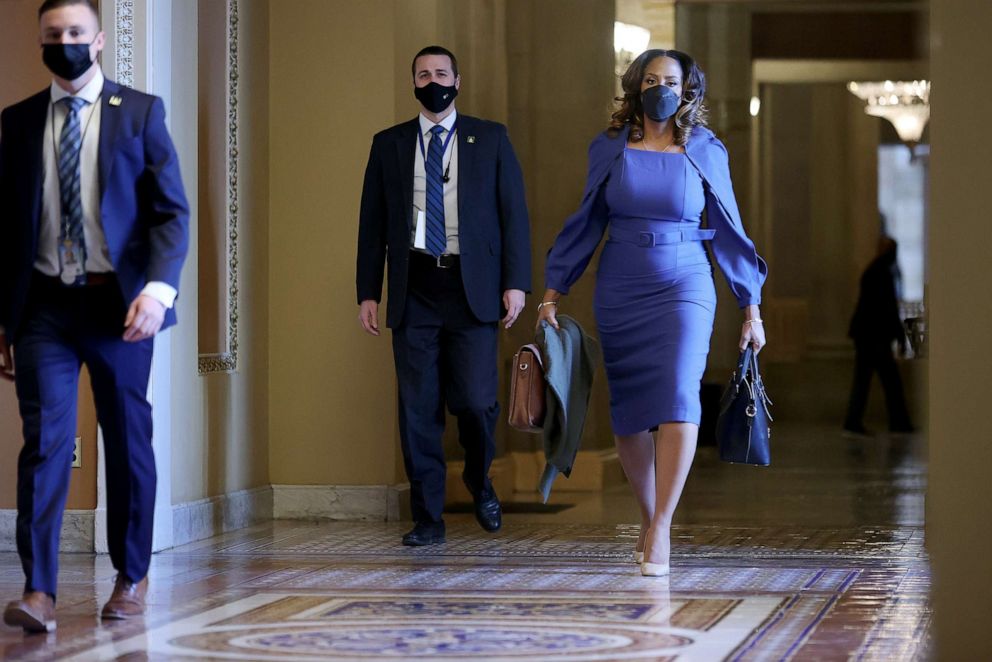
Congresswoman Stacey Plaskett, D-Virgin Islands, argued Trump's repeated patterns and practices of violent incitement led to the Jan. 6 attack on the Capitol and went through social media posts that she claimed were monitored by Trump officials, which spelled out his supporters' plans for violence on his behalf.
"Donald Trump over many months cultivated violence, praised it and then when he saw the violence his supporters were capable of he channeled it to this big, wild, historic event," Plaskett said. "He made sure that those violent people would literally march right here -- to our steps -- from the Ellipse to the Capitol to 'stop the steal' -- his cavalry," she called them.
She also said that a permit to march from the Ellipse to the Capitol was not authorized until Trump got involved in planning.
"The permit stated in no uncertain terms that the march from the Ellipse was not permitted. It was not until after President Trump and his team became involved in the planning that the march from the Ellipse to the Capitol came about," she said.
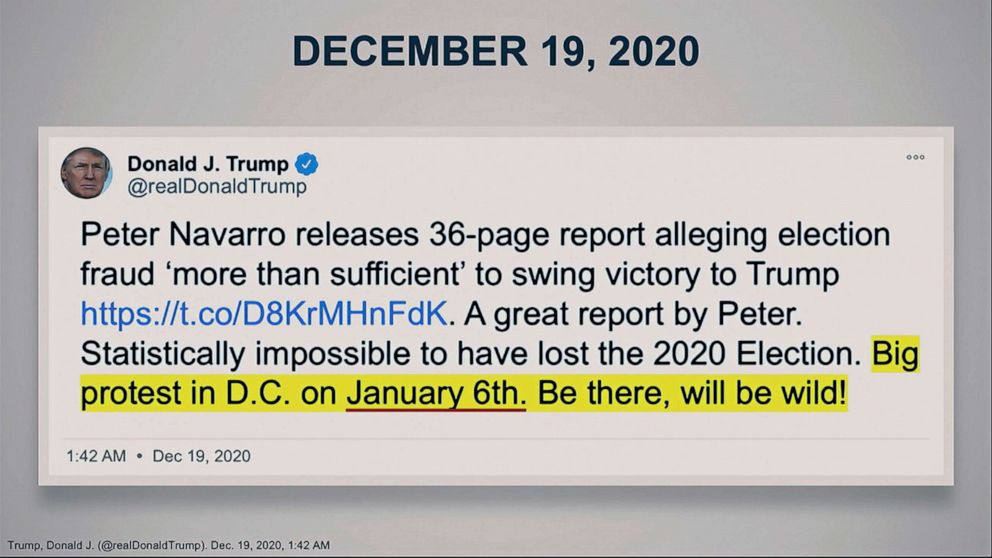
Plaskett repeated, as most managers have, Trump's Dec. 19 tweet to "save the date" before ticking through disturbing social media posts from Trump supporters leading up to the Jan. 6 event -- showing the attack, at least for some, was meticulously planned out.

"They treated it as a war and they meant it," Plaskett said. "His supporters took it as a call to arms to attack the Capitol. There were detailed posts of plans to attack online."
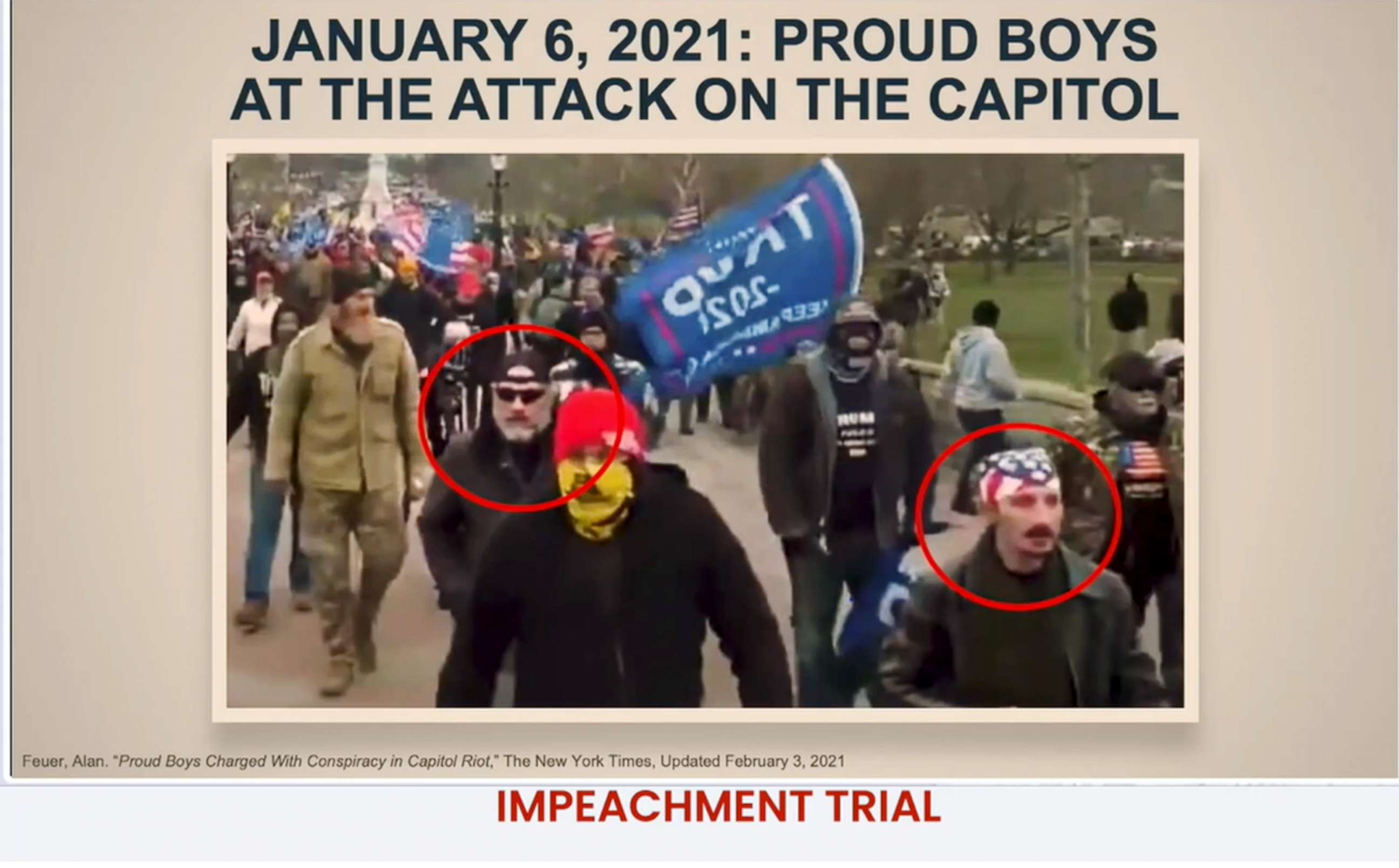
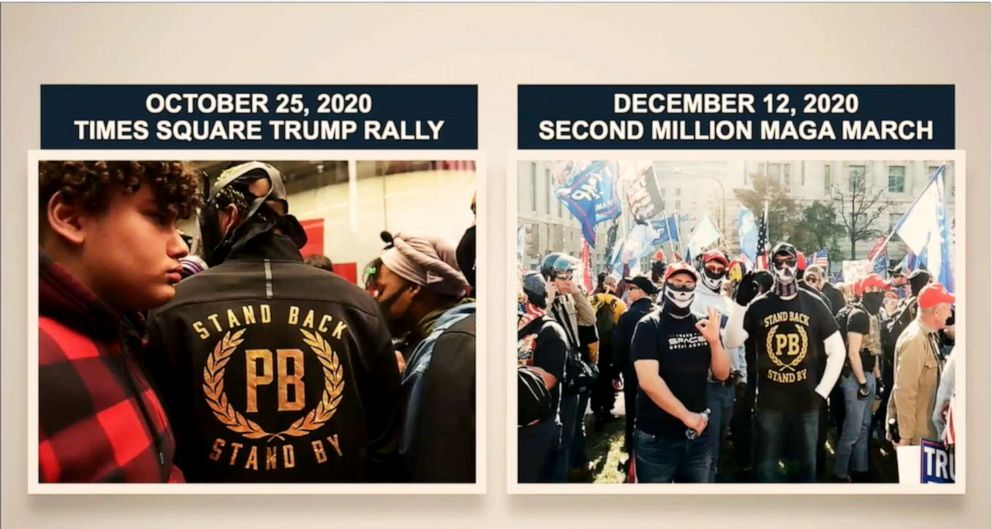
She closed her remarks using Trump's own words to his "cavalry" -- once he had them assembled before him in Washington.
"When those thousands of people were standing in front of President Trump, ready to take orders and attack, this is what he said: 'We're going to the Capitol, and we fight. We fight like hell, and if you don't fight like hell, you're not going to have a country anymore,'" Plaskett said. "And that's why this is different, and that's why he must be convicted and disqualified."
Inside the Senate chamber, some senators have been listening intently and taking notes, while others chatted with each other or moved in and out of the chamber.
One moment when everyone in the chamber seemed to turn to pay attention -- including Sen. Josh Hawley, R-Mo., up in the gallery and those on the floor who were otherwise distracted: When House manager Rep. Joe Neguse quoted rioters saying they were inspired by Trump. Neguse showed slides of tweets and news stories and played clips of video.
After this moment played out and Neguse turned it over to Rep. Joaquin Castro, D-Texas, there was a lot of shuffling in the chamber and a number of senators got up to go to their respective cloakrooms.
Two of Trump’s staunchest allies left the floor to confer: Sens. Lindsey Graham, R-S.C., rose and tapped Ted Cruz, R-Texas, on the shoulder. They then stood in the cloakroom, in view of reporters through the glass in the doors, and spoke for several minutes.
Of all senators taking notes, Sen. Bill Cassidy, R-La., was the most notable -- he voted with Democrats Tuesday night and said he was approaching the trial as an impartial juror. He wrote vigorously and almost unceasingly until a break was called.
Sen. Ben Sasse, R-Neb., also took notes on a stack of small notecards. When videos of protesters shouting "stop the steal" were shown by House managers, almost all of the members looked up at the screen. The senators seemed less interested during videos of president Trump.
Rep. Eric Swalwell, D-Calif., read a tweet of Trump's that mentioned Senate Minority Leader Mitch McConnell and Sens. John Thune, R-S.D., and John Cornyn, R-Texas., by name. When the tweet was read, Cornyn looked directly at Thune. But Thune stared straight ahead at the screen. McConnell was stoic and remained still.
-ABC News' Allison Pecorin and Kathrine Faulders
Congresswoman Stacey Plaskett, D-Virgin Islands, was tasked with arguing the case for how Trump was aware of the violence on Jan. 6 and amplified supporters' plans for insurrection instead of calling them off, a pattern the president had already established in his repeated refusals to directly denounce violence in his presidency, she said.

"Some of you have said there's no way the president could have known how violent the mob would be. That is false, because the violence, it was foreseeable," Plaskett said. "The violence that occurred on Jan. 6 -- like the attack itself -- did not just appear. You'll see that Donald Trump knew the people he was inciting. He saw the violence that they were capable of, and he had a pattern and practice of praising and encouraging that violence never, ever condemning it."
"This violent attack was not planned in secret," Plaskett continued, noting many rioters -- whom she referred to as "Trump's cavalry" -- were proud to be a part of the attack. "The insurgents believed that they were doing the duty of their president. They were following his orders, and so they publicized it openly, loudly, proudly -- exact blueprints of how the attack would be made."
"He fanned the flame of violence and it worked," she said. "There are many examples where the president engaged in this pattern and I'm just going to walk you through a few of them."
Plaskett went on to tick through instances to support the managers' case including Trump calling on the Proud Boys to "stand back and stand by" in the first 2020 presidential debate -- instead of denouncing them -- and tweeting videos praising his supporters attempting to drive a Biden campaign bus off the road ahead of the election.
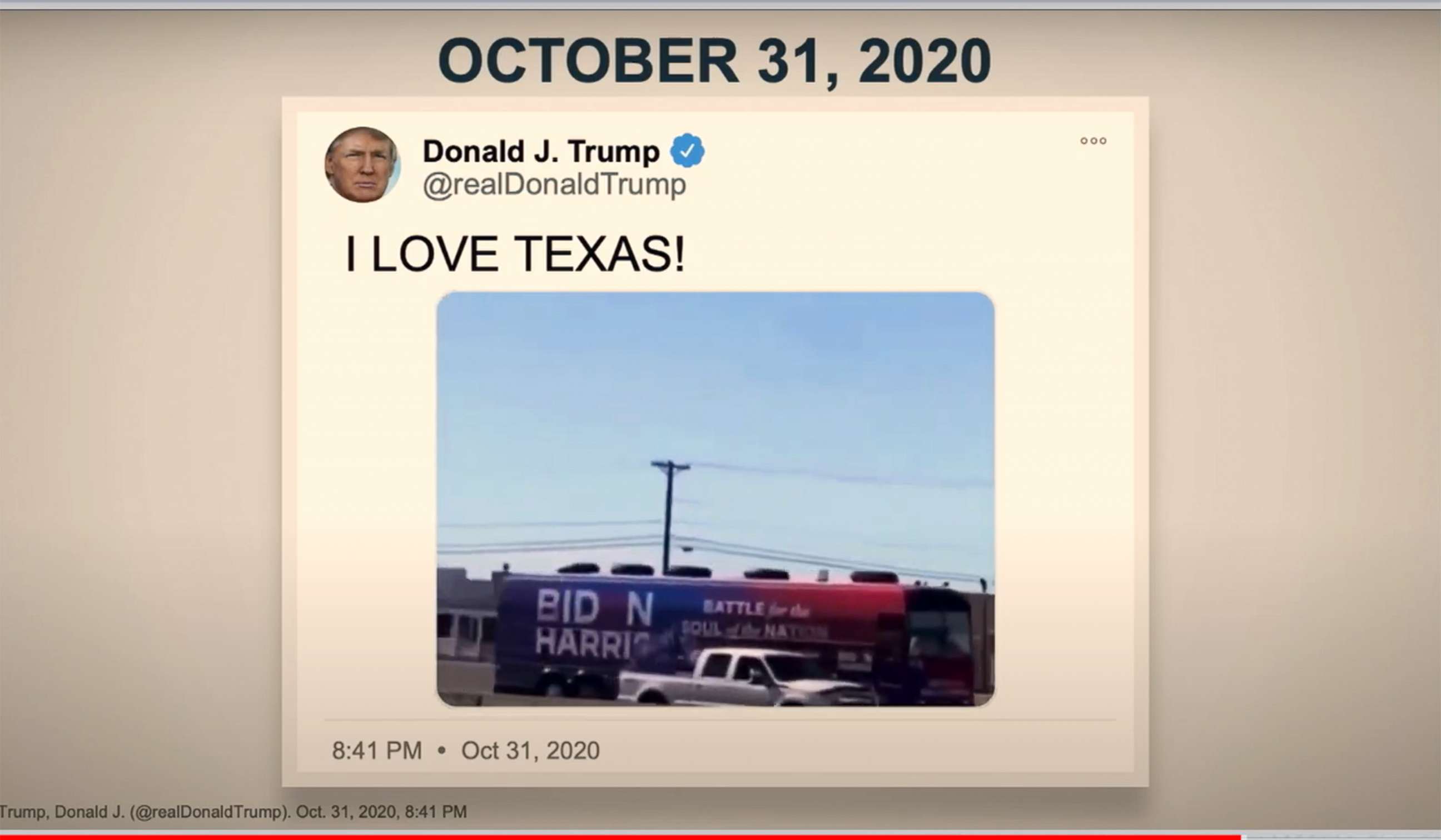
Lead impeachment manager Rep. Jamie Raskin, D-Md., in introducing Plaskett called it a moment of "special pride" because Plaslett is not only the first delegate ever to be on a team of impeachment managers in American history, but she is also but also Raskin's former law student.