Trump claims military victory in Iran. But is the mission accomplished? ANALYSIS
What effect U.S. strikes had on achieving peace in the Middle East is uncertain.
The Trump administration loudly and proudly declared a military victory in Iran this week.
"Total and complete victory. 100 percent. No question about it," President Donald Trump told a reporter with the AFP.
"This is a victory for the United States that President Trump and our incredible military made happen," White House press secretary Karoline Leavitt said at a press briefing on Wednesday.
"This morning, a big day for world peace. Iran wants it to happen. They've had enough. Operation Epic Fury was a historic and overwhelming victory on the battlefield. A capital 'V,'" Defense Secretary Pete Hegseth said during a Pentagon briefing on Wednesday.
Their comments came after an 11th-hour deal for a ceasefire following President Trump's apocalyptic threat to wipe out a "whole civilization."
But military dominance doesn't always mean strategic success.
Militarily, yes, the war was unquestionably one-sided.
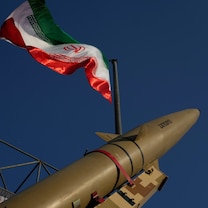
The joint U.S. and Israeli mission overwhelmed Iranian defensives. More than 10,000 military targets were destroyed inside Iran and the damage done by Iran was totally disproportionate.
But what effect those strikes had on achieving peace in the Middle East is still uncertain.

Iran still maintains a stranglehold on the critical oil thoroughfare in the Strait of Hormuz, which flowed freely before the start of the war.
It still has highly enriched uranium that it could use to build a nuclear weapon -- a major impetus for launching the war.
Remnants of the hardline Iranian regime still remain in power.
And, although its capabilities are significantly diminished, Iran still can strike U.S. interests in the region.
None of these issues were resolved through the bombing campaign. Instead, they all hinge on diplomacy.
Vice President JD Vance will lead a delegation of U.S. diplomats to Islamabad, Pakistan, this weekend to work on these remaining points. They've given themselves two weeks to do it.
Karim Sadjadpour, a senior fellow at the Carnegie Endowment for International Peace, says it's an unrealistic timeline.

"It took the Obama administration nearly two years to negotiate just a nuclear agreement with Iran," Sadjadpour wrote on X. "There's no chance the Trump administration gets a more comprehensive deal -- including Hormuz, nukes, missiles, and proxies -- in two weeks."

The starting point for negotiations is also unclear.
The president has delivered conflicting messages about the basis for these talks.
When the ceasefire was announced, he said the Iranians offered a 10-point plan that he believed was "a workable basis on which to negotiate." But the White House has offered no clarity on those points. Instead, it's lashed out at what the Iranians have said is in the proposal, calling those ideas a "garbage" wish list.
The war also has strategic implications beyond the Middle East. Here at home Americans are paying over $4 a gallon for gas, while countries like Russia and China see potential benefits.
Ryan Hass, a China analyst with the Brookings Institution, says the war in Iran gives China what it wants most from the U.S.
"The thing that the Chinese most want is space, strategic space. And as they watch the United States send Marines from Japan, send a carrier strike group from Asia, send parts of the Terminal High Altitude Air Defense system from South Korea, pack up parts of Patriot defense missile systems from Asia and send them to the Middle East, what they are getting is space," Hass said in a recent Brookings podcast.
Additionally, the war in Iran has been an economic boon for Russia, as it struggles to financially wage its now 5-year war in Ukraine.
"Russia has emerged as an early beneficiary of the U.S.-Israeli war on Iran, aided by higher oil revenues, rising demand for other products it produces like fertilizers, and the prospect of air defense resources for Ukraine being diverted to the Middle East," writes Thomas Graham, distinguished fellow at the Council on Foreign Relations.

There's also the continued stress President Trump has put on the NATO alliance as a result of the Iran war. Whether it's a valid criticism or not, he's expressed frustration that not all NATO countries assisted the U.S. in its war in Iran, with several allies flatly saying this is not their fight. He's called this war a test for NATO and says they failed.
Both Trump and Secretary of State Marco Rubio met with the NATO Secretary General on Wednesday.
Trump later said he was "disappointed" in the alliance and Rubio said in an interview with Fox News said that once the conflict is resolved "we are going to have to reexamine that relationship."
So, while the bombs may have stopped, the dust has yet to settle.
Related Topics

Popular Reads

ABC News Live