Trump meets Netanyahu amid rising tensions with Iran
The two men held a closed Oval Office meeting amid Trump's threats to Iran.
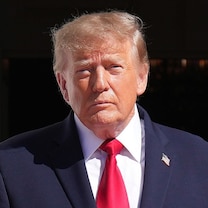
President Donald Trump met with Israeli Prime Minister Benjamin Netanyahu Wednesday at the White House amid rising tensions in the Middle East as Trump threatened to attack Iran if it failed to negotiate over its nuclear program.
This was the Israeli prime minister’s seventh trip to Washington since President Trump returned to the White House 13 months ago.
"I will present to the president our outlook regarding the principles of these negotiations -- the essential principles, which, in my opinion are important not only to Israel, but to everyone around the world who wants peace and security in the Middle East,"
Netanyahu told reporters before boarding his flight to the United States on Tuesday.

Netanyahu had initially planned to visit Washington later this month but moved his trip up, saying last week he planned to discuss ongoing negotiations between the U.S. and Iran with the president.
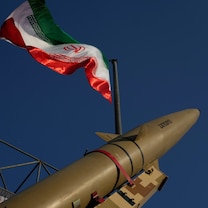
Sources told ABC News that Netanyahu would personally present the latest Israeli intelligence to Trump on Iran’s efforts to rebuild its ballistic missile program and nuclear program.
Following the meeting, Trump posted on social media that "nothing definitive" was reached with the Israeli prime minister and that he insisted that negotiations with Iran continue to see if a deal can be reached.
Trump said he told Netanyahu that a deal with Iran is his preference, but warned that if a deal can't be reached, "we will just have to see what the outcome will be," potentially leaving the door open to military action against Iran.
"Last time Iran decided that they were better off not making a Deal, and they were hit with Midnight Hammer -- That did not work well for them. Hopefully this time they will be more reasonable and responsible," Trump said.
Netanyahu’s visit to the White House Wednesday was met with little fanfare as U.S. pool cameras were not allowed into the Oval Office for their meeting, as is usually the norm with previous official visits by foreign dignitaries, but Netanyahu's office posted a photo on his account.
Netanyahu arrived at the White House privately, with cameras catching only his vehicle's arrival.
Netanyahu's visit Wednesday comes as the Trump administration is set to hold a second round of talks with Iranian officials in the coming days about Iran’s nuclear program.
Iran became embroiled with political protests late last year over economic concerns which escalated into a brutal crackdown by the Iranian regime, leading to thousands of reported deaths and tens of thousands of arrests.

At the time, Trump vowed to retaliate and ordered a significant buildup of U.S. military forces in the region.
U.S. officials have repeatedly asserted that they should first pursue a diplomatic approach with Iran.

Secretary of State Marco Rubio last week said if talks with Iran are expected to be meaningful, Iran must wind down its nuclear ambitions, disassemble its ballistic missiles program, and cut ties with terrorist proxies in the region.


"I think in order for talks to actually lead to something meaningful, they will have to include certain things, and that includes the range of their ballistic missiles, that includes their sponsorship of terrorist organizations across the region, that includes a nuclear program, and that includes the treatment of their own people," Rubio told reporters last week at the U.S. State Department.

The talks last week between U.S. envoys Steve Witkoff and Jared Kushner and the Iranian officials in Oman were the first in person talks between the two delegations since talks broke down last June, when Israel and Iran fought for 12 days.
The U.S. joined the attack by sending stealth bombers to strike Iranian nuclear facilities, which American intelligence later determined damaged Iran's nuclear project, but did not destroy it.
Netanyahu has backed U.S. demands for a comprehensive deal with Iran, saying last week that the talks must include restricting Iranian missiles and proxy militias.
Iranian authorities have consistently rejected U.S. demands that a deal should include Iran’s ballistic missile program and its regional proxies.
"No one can do even the slightest thing against our missiles. Our missiles are not part of the negotiations, and they won't be,” warned Iranian Foreign Minister Abbas Aragchi.

Ahead of his Wednesday visit, Trump told Axios in an interview on Tuesday that he's considering sending a second aircraft carrier strike group to the Middle East to prepare for military action if negotiations with Iran fail.
"Either we will make a deal or we will have to do something very tough like last time," Trump told Axios.
Trump referenced the armada heading towards the region and said that a second one may follow, adding that he’s "thinking" about sending another aircraft carrier strike group.
Trump claimed in the interview that Iran "wants to make a deal very badly" and is engaging more seriously than in previous talks due to the military threats.
"Last time they didn't believe I would do it," Trump said, alluding to his decision to strike Iran's nuclear facilities in June.
Trump told Axios it was a "no-brainer" for any deal to cover Iran's nuclear program, but that he also thought it would be possible to tackle Iran's ballistic missile stockpiles.
"We can make a great deal with Iran," Trump said to Axios.
ABC News' Hannah Demissie and Jordana Miller contributed to this report.
Related Topics

Popular Reads
ABC News Live