'This Week' Transcript 5-10-26: Amb. Mike Waltz, Dr. Michael Osterholm & Adm. William McRaven
This is a rush transcript of "This Week" airing Sunday, May 10.
A rush transcript of "This Week with George Stephanopoulos" airing on Sunday, May 10, 2026 on ABC News is below. This copy may not be in its final form, may be updated and may contain minor transcription errors. For previous show transcripts, visit the "This Week" transcript archive.
(COMMERCIAL BREAK)
MARTHA RADDATZ, ABC “THIS WEEK” CO-ANCHOR: With concerns over the hantavirus, the ship at the center of the deadly outbreak arriving in the Canary Islands moments ago.
“THIS WEEK” starts right now.
(BEGIN VIDEO CLIP)
RADDATZ: Urgent containment.
UNIDENTIFIED FEMALE: The risk to the public remains low, but we’re following that, reassessing that regularly.
RADDATZ: The race to curb the hantavirus as officials track infections across the world.
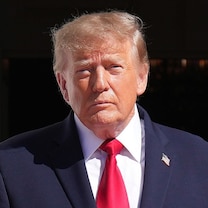
DONALD TRUMP, PRESIDENT OF THE UNITED STATES: We have a lot of people, a lot of great people studying it. It should be fine. We hope.
RADDATZ: How concerned should you be? And just how dangerous is the virus? A top infectious disease expert is here to answer those critical questions.
Shaky ceasefire.
TRUMP: They trifled with us today. We blew them away.
UNIDENTIFIED MALE: We are nowhere close to an agreement. President Trump keeps saying that we are.
TRUMP: The U.S. and Iran trade fire in the Strait of Hormuz, but can they reach a deal? This morning, U.S. ambassador to the U.N., Mike Waltz, joins us. And the retired admiral at the center of the mission to kill Osama bin Laden, how does he think this war will end?
Key battleground.
So, all eyes on this -- on this town, on this county.
UNIDENTIFIED MALE: We’re -- all eyes are on Allentown.
RADDATZ: We traveled to Pennsylvania to hear from voters after a tumultuous ten weeks of war.
UNIDENTIFIED MALE: It scares me to death to have Iran with a nuclear bomb.
UNIDENTIFIED MALE: His, you know, adventure in Iran is absolutely disastrous.
RADDATZ: Plus, the roundtable on the fallout from the escalating redistricting battle.
And, is it a UFO? The dramatic images and video from never before seen UFO files just released by the Pentagon
(END VIDEO CLIP)
ANNOUNCER: From ABC News, it’s “THIS WEEK.” Here now, Martha Raddatz.
RADDATZ: Good morning, and welcome to "This Week."
As we come on the air this morning, the cruise ship that is at the center of the hantavirus outbreak has reached its port in the Canary Islands. Those passengers finally getting off the ship. Groups of them shown here in protective gear, disembarking this morning. Many of them set to take repatriation flights to their home countries today.
For many of us, the mere mention of an infectious disease outbreak brings back the terrible memories of the COVID epidemic in 2020. But the World Health Organization is urging calm this morning. The director general penning an open letter to the people of Tenerife, where the ship has arrived, writing in part, “I know you are worried. I know that when you hear the word outbreak and watch a ship sail towards your shores, memories surfaced that none of us have fully put to rest. But I need you to hear me clearly. This is not another COVID. The current public health risk from hantavirus remains low.”
He went on to say, “the best immunity any of us has is solidarity.” Spanish officials demonstrating that this morning, receiving the cruise ship carrying nearly 150 people from 23 countries, including 17 Americans who will now head back home to the U.S. on a chartered plane. None of the passengers arriving this morning are symptomatic.
The WHO says there are six confirmed and two probable hantavirus cases from the ship so far. Of those eight, three people have already died, and there’s no known cure for the virus. President Trump saying, quote, “It’s very much, we hope, under control.”
But concerns still remain. We will be joined here in studio by a top infectious disease specialist. But first, our Maggie Rulli is on the ground in Tenerife, where that cruise ship just arrived.
Good morning, Maggie.
MAGGIE RULLI, ABC NEWS FOREIGN CORRESPONDENT: Hey, Martha, good morning.
Now, you can see that Dutch cruise ship right here, the MV Hondius. It pulled in around 5:30 a.m. this morning local time.
And, Martha, if you look around me, you can see, there is media here from all over the world. They’re tracking those roughly two dozen nationalities on board as people are being ferried off country by country. And, Martha, one doctor on board told us that they’re only allowed to bring hand luggage with them. That all their baggage will remain on board and be disinfected.
(BEGIN VIDEOTAPE)
RULLI (voice over): This morning, that cruise ship at the center of the deadly hantavirus outbreak, now anchored offshore of Tenerife in the Canary Islands. The remaining passengers finally setting foot on land again.
RULLI: And, right here, these are some of the first people allowed off that ship. We can see a small group on board right now. They’re dressed in full blue protective gear. I saw some of
them waving back to people on the ship as they’re getting ferried to the shore right here.
RULLI (voice over): The Spanish government saying the passengers will have zero contact with anyone on the island, as officials continue to urge calm.
BORIS PAVLIN, WHO EMERGENCIES PROGRAMME TEAM LEAD FOR FIELD AND HUMANITARIAN EPIDEMIOLOGY: The average person has no reason to worry the. The -- this Andes hantavirus has spread in limited amount from human to human. These folks who are coming off right now, first of all, they’re not sick. They’re asymptomatic. They are just being monitored as a precautionary measure.
RULLI (voice over): A WHO doctor on board sending us this video of the evacuation. The evacuated passengers now en route to their home countries as others wait on board. Of the 150 passengers who were on the boat, seventeen are Americans who the CDC says will not be required to quarantine upon their return to the United States.
DEB HOURY, FORMER CDC OFFICIAL: No mandatory quarantine is the right path to go with the data we have. It’s only symptomatic people that are passing on hantavirus. And so, people that are asymptomatic, they are not at risk from -- based on what we know today.
RULLI: Still, local authorities in the U.S. are tracking at least nine Americans across six states, while none have shown any symptoms, they could potentially have been exposed. Authorities have been investigating the eight hantavirus cases stemming from the cruise ship, as well as its origins, after three passengers died from the disease. But despite the concern over the virus, passengers aboard the cruise insist the atmosphere remained positive.
Dr. Stephen Kornfeld is an American oncologist from Oregon on the Hondius, taking over after the doctor on board fell ill treating hantavirus patients. He tells ABC that nobody on the ship has had symptoms in well over a week.
DR. STEPHEN KORNFELD, MV HONDIUS PASSENGER: There’s been a lot of recriminations and finger-pointing. And I’ve lived all this, and I am a physician. Even in retrospect, I don’t think any clues were missed. I have nothing but accolades for this -- this boat and everybody on it.
(END VIDEOTAPE)
RADDATZ: And, Maggie, for those Americans, they’ll be heading home today. How are U.S. officials handling their return?
RULLI (on camera): Yes, Martha, officials are telling us that those 17 Americans on board will be the last to be evacuated today. But once they are, the State Department has announced a special flight to take them back to the States. And we know that the CDC is already waiting for them at the airport right now. They’re going to escort them back to the states, where they’ll go to the National Quarantine Unit in Omaha, Nebraska.
And, Martha, if that sounds familiar, it’s because it’s the exact same facility used to quarantine people during the COVID-19 pandemic in those early days.
And, Martha, I also just had the chance to ask a spokesperson here for the Ministry of Health in Spain what he thought about the fact that America is not enforcing a mandatory quarantine for these passengers. And he said, I don’t think it’s the best practice from a technical or scientific point of view.
Martha.
RADDATZ: Thank you, Maggie.
I’m joined now by one of the top infectious disease specialists in the country, Dr. Michael Osterholm of the University of Minnesota.
It’s good to see you this morning.
DR. MICHAEL OSTERHOLM, DIRECTOR, UNIVERSITY OF MINNESOTA CENTER FOR INFECTIOUS DISEASE RESEARCH & POLICY: Thank you.
RADDATZ: Most Americans, of course, had never even heard of the hantavirus. So, you can understand the kind of fear. But we are told again and again, this is not COVID-19. Don’t worry. You’re among those people saying that.
OSTERHOLM: Yes. Thank you. And first of all, Happy Mother’s Day to you.
RADDATZ: Thank you.
OSTERHOLM: In fact, the good news is, is that in a sense it is hantavirus and not another coronavirus or an influenza virus. This is one that has very limited ability to be transmitted person to person. In fact, it’s a rare exception. And so, we have no question about the fact that this really is on the end of its run right now. And there very possibly may be not -- no additional cases from here on out.
RADDATZ: And I know originally you catch it from rat feces or urine. How many cases are there generally in a year?
OSTERHOLM: In the United States, there are about 30 cases a year on average. And they mostly occur west of the Mississippi. About 96 percent are west of the Mississippi. And it has to do with the kind of mouse that lives west of the Mississippi, a deer mouse. And they’re the ones that really contain the virus.
In terms of what happens around the rest of the world, it’s different with different strains of the hantavirus. And the one that really raised our concerns with this boat related transmission is the one from South America, which is called the Andes strain. And that one actually, on occasion, has resulted in person to person transmission.
RADDATZ: Let’s talk about the time it takes for someone to get it. It -- that’s a much longer period than with COVID that, you know, a half an hour or something, right, with the person.
OSTERHOLM: Right. Right. Actually, in terms of the ability to transmit to somebody else, it’s only a rare person that does that. I mean we’ve had many examples of people that were infected from mouse urine or feces contact in Argentina, for example, where this particular strain is, never results in person to person transmission. It’s a very rare exception.
So, in that sense, that you may only need a limited amount of time, but it has to be one of those superspreaders that actually is the person sharing the virus with you.
RADDATZ: And supposedly, you aren't passing that or transmitting that unless you're symptomatic?
OSTERHOLM: Right. Right now, you can manage the individuals who've been exposed very simply by asking them twice a day, are you experiencing any kind of a fever? And then take the temperature. Do you have any symptoms?
If somebody is identified right at that point, you can put basically an N95 mask on and stop all transmission.
So this is why we don't need this high-tech, you know, containment facilities, et cetera, to monitor these people. We can monitor them very simply.
RADDATZ: And should they stay home?
I know these 17 Americans are coming back. They're going to Nebraska. They will be checked then. And then they're sent home.
And this is just a trust thing? Just check your fever? Are you happy with that?
OSTERHOLM: Well, you know, it's not actually even just a trust thing. In a sense, people really do respond to participating in this for their own health, as well as the health of those around them.
We've had a lot of experience with this in the past. Ebola was a good example. When we had all returning healthcare workers coming back from Africa back in 2015 to 2017, we monitored them twice a day for their temperature and for any symptoms. And that worked very, very well.
So I have complete confidence that we will have good compliance here. And I think within days, this will no longer be a story.
RADDATZ: Even the people who were let off the ship earlier at the end of April and are now, some of them back in the United States, no worries there?
OSTERHOLM: No worries there in the sense that they're going to be monitored now as they weren't before. But again, none of them have had any symptoms onset, have had no suggestion of infection. The same is true with all the individuals disembarking right now today. There's no evidence any of those individuals were sick.
And if you look at what happened, the first person that came on the ship brought it with them. And you can basically explain all the cases that have occurred to date around exposure just to that one individual, not to multiple people transmitted the virus.
RADDATZ: Thanks so much for joining us this morning.
OSTERHOLM: Thank you.
RADDATZ: You put us at ease. Thank you.
OSTERHOLM: Thank you.
RADDATZ: And I'm joined now by the U.S. ambassador to the U.N., Mike Waltz.
It’s good to see you, Mr. Ambassador.
I want to talk to you about Iran in just a moment. But first, a couple of questions about hantavirus.
Tell me how the coordination is going with other countries to get those Americans out of there. We know the president exited the World Health Organization.
So, is the coordination any more difficult?
MIKE WALTZ, U.S. AMBASSADOR TO THE UNITED NATIONS: No, it’s being happened -- or it’s happening, just as it was, whether we were in and out.
And the WHO is a completely different issue. We are coordinating closely with our European partners. The CDC is in the lead. Of course, I'll defer to them and the National Institutes of Health. But my understanding is, we have teams on the ground. We’re taking care of the Americans that were on that ship. They will get repatriation flights. And they will come back to Nebraska, to the national quarantine center.
Again, not a doctor. I don’t want to get too deep into it. But I do understand that this is not a respiratory disease. Meaning, it’s very difficult, if impossible to pass through coughing or breathing. It’s very rare to see it transmitted between humans. And I'm confident again that our experts at CDC and NIH are on top of it.
RADDATZ: And President Trump, of course, said of the virus, it’s very much, we hope, under control. But you know, people are scared because of what happened with COVID. And President Trump said in a CNBC interview, at the beginning of COVID, he had no worries, not at all and that we had it under control, it’s going to be just fine. That was at the beginning of COVID.
So, you can understand why people have concerns. What would you say to them?
WALTZ: Well, I think that’s also why we have to be very clear about the nature of what we’re dealing with here. And that is a very rare -- my understanding, again, from the medical experts, very rare to see it transmitted human to human, almost impossible to transmit from respiratory or coughing or breathing.
And that it’s -- but, at the same time, we’re taking it incredibly seriously. And you will see those individuals handled appropriately, pulled back to a quarantine center in Nebraska. And then, my understanding, again, is monitored very closely once they’re cleared, I believe after a month, to then go back to their communities.
At the same time, you know, this is why we have a State Department, our great embassies and consulates overseas, so that they can coordinate with local authorities since this ship is near the Canary Islands, right off the coast of Spain. And all of that coordination will be handled through the inner agency and through the State Department and the CDC.
RADDATZ: Thanks, Ambassador.
Let’s turn to Iran.
What is happening with negotiations? We heard on Friday Secretary of State Marco Rubio say they expected a response from Iran about this proposal. Why haven’t we gotten one?
WALTZ: Well, I think part of it is that their leadership has been so devastated and so fractured. We know that Mojtaba, the new ayatollah, the previous ayatollah’s son, has been severely injured. He’s in hiding. He’s incredibly difficult to get a hold of. Yet the IRGC is still deferential to some degree. So, that is making the negotiations go longer and slower, I think, than anyone would like. But, at the same time, those negotiations and that diplomacy is ongoing.
So, we’ll see what they come back with. But President Trump has been very clear, not just now, but frankly, for decades, even before he was in office, that the world cannot and should not have a genocidal, aggressive regime with its hand on a nuclear button.
And, Martha, it’s important to point out, I'm the ambassador to the U.N. It’s not just the United States’ position. We have had resolution after resolution for nearly 20 years with the entire world agreeing that Iran cannot have a nuclear weapon, that it has to subject itself to inspections, that it cannot violate its obligations to the nuclear non-proliferation treaty, and on and on.
So, it’s not just us. That’s the entire world’s position. And the entire world stood strong with us when they snapped back the sanctions to, frankly, punish the regime for its violations of its obligations under nuclear non-proliferation.
RADDATZ: But, Mr. Ambassador, it was 50 days ago that President Trump posed a warning to the Iranians saying they had 48-hours to fully open, without threat, the Strait. Fifty days ago. Nothing happened and the Strait is still closed.
WALTZ: Well, one, Martha, I think we should take a step back. Fifty days to deal with a 50-year-old problem. And, by the way, this isn’t the first time Iran has either threatened or actually done this. I mean, we had the tanker wars where they struck one of our ships with a mine back in the ‘80s, and we took out, under Reagan, half of the Iranian navy.
That said, that’s why we’re pushing now another U.N. resolution that says Iran cannot do this. No country can do what Iran is doing in international waterways.
Martha, we cannot have a conflict between two countries, whether it’s over a border, resources, a nuclear program, where one side responds by holding the entire world’s economies hostage, by throwing sea mines out in international waterways. Can you imagine if a country did that in the Strait of Gibraltar or the Straits of Malacca?
RADDATZ: But -- but, Mr. Ambassador --
WALTZ: And also, they’ve even now threatened, in Iranian state TV, to take over the undersea cables that flow through that waterway, which moves financial data, stock exchange data --
RADDATZ: Mr. Ambassador --
WALTZ: Things that are going into the cloud and data centers. We can’t stand for it. We’ve gathered over 60 countries now that are standing with us to isolate Iran and make sure no country can ever do this again.
RADDATZ: We also had this week, in addition to the fact, again, that that was 50 days ago he threatened Iran and nothing happened. We’ve also had now, this week, an exchange of fire just today. Drones going over Kuwait. Others over UAE. And you're saying that is not a violation of the ceasefire. How is exchanging live fire with Iran not a violation of the ceasefire?
WALTZ: Well, Martha, I've got to push back. Something did happen. President Trump put in a blockade with our great U.S. Navy that has stopped Iranian shipping, both coming out and, importantly, the empty tankers coming in that they need for storage. We see now Iran’s economy in absolute free-fall. Its currency is down over 100 percent. Its foreign currency reserves are completely exhausted. “The New York Times” ran an article today about mass layoffs across its manufacturing sector. So, the regime is under tremendous pressure.
We don’t expect a regime that’s been obsessed with a nuclear weapon to just give it up freely. It’s going to take this type of pressure. But at the same, to your point on the ceasefire, look, that’s up to President Trump, as commander in chief, to determine what constitutes a violation, when to go back to military action, or when to continue to give diplomacy a chance. And when the mediators, in this case Pakistan, ask us, head of state to head of state, to give this negotiation another chance before we go back to bombing Iran, then I think that’s a completely appropriate choice for President Trump to make. He is putting -- giving diplomacy every chance we possibly can before going back to hostilities. But he’s absolutely prepared to do that.
RADDATZ: OK, thanks so much for joining us this morning, Mr. Ambassador.
WALTZ: All right. Thank you.
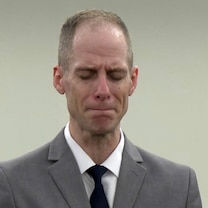
RADDATZ: And joining me now is retired Admiral William McRaven, the commander of the Special Operations Forces that took out Osama bin Laden and author of the new book, "Duty, Honor, Country, and Life."
It's great to see you this morning, Admiral. You heard what Ambassador Waltz said, and I especially want to talk about -- they say there is no -- that the ceasefire has not been violated. As you look at what -- I see you laughing already. As you look at this situation, and again this morning we've had drones launched from Iran, has the ceasefire been violated?
ADM. WILLIAM MCRAVEN, FORMER U.S. SPECIAL OPERATIONS COMMANDER: Yes, well, of course, the ceasefire has been violated, Martha. Anytime you have rounds being exchanged, then that's a violation of the ceasefire. Now, I understand Ambassador Waltz's position. At the end of the day, this is about hopefully getting the Iranians to agree to the proposal, and therefore, you know, we want to downplay this exchange of fire.
But, I mean, in technical terms, of course, the ceasefire has been, you know, has been put aside. The fact of the matter is, when you're shooting at each other, then you no longer have a ceasefire.
RADDATZ: And how do you think the Iranians are taking this when they see what's happened, and, OK, we can keep firing these things? It appears that they are keeping on that.
MCRAVEN: You know, of course. You know, this is -- and we're at an interesting point right now. We're at this impasse, and if I were advising the president, I would tell him to look towards your strategic goals. I mean, at the end of the day, he wants to get the Strait open back up. He wants to have some sort of agreement on the nuclear enrichment of the uranium. So if you want to do that, you're going to have to get the Iranians to the negotiating table.
And he has one ability -- or his real one leverage point is this blockade. And the blockade has been working. So if I were the president, I would go to the Iranians and say, look, I will lift the blockade if you will open the straits and come to the negotiating table. By doing that, one, he can always put the blockade back in place. This is something with a flip of a switch, he can put the blockade back in place if the Iranians don't come to the negotiating table or if they don't open the straits.
But you're not going to get any further along where we are right now unless they come to the table and we begin to have these discussions about some of the hard and serious issues.
RADDATZ: And some of those hard and serious issues, the number one is some sort of nuclear agreement, and that has a 30-day period right now to get that done. Is that realistic to you?
MCRAVEN: Yes, I don't think it is. The fact is, you know, it took over two years to negotiate the JCPOA. So this idea that somehow we will negotiate, you know, a very challenging nuclear deal with the Iranians, I think 30 days is way too compressed of time.
RADDATZ: Do you see the Iranians giving up that enriched uranium? We've heard President Trump say it doesn't matter. Then we've heard him say we're going to get it back. Is it important?
MCRAVEN: Yes, of course, it's important. I mean, the fact of the matter is they've got about 970 pounds of highly enriched uranium. It would not take them long if they have the ability to do that to produce enough uranium to build a bomb.
Yes, I think what the American people have to ask themselves, Martha, is, you know, are we better off now than we were before February 28th? And I think that's open for some serious debate. The fact is, before February 28th, the straits were open. You had a -- you know, not a moderate regime, but the regime, you know, right now is much more hard line than before February 28th, and I get -- my guess is that they were moving towards an enrichment.
I don't think they had a nuclear weapon. I don't think it was, you know, coming about imminently. But the fact of the matter is we're not really that much better off now than we were before February 28th. Yes, we have sunk their navy. Yes, we have destroyed their air force. Yes, we have taken out a lot of their leadership, but I'm not sure we're a lot better off. So if the President wants to get to a position where we are better off, he needs to bring them to the table, and my recommendation is he can make the blockade -- you know, make it a carrot rather than a stick. Get the Iranians to the table and then go from there.
RADDATZ: I want to ask you a question about the girls' school that was bombed on the first day. There is an investigation underway, 170 people were killed. The U.S. was bombing in that area. Obviously, we would never have done that on purpose, but mistakes can be made.
Is it normal for an investigation to take this long? And how important is it that we own up to mistakes if we made them?
MCRAVEN: Yes, well, I think it's very important that we own up to mistakes. I mean, the fact of the matter is, this is who we are as Americans.
Look, we hold people accountable, or we certainly should hold people accountable.
And to your point, Martha, look, this was clearly a mistake. Mistakes do happen. I mean, I've been involved in mistakes like this, not quite this serious, but in Iraq and Afghanistan.
You feel terrible about innocent civilians being killed. But you do a very thorough investigation, and then you hold people accountable. That doesn't mean you have to end their careers or destroy them, but there has to be some level of accountability when you have an accident like this.
RADDATZ: Is it taking longer than usual?

MCRAVEN: Well, I don't know the details of it, but, you know, it was frankly pretty clear from the very beginning that we were probably responsible. But again, I don't know the details of how this whole thing unfolded. It seems to be taking longer than I would think. But again, not being in the inner circle, I can't tell you whether this is too long or not.
RADDATZ: Okay, thanks very much, Admiral McRaven. Very good to see you this morning. Thanks.
MCRAVEN: Thank you.
RADDATZ: Up next, what do the rapid redistricting moves mean for November's midterms? And we hear from voters in the key swing state of Pennsylvania. What do they think of the Iran war?
(COMMERCIAL BREAK)
RADDATZ: The Virginia Supreme Court dealt Democrats a blow Friday, striking down a new congressional map that was just approved by voters and could have given them as many as four additional seats in Congress after this November.
It is the latest in a dizzying few days for redistricting across the country.
ABC's Washington bureau chief, Rick Klein, is here to explain.
So, Rick, tell us what is the state of play right now?
RICK KLEIN, ABC NEWS WASHINGTON BUREAU CHIEF: Sure, Martha.
Just -- until just a couple of days ago, it looked like the big redistricting battles of 2026 were essentially a draw. You saw some late action in blue Virginia and then red Florida to basically cancel each other out. It looked like the map was basically set.
Then we had these two big quarter court rulings just in the last couple of weeks, start with the Supreme Court, which gave the green light to Louisiana and a range of other southern states to do a lot more in terms of gerrymandering than they have in the past. Some of that's still unsettled. But Republicans are looking at some big wins there.
Then you cancel out those Democratic wins in Virginia because of the court ruling you mentioned and what looked like it might be a draw now looks like Republicans could -- could be talking about eight or even nine seats in an election where they only need to hold on to this -- to the House with three seats. The Democrats just need three to take over.
Of course, voters still have to vote. A lot of things still have to happen, and the presidents almost always lose ground in midterm elections.
RADDATZ: Voters still have to vote indeed. But on that Supreme Court ruling on voting rights, Democrats are at risk of losing a lot more seats even after this election.
KLEIN: Yes, Martha, and this is really striking. This is what the congressional delegations in the South looked like after 2024. You see some big blue areas.
Those are usually majority-minority districts, often majority black districts, that because of the Voting Rights Act, even if you were in a Republican state, you had to leave space for that.
Now, we don’t know what’s going to happen in 2028, but this is a “New York Times” analysis of one scenario. You can see all of those big blue areas just squeezed down to the tiny specks, and there's almost an erasing of political power for black voters potentially in the South. You're talking about more than a dozen seats that could be lost. And in the immediate term, and maybe even a longer term, you're talking about a situation where Democrats might be essentially shut out of representation in Congress through much of the South.
RADDATZ: Thanks so much, as always, Rick.
And as you know, as Democrats grapple with the fallout over the Virginia Supreme Court ruling and Republicans' recent victories to redraw maps in their favor, Democratic efforts to flip key districts in battleground states are now even more crucial to their quest to take back the House.
We went to one of those swing districts in the swing state of Pennsylvania, talking to voters, business owners and political leaders in all important Allentown.
(BEGIN VIDEOTAPE)
RADDATZ (voice-over): The race for control of Congress this November is tighter than ever and could come down to a handful of swing districts here in the battleground Keystone State.
Democrats have identified four districts here in Pennsylvania they think they can flip in the midterm. That's more than any other state. And it includes the district here in Lehigh Valley.
(Voice-over): Republican Congressman Ryan Mackenzie flipped Pennsylvania's Seventh District seat by just one percentage point in 2024, about 4,000 votes. The city of Allentown now at the heart of Democratic efforts to take back the House.
MAYOR MATT TUERK (D), ALLENTOWN, PENNSYLVANIA: If people come out and vote in large numbers in a city like Allentown, that can have a huge impact on the county.
RADDATZ (voice-over): Democratic Mayor Matt Tuerk knows it will be a tough fight, but remains optimistic.
TUERK: The path to a Democratic majority in Congress is places like Allentown, places like Scranton. Lots of different places in Pennsylvania. If this -- if there's a blue flip, a blue wave that starts here, that has huge implications for life in Washington, D.C..
RADDATZ (voice-over): Tuerk is Allentown's first Latino mayor and says he's representative of the changing city.
TUERK: We were pretty much 98 percent white in 1970. Today, we're a majority Latino city that continues to change every year.
RADDATZ (voice-over): President Trump won Pennsylvania in part because of support from the Latino community and his promises to revitalize the economy.
TUERK: In 2024, a lot of people told me that they didn't like what the Biden administration had done, and didn't see a lot of change with Vice President Harris and that -- and that they were going to vote Trump because of that. I think those same people have expressed some disappointment and frustration that they were voting for change, and they really didn't get it. Prices are higher than ever.
RADDATZ (voice-over): And with the unpopular war in Iran and skyrocketing energy prices, Democrats here hope they can win back the voters they lost.
Do you sense a shift to the Democrats? Do you sense any change from the last two years?
GLENN GUANOWSKY, PENNSYLVANIA VOTER: So I think the Democrats are starting to realize that they have to kind of come forth with their own proactive messages and not simply say, we're against Trump.
RADDATZ (voice-over): Claudia Salazar runs Casa Latina restaurant in Allentown. She says she didn't vote in the last election, but wants to get more involved now in politics because of rising costs.
CLAUDIA SALAZAR, RESTAURANT OWNER: The cost of the produce is going higher and higher every time we go to the, you know, buy them. So that makes it hard for us to like, you know, maintain the same prices. We've been struggling. Things are going too expensive nowadays.
RADDATZ (voice-over): Even the president's strongest supporters acknowledge the challenge he faces.
ANGELIC SCHNEIDER, PENNSYLVANIA VOTER: I think he's getting a lot of pushback on a lot of things.
JIM VINUP, PENNSYLVANIA VOTER: Sometimes the things he says make me cringe.
RADDATZ (voice-over): We first met Pennsylvania voters Angelic Schneider and Jim Vinup back in January 2024. The definition of diehard Trump supporters.
SCHNEIDER: I think he can get it done. You know, he's not a career politician. He is, you know, a businessman.
VINUP: How many presidents, how many politicians have come out on stage and hugged the American flag? That really means something to me.
RADDATZ (voice-over): And now, two and a half years later.
SCHNEIDER: His approval ratings, you know, are changing by the day. I think, you know, Donald Trump is very unpredictable. And I think he likes it that way. And I think for Americans, I think that's difficult because even supporters like myself, you never know what to expect. And in our society, a lot of times we want things that are consistent. And his unpredictability sometimes can come across as chaos.
RADDATZ: And you talk about what people perceive as chaos and inconsistency. How do you feel about that?
SCHNEIDER: You know, I look at the bigger picture, that his job is to run the government and to secure our borders and to work at, you know, the national level. And everything’s not Donald Trump’s fault. I think we’d like it to be. I think a lot of people say, oh, it’s Donald Trump, it’s Donald Trump. But you have to really look at your individual states and see what’s going on.
RADDATZ (voice over): Vinup is still on board, but like most Americans, he’s feeling the pinch.
RADDATZ: I remember you saying you loved that Donald Trump had hugged the flag, right?
JIM VINUP, PENNSYLVANIA VOTER: Yes.
RADDATZ: You still do. That truck you own is well over one hundred dollars now to fill with gas, I’m sure.
VINUP: Yes. It’s like, holy cow. And I’m trying to be patient. I really am. I’m trying to be patient. You know, I see the gas fluctuating like crazy and I’m saying, please, Donald, you know, get this thing squared away.
Am I concerned? Absolutely. Do I want it to go another day longer? No.
RADDATZ: But you’re behind it? The war?
VINUP: I have to be. I have to be. If we would not have done anything, they would have had a nuclear bomb.
RADDATZ (voice over): And he says he does worry about Republicans chances in the upcoming races.
VINUP: I think that the Republicans, the conservatives, have a good chance in a number of the races. But I’m up in the air. Even, you know, we thought that the governor in Virginia would be a lot closer. We thought that the governor in New Jersey would be a lot closer. I’m just not sure what’s going on.
RADDATZ (voice over): But what is going on is familiar in midterm elections, the policies or perceived failures of an incumbent president loom large when voters make up their minds.
(END VIDEOTAPE)
RADDATZ (on camera): A state we’ll be watching closely.
Coming up, the roundtable weighs in on the redistricting fallout.
We’ll be right back.
(COMMERCIAL BREAK)
(BEGIN VIDEO CLIP)
REP. HAKEEM JEFFRIES (D-NY), MINORITY LEADER: When we took the House back in 2018, we were 24 seats short. We crossed over that hurdle, and in fact, in 2018, we flipped a total of 40 seats. So we're going to take back control of the House of Representatives.
(END VIDEO CLIP)
RADDATZ: Minority Leader Hakeem Jeffries confident Democrats will still be able to take back the House after that Virginia redistricting ruling.
The roundtable debates that and much more when we come back.
(COMMERCIAL BREAK)
RADDATZ: So, let's bring in the roundtable.
Bernie Sanders 2020 campaign manager, Faiz Shakir; “Puck's” chief Washington correspondent, Leigh Ann Caldwell; and former GOP Congressman Charlie Dent of Pennsylvania, who represented Allentown until 2018.
Welcome to all of you.
Happy Mother's Day to you, Leigh Ann.
LEIGH ANN CALDWELL, PUCK CHIEF WASHINGTON CORRESPONDENT: Thank you.
RADDATZ: Faiz, I want to start with you. You saw that map that Rick Klein had. The Virginia decision, the voting rights decision, the map that “The New York Times” laid out -- it has been quite a 10 days.
FAIZ SHAKIR, BERNIE SANDERS 2020 CAMPAIGN MANAGER & ABC NEWS CONTRIBUTOR: Yeah, it certainly is challenging for many Democrats now with this map. Nevertheless, I still remain optimistic that we can gain the House.
I will say that you talked in your segment about racial dilution of power, and that's certainly happening. But in addition to that, Martha, you remember about a year ago this time, Republicans passed a bill to cut Medicaid and give tax cuts to the rich.
Well, now the second step of that is to take the people who are on Medicaid in some of these districts, some of the poorest districts in America, Memphis, Louisiana -- New Orleans, Louisiana, Mobile, Alabama, taking those voters and diluting them with wealthier suburbs and taking the power away from many of the people who were the subject of the cuts from Donald Trump.
RADDATZ: And Charlie, if you want to react to that, you can. But also, this is a tough time for Republicans, despite what just happened. Do you see them holding the House?
CHARLIE DENT, (R) FORMER PENNSYLVANIA CONGRESSMAN: At this point, I don't think it's likely that Republicans can hold the House. And with respect to redistricting, Republicans are diluting a lot of Republican seats as well as Democratic seats. And I think they've overreached in states like Texas.
I mean, I think Republicans would be lucky to win three of those five seats that they drew. They're probably going to overreach in Florida. In Virginia, even though they lost on the -- Republicans lost and the Democrats just had their map overturned, there's still two Republican seats at great risk in Virginia.
So right now, I just don't see a path for Republicans to take back the House. Things can change, but right now, the headwinds and dynamics are just not in their favor.
RADDATZ: And forgive me, I have allergy attacks right now, but, Leigh Ann, whichever side wins in November, this map will change. I know Congressman Jim Clyburn said about half of the members of the Congressional Black Caucus wouldn't be on the Hill had there not been those changes to the Voting Rights Act that the Supreme Court has now struck down.
CALDWELL: Yeah, and the outcome could be that the Congressional Black Caucus and the
Black Power in Congress could absolutely be diluted after these new maps as well.
You know, I was talking to Senator Warnock about this. He says that he is a product also of the Voting Rights Act. And I asked him, “Well, in these days, is it actually necessary to -- for the Voting Rights Act to exist? Things have changed since the '60s.”
And he said there are still efforts to continue to marginalize voters, especially voters of color, and that's why he says it's necessary.
RADDATZ: So, Faiz, what do you think Democrats do here?
SHAKIR: Well, certainly, I think that right now, the biggest advantage that they have is that there's a desire to check Donald Trump's power.
And increasingly, even if you don't believe in some of the Democratic policies, as you saw in the Democratic shutdown over the Department of Homeland Security funding, there was an effort by Democrats rightly to hold Kristi Noem accountable, who no longer sits in the position. Greg Bovino, who was the head of CBP, changed some of the ways ICE was behaving in responsible and good ways.
There's been a positive trajectory, and that carries forward into hopefully the argument for the next Congress, that if you put us into power -- if you are upset with the direction of Donald Trump on the war and the economy, there's only one path. You know, they already hold the House and the Senate. The Republicans do. So if you want to check on his power and to change the direction of this country, vote Democratic.
RADDATZ: And, Charlie, let's move to Indiana. Let's turn to Indiana. Let's not move to Indiana, even though we like Indiana very much.
Those Indiana State Senate elections, where most of the candidates President Trump targeted for opposing him on redistricting lost their seats.
DENT: Yeah, I mean, I would read too much into this. Look, one of the Republicans -- one of the incumbents won. The other one might win. But there's one of those other seats that could easily flip to the Democrats.
So Donald Trump is essentially king of the Republican Party, but he's presiding over a dwindling empire. The base is actually shrinking. And this doesn't have any impact on the midterm election. Doesn't -- doesn't change those dynamics in any way, shape or form.
So I think, frankly, they wasted a lot of money to flip a few seats because they didn't like the incumbent. They wasted a lot of money, but for no good reason. They could have spent that money on Virginia or California, but they spent it in Indiana.
RADDATZ: Leigh Ann, you wrote this week that President Trump's operation made clear that he not only defeated his dissenters, but showed what happens to Republicans who tried to defy the White House. Not exactly on the lines with what Charlie said. Does that work nationwide, in your view?
CALDWELL: Yeah, it was a message to Republicans to not cross the president. Absolutely. And you're seeing that's why some of these states have -- after the Voting Rights Act decision, moving extremely quickly to try to implement based on the new court decision.
They don't want the wrath of the president. But I will say, it took an enormous amount of money for the president to prevail in Indiana. They spent about $15 million, his allies, in state senate races that usually cost $30,000, $40,000, maybe $100,000, $200,000. And so they were --
RADDATZ: Just ads constantly, constantly, constantly.
CALDWELL: Yes. And so -- and so, it was a dynamic that the White House had to put it. They put in a lot of political power behind that. And it was absolutely necessary after a series of losses. They had to prove that they were able to win again after California.
The vote -- the voters in Virginia rejected the Republicans in their redistricting effort. Of course, the courts prevailed, but it was a much needed win for this White House.
SHAKIR: But, Leigh Ann, you know that $15 million spent, chump change for the Trump orbit right now because they are sitting on literally hundreds of millions of dollars that they're choosing what they're going to do with it.
And because of the way he's been act -- enacting his administration so corruptly, so many of the biggest funders have funded not only his ballrooms and, you know, his desires for all kinds of personal favors, but in addition, they filled his campaign coffers.
Now, his next test is going to be Thomas Massie in Kentucky. And I'm not a Republican, but I am hoping that Thomas Massie survives this and beats Donald Trump. And if he does so, I think it might mark the beginning of a time in which many more Republicans would be comfortable standing up and disagreeing with the president, hopefully, if Massie can survive that race.
RADDATZ: Charlie, I want to turn to you about Pennsylvania. You saw those voters I spoke with remain fully behind the president. He's not on the ballot. How do you think he affects things now still?
I mean, they clearly had some issues with what was going on, even though their support was strong. But again, he’s not the guy on the ballot.
DENT: Well, he’s not on the ballot, but people are coming out in many cases to vote against him. He is a turnout machine for the Democrats and that district you visit, I live in Allentown, Pennsylvania. And it is the swingiest district in the swingiest state in the country.
But I think sometimes we should be talking less to the diehard Trump voters and talking to these independent voters and soft Trump voters who right now have misgivings. And this is why Republicans are trailing in the polls right now. They're just getting clobbered among independents.
So I do see something happening, not just in Pennsylvania, but across the country where so many Republican candidates are just running into such a headwind based on the affordability issues. And when the president is talking about ballrooms and the arch and all these other issues, there's a detachment that I think many voters see to their main concern.
RADDATZ: And it is kind of that ballroom, a lot of people talked about that to just sort of these distractions when they really -- they might want to focus on what's happening. He clearly does not.
DENT: Well -- yes, well, they're worried about the high cost of gasoline, health care.
RADDATZ: Exactly.
DENT: Electricity, food, health care. And here we are talking about the Great Gatsby and the Gilded ballroom and talking about the arch. And we're talking about all sorts of things that, you know, none of these people are going to go to the ballroom. They're not going to go to the Kennedy Center. And so they're wondering, but what about me? And I think that is the problem that we're facing.
RADDATZ: OK. Thanks to all of you. Again, Happy Mother's Day.
Up next, it's a bird. It's a plane. It's a UFO. We'll have the never-before-seen videos and files just released by the Pentagon when we come back.
(COMMERCIAL BREAK)
RADDATZ: For decades, reports of unidentified flying objects have captivated Americans, leading to rampant speculation and conspiracies of what the government may or may not know about life beyond Earth.
This week, the Pentagon released hundreds of pages of documents related to reported UFO sightings.
ABC's Jay O'Brien has the latest from that release.
(BEGIN VIDEOTAPE)
JAY O'BRIEN, ABC NEWS WASHINGTON CORRESPONDENT (voice-over): From the big screen.
E.T. CHARACTER: Right here.
O'BRIEN (voice-over): To late-night TV.
JOHN OLIVER, LATE-NIGHT HOST: Now might be a good time to, and I cannot believe I'm about to say this, talk about UFOs.
O'BRIEN: Americans have long been captivated with the cosmos and sightings of so-called unidentified flying objects or UFOs.
DONALD TRUMP, PRESIDENT OF THE UNITED STATES: They want to find out about the UFOs and anything having to do with UFO or related material. And we're going to be releasing a lot of things from -- that we have.
O'BRIEN (voice-over): That fascination reaching a fever pitch this week after the Pentagon, on orders of President Trump, released the first batch of decades worth of videos, photos and reports of what military officials acknowledge are unexplained objects seen flying in Earth's skies like this never-before-seen infrared video taken by the U.S. military in the Middle East in 2013, showing what appears to be a moving, star-shaped object, leaving behind a trail.
Another showing a white dot darting through a wind farm. More than 160 files made public so far detailing what military officials call unidentified anomalous phenomena, or UAP. In the first 24 hours since the files were made public, nearly 500 million hits to the Pentagon's Web site, a top official says.
Also in the release, several sightings from beyond Earth's atmosphere going back decades. Apollo 12 astronaut Alan Bean describing flashes of light he saw in 1969 sailing off in space. And these photos, taken by astronauts on the moon during the Apollo 17 mission in 1972, showing three dots in triangular formation, which the crew described as very bright particles of light, rotating way out in the distance.
Some of what was released, like the Apollo images and those sightings of lights, have already been public. Also, inside hundreds of pages of FBI, State Department and military reports, one detailing six different federal law enforcement agents independently seeing strange orbs and orbs launching other orbs in the western U.S. in 2023. While the government has found no evidence any of these incidents are extraterrestrial in nature, military officials admit many remain unresolved and cannot be explained.
The former head of the Pentagon office investigating UAP telling ABC News, "There's nothing unexpected in the release and without any analysis or context, will only serve to fuel more speculation, conspiracy and armchair pseudoscience."
(END VIDEOTAPE)
RADDATZ: A lot of mystery there.
Our thanks to Jay. We'll be right back.
(COMMERCIAL BREAK)
RADDATZ: Thanks for sharing part of your Sunday with us. Check out "WORLD NEWS TONIGHT." And for the moms out there, Happy Mother's Day.
(COMMERCIAL BREAK)

Popular Reads

ABC News Live