Tracking Storms by Plane and Supercomputer
June 6, 2003 -- In this week's Cybershake, we explore the U.S. government's attempts to use technology to hunt for hurricanes. Plus, we take a quick look at a software product that might have high-tech outdoor enthusiasts packing away paper maps forever.
High-Tech Hurricane-Hunting Season
Experts with the U.S.'s National Oceanic and Atmospheric Administration say that the climate is ripe for an increased number of hurricanes this year. But officials at NOAA say they're now using new high-tech gear that could allow for much more accurate hurricane forecasts.
One aid is the Gulfstream IV (G-IV) jet plane, one of the many small planes in NOAA's fleet of so-called hurricane hunters. The twin-engine jet is designed to carry an array of electronics, including sophisticated radar systems, satellite communication gear, and four computer workstations.
When stalking hurricanes, the G-IV stays airborne for up to 12 hours at a time at altitudes of up to 45,000 feet. Once over a storm, the plane will drop sensors called dropwindsondes that will measure the air pressure, temperature, humidity and other factors.
The data is sent back to technicians onboard the G-IV who will process and transmit the data via satellite to the National Hurricane Center in Miami and the National Centers for Environmental Prediction in Camp Springs. Md.
Computers at both sites will analyze the data as it arrives to predict when and where the storm may strike the U.S. coasts.


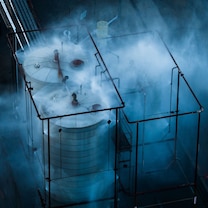
And on Friday, NOAA is expected to announce a joint venture with IBM for even more computing horsepower. The Armonk, N.Y., company will supply NOAA with a supercomputer capable of performing 7.3 trillion calculations per second.
Flight director Marty Mayhou says that technology means better forecasts. "As we go along and technology increases we'll have better understanding and hopefully get closer and closer to the ultimate goal of getting it right."
NOAA expects that the real-time data capabilities of the G-IV and new supercomputer power from IBM, hurricane landfall tracking and prediction capabilities could improve by as much as 20 percent. And hurricane forecasts will now cover five days instead of just three.

Popular Reads

ABC News Live