25 years later, 9/11 victims hope newly uncovered records will help illuminate Saudis' alleged role
Victims' families are pressing President Trump to declassify more materials.
Twenty-five years after Sept. 11, a trove of newly obtained records is offering what families of the victims characterize in court as compelling evidence of deep Saudi complicity in the attacks. Now, as their decade-old lawsuit against the Saudi kingdom marches toward trial, the families are pressing the Trump administration to declassify more government records they believe could finally deliver justice.
The newly revealed records, from a lawsuit involving an alleged Saudi agent, include a video purportedly casing the Capitol two years before the attacks and a sketch that purportedly shows calculations for navigating a plane toward a target on the ground, which one family member called "smoking gun evidence."
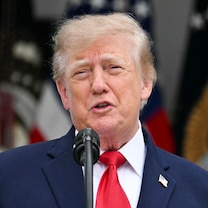
The decision on whether to declassify additional records ultimately lies with President Donald Trump, whose administration has touted government transparency and who has personally signed executive orders declassifying records ranging from purported UFO sightings to high-profile assassinations.

"We've seen him do it for the [President John F. Kennedy] files. Why not the 9/11 files?" Brett Eagleson, whose father Bruce was killed in the World Trade Center's South Tower, said in an interview with ABC News.
"Now is the moment, 25 years later, to finally bring resolution," Eagleson said, "and the man that sits in the Oval Office has a historic and a tremendous opportunity to do it."
Eagleson has enlisted the support of members of the New York congressional delegation to press the administration to release key records that include phone logs purportedly belonging to Omar al-Bayoumi, who the families allege is a Saudi intelligence asset, as well as two of the hijackers.
Among those who cosigned a letter seeking the declassification of those records is Rep. Nicole Malliotakis, R-N.Y., a Trump ally who is urging the president take up the matter before the 25th anniversary, less than two weeks away.

"This is probably one of the better shots that we have at getting this information out there," Malliotakis said. "And I think that hopefully we'll see this type of transparency coming from this administration."
White House spokesperson Anna Kelly told ABC News, "President Trump is leading the most transparent administration in history, and his team is working diligently to identify records that are responsive to these families' request."
'Smoking gun'
The families have waged their legal campaign against the Saudis in one form or another since 2003, but only recently uncovered videos, notes and other records they say offer irrefutable evidence of Saudi government complicity -- claims that the Saudis have long denied.
Al-Bayoumi lies at the heart of those records.
The Saudi national lived in the U.S. for the better part of a decade -- nominally as a student -- prior to the attacks, and provided "essential support" to two hijackers when they arrived in California in early 2000, according to the families' lawsuit, which claims that al-Bayoumi assisted the men by "finding them an apartment in his complex" and "providing funds just below the suspicious activity reporting threshold to help them open a bank account."

According to the families, al-Bayoumi also threw a party for the hijackers and "the hijackers stayed at al-Bayoumi's apartment for 1-2 days, before their apartment was ready."
"He was the man," Eagleson told ABC News. "Omar al-Bayoumi is coordinating and directing logistical and financial support to the hijackers."
In 1999, al-Bayoumi travelled to Washington, D.C., where he filmed what the families called a "chilling" video of al-Bayoumi "'casing' the U.S. Capitol for an attack," according to the suit. The Capitol is believed to be the target of United Flight 93, the hijacked plane that crashed into a field in Shanksville, Pennsylvania.
In the video, according to the suit, al-Bayoumi describes to an unidentified audience the security posture inside and outside the Capitol building, highlights its proximity to the nearby Reagan National Airport, and opaquely references a "plan."
The families also presented in court a sketch and math equation from al-Bayoumi's notebook showing what they claim to be a "line of sight calculation for navigating a plane to a target on the ground."

The Saudis have repeatedly denied having any role in facilitating the attacks and replied in court that they remain "an ally of the United States [and] a sworn enemy of Al Qaeda."
Attorneys for the kingdom also fervently disputed the families' characterizations of that evidence in court, dismissing the Capitol "casing" film as a "tourist video that includes footage of artwork, flowerbeds, and a squirrel on the White House lawn." They say the notepad sketch "appears to be a high school math assignment" belonging to al-Bayoumi's child.
Al-Bayoumi, who is believed to now live in Saudi Arabia, "became entangled in the 9/11 investigation because he had helped two fellow Saudis he had no reason to suspect of wrongdoing," the Saudi attorneys said -- a sentiment al-Bayoumi shared in a deposition in the case. Al-Bayoumi has also denied any connection to Saudi intelligence.
Last year the judge overseeing the case ruled that the evidence presented by the families was compelling enough to proceed to trial, dealing a major setback to the Saudis and granting the families what they called "the most consequential step yet" in two decades of litigation.
The judge noted that the Saudis' exculpatory explanations "are either self-contradictory or [are] not strong enough to overcome the inference that [the Saudis] had employed al-Bayoumi ... to assist the hijackers."
And while there remains no evidence that Saudi leaders at the top of its government were likely aware of plans for the attack, "the total evidence creates a high probability as to al-Bayoumi's ... [role] in the hijackers' plans," the judge concluded, "and the related role of [his] employer," the Kingdom of Saudi Arabia.
An 'extraordinary irony'
For Eagleson, the material amounts to "smoking gun evidence" that should not have taken nearly a quarter-century to unearth.
"That information never saw the light of day until 25 years later," Eagleson said. "And what was found in those files should blow everyone's mind. Everyone should be outraged."
The families presented this new body of evidence in court last year after retrieving it from British authorities, who first gathered it as part of a raid on al-Bayoumi's home in the U.K. just 10 days after the attacks in New York and Washington. The evidence was turned over to the FBI, Eagleson said, but what became of it later remains murky.

Crucially, according to attorneys for the families, much of this evidence was not made available to the 9/11 Commission, which released its report in 2004 absolving the Saudi governing of "knowingly" supporting Al Qaeda.
Experts suggest this evidence could reshape the public's understanding not only of the attack on Sept. 11, but also the United States' subsequent geopolitical and military decisions in the Middle East.
Daniel Benjamin, a counterterrorism official during the Clinton and Obama administrations, said the al-Bayoumi records and other materials "force us to think that our entire theory of what 9-11 was about -- what the whole war on terrorism was about -- was largely mistaken."

"The Bush administration insisted that no non-state actor could have done something as complicated as the 9/11 attacks, and that was a major reason that it turned the focus on Iraq and on Saddam Hussein," said Benjamin, now the president of the American Academy in Berlin. "And it is an extraordinary irony that they may have been right about the need for state support -- but they got the state completely wrong."
The Saudi lawsuit is far from the last remaining question mark regarding culpability for the attacks. Last week, a military judge ruled that after spending two decades at Guantanamo Bay, Khalid Sheikh Mohammed, the self-proclaimed "mastermind" of the attack, would finally face trial in June 2028.
'Repeated obstacles'
In July, Rep. Malliotakis, the New York Republican, joined Democratic Reps. Dan Goldman and Jerry Nadler in writing a letter to a little-known but powerful advisory panel called the Public Interest Declassification Board, housed within the National Archives, which carries the power to consider requests for sensitive government secrets and make recommendations to the president about whether to declassify them.
The lawmakers' request, sent at the behest of the families, bemoaned the "repeated obstacles" attorneys for the families have faced "in obtaining access to these materials from U.S. law enforcement and intelligence agencies."
In the letter, lawmakers requested the declassification of "various phone records and analyses directly relevant to al-Bayoumi's role" in 9/11, including records for a cell phone purportedly belonging to al-Bayoumi that he, according to the letter, "lent ... to the hijackers to keep in touch with his associates such as Anwar Aulaqi," the high-profile American al-Qaeda follower who in 2011 was killed by a U.S. drone strike.

Attorneys for the families believe those records could help them better understand the timing and nature of al-Bayoumi's and the hijackers' communications and key events in the hijackers' planning of the attacks.
The board responded weeks later, writing that it was "actively engaged in interagency consultations to determine what equities, if any, may remain in relation to these records." It urged patience as "those discussions continue."
The White House said last week that President Trump would attend a ceremony at the Pentagon to commemorate the 25th anniversary. Vice President JD Vance will travel to New York to be at Ground Zero.
Related Topics

Popular Reads
ABC News Live