Energy secretary defends waiving sanctions on Russia: 'It’s not an economic lifeline'
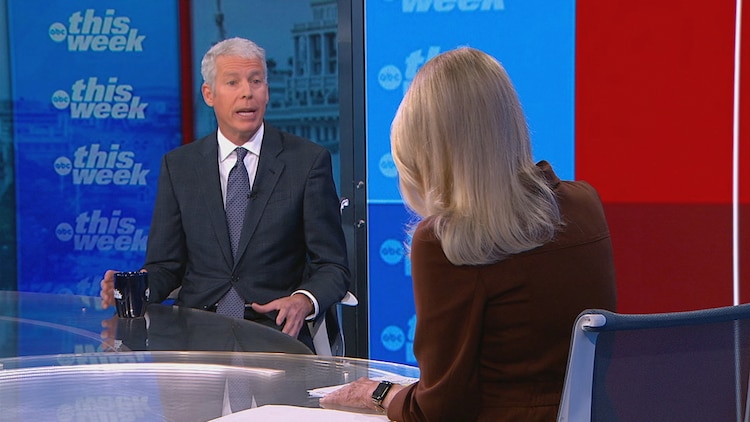
Chris Wright was interviewed on "This Week."
Energy Secretary Chris Wright on Sunday defended President Donald Trump’s decision to waive new sanctions and tariffs meant to pressure President Vladimir Putin, asserting that the exemption was not an “economic lifeline” for Russia.
“This is a carrot to try to end a war. It's not an economic lifeline for Russia," Wright said Sunday on "This Week."
Late Friday, Trump signed an executive order waiving new sanctions two days before they were set to take effect. The economic punishments were required under a bill named after the late Republican Sen. Lindsey Graham that the president signed exactly one month ago Sunday.
Graham’s sister, who replaced him in the Senate, said she disagreed with Trump.
"Personally, I would choose to keep the pressure on Russia to end the war and get the gas prices down, because I don't trust Putin and don't trust Russia,” Darline Graham said Saturday.
Ukrainian President Volodymyr Zelenskyy said Trump’s decision was “wrong,” adding, “It definitely helps only the Russians.”
But in his interview with ABC News' Martha Raddatz, Wright maintained that waiving these sanctions does pressure Russia.
“The only way Russia gets benefit from this move means they have to export diesel, which means they have to either consume less diesel internally, reduce the war effort, or have an ability to repair their refineries, which they only can get to through a peace agreement with Ukraine, an energy ceasefire, or a step towards peace,” Wright said.
Trump’s executive order came a week after he announced a deal with Russia to eventually import millions of tons of diesel from the country despite a 2022 law that explicitly bans the United States from importing Russian energy. He also lashed out at Zelenskyy over his country’s targeting of Russian oil refineries, asserting those attacks are driving up prices.

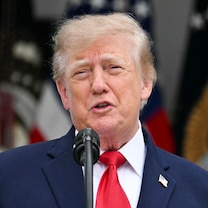
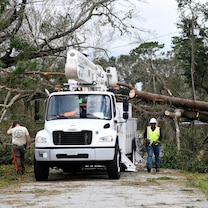
The diesel deal, made as domestic diesel prices remain above $6 a gallon on average, has prompted bipartisan backlash from lawmakers. Zelenskyy called it a “birthday gift” to Putin, and in an interview on “This Week” last Sunday, said the higher diesel prices are fueled by another conflict.
“It's more simple to speak about the prices and connect it with Ukraine, when everybody in the world understands because of the war in Middle East, the prices are rising,” he said.
While some lawmakers have accused Trump of capitulating to Putin with his recent actions, Wright said the administration is still putting “a lot of pressure” on the Russian leader.
“There have never been sanctions nearly as strong on Russia today as there, as there is under the Trump administration,” the energy secretary said. “Four-and-a-half years into this war, a million-and-a-half casualties haven't brought an end to the war. President Trump isn't going to just throw up his arms and say, ‘Well, I guess we can never stop it.’”
Americans have been grappling with higher gas and diesel prices for months; prices started increasing after the U.S. went to war with Iran in late February.
Wright acknowledged that people are frustrated with the additional costs.
“People are upset about high gasoline and diesel prices, and we understand that, which is why we're working in all different avenues to address that problem,” he said. “In contrast, the Democrats for 15 years have done everything they can to make energy more expensive.”

Popular Reads
ABC News Live