'I'm scared for my daughters': Pregnant Ecuadorian woman fighting deportation
Maria Isabel Loja-Loja was scheduled to be deported on May 2.
A pregnant mother from Ecuador is fighting to remain in the United States with her two daughters after being slated for removal despite a pending visa application for victims of trafficking, according to court documents.
Maria Isabel Loja-Loja was scheduled to be deported on May 2 along with her two daughters as part of the Trump administration's immigration crackdown, but a federal judge in Boston issued an eleventh-hour emergency order temporarily blocking their removal.
"Ecuador is really dangerous right now, I'm scared for my daughters if I have to go back," Loja-Loja, who is four months pregnant, told ABC News in Spanish. "There's a lot of crime, trafficking, robberies, murders."
The Ecuadorian mother and her lawyer told ABC News that she was trafficked in the U.S. in 2024 and has been receiving threats from alleged human smugglers since then.
"They took photos of her children," said her attorney, Todd Pomerleau. "They started sending her text messages when she was in the United States, saying, 'We're going to find you.'"
Loja-Loja, who now works in construction, told ABC News she used to work as a secretary for an organization in a rural village in Ecuador that targeted criminal groups and raised awareness about crime in her country. Because of that work, she said she believes she is a target and would be killed if deported.
According to court documents, after Loja-Loja's asylum application was denied by a federal immigration judge and by the Board of Immigration Appeals, the Ecuadorian mother was placed on a GPS monitoring system last month.

She then applied on April 30 for a "T visa," which provides legal status to certain victims of human trafficking. The government issues 5,000 "T visas" and 10,000 similar "U visas" per year. But on May 1, Loja-Loja said she received messages from an official with an ICE supervision appearance program saying she was expected to be at the airport for departure to Ecuador.
Pomerleau, who filed an emergency habeas to block Loja-Loja's removal on May 2, argues that federal authorities are violating her due process rights by moving to deport her before her "T visa" application can be adjudicated.
According to Loja-Loja's habeas petition, the Department of Homeland Security in 2025 reversed a policy that allowed ICE officials to exercise discretion in deferring decisions on civil immigration enforcement against "T visa" and "U visa" applicants.
"What we're seeing here is that the victims of these crimes are now being victimized by the government," Pomerleau told ABC News. "They're seeking refuge from [traffickers], and ICE is trying to prevent them from even utilizing the process Congress has created."

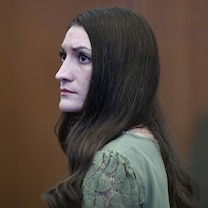
In a statement to ABC News, a Department of Homeland Security spokesperson said Loja-Loja "has been processed for expedited removal and released with a GPS monitor while she undergoes further removal proceedings."
"A pending application does NOT confer any type of legal status in the United States," the spokesperson said. "If a person enters our country illegally, they are subject to detention or deportation. Each illegal alien receives due process."
The move to detain and deport alleged victims of trafficking and other crimes prompted a class-action lawsuit in California last year from the Center for Human Rights and Constitutional Law. The group argues that DHS policy allows, for the first time, "the arrest, detention, and deportation of immigrant survivors" of violent crimes. The case is still being litigated in court.
The lawsuit claims that until recently, ICE followed a congressional framework that generally did not pursue enforcement against individuals with pending "T visas" or other visas for victims of certain crimes.
"ICE now routinely deports survivors of trafficking and crime who have pending applications for the U and T visas that Congress created specifically to protect them from deportation," the group said in a statement.
In court filings, the government has argued the changes in policy were made to comply with executive orders prioritizing the removal of all removable noncitizens.
Loja-Loja told ABC News that she hopes to be able to stay in the U.S. to pursue her case.
"I need protection for my daughters, and I have my other baby on the way," she said.

Popular Reads
ABC News Live