Quakers, one of the 1st abolitionists, renew their call for resistance as America turns 250
The faith group’s advocacy efforts have recently focused on helping immigrants.
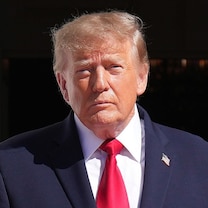
Quakers are joining with national advocacy groups on July 4 in Philadelphia to protest what they say are unjust policies by President Donald Trump’s administration.
The faith group, formally known as the Religious Society of Friends, gathered signatures online and in person for a “Declaration of Resistance Banner” that they will display during their “People’s Parade” on the 250th birthday of the United States, according to Quaker officials.
The proclamation -- created by the Quakers’ advocacy arm, American Friends Service Committee (AFSC) -- includes condemnations of mass arrests and deportations of immigrants, acts of war on sovereign nations and the dismantling of slavery exhibits in national parks, including Philadelphia’s President’s House -- the site of George Washington’s executive mansion.

Philadelphia isn’t only the “birthplace” of the U.S., where the Founding Fathers met to write and sign the Declaration of Independence in 1776, but is also in a state founded by Quakers.
William Penn, a powerful Quaker, established the state of Pennsylvania after King Charles II granted him the land in 1681. It was founded as a holy experiment for religious tolerance.
“Native American peoples, Quakers, Baptists, Lutherans and other religious groups that had been persecuted in Europe could come and express their own conscience freely,” Dr. Brian Blackmore, director of Quaker engagement with AFSC, told ABC News.

Laura Boyce, the associate general secretary of U.S. programs for AFSC, told ABC News that she meets people all over the country while travelling for work. She said that people she spoke with believed before the current administration that there were certain fundamental rights that were off-limits to government intervention, like the freedom to vote and the freedom to peacefully dissent.
The Supreme Court recently voted down an attempt by the administration to disallow states from counting late-arriving mail-in ballots. Trump is currently pushing Congress to pass the SAVE America Act, which would require new voter ID laws.
The administration also cracked down on student protesters in 2025 for advocating on behalf of Palestinians during the war in Gaza. The administration labeled the protests as antisemitic and supportive of terrorist organizations like Hamas.
Quakers: A history of bucking the establishment
Quakersim started in England in the middle of the 17th century when George Fox founded the Religious Society of Friends as an alternative Christian religion to the Church of England and Catholicism, according to Blackmore.
Fox believed that every person on Earth could establish their own direct relationship with God, rather than through a spiritual leader. Quakers were countercultural from the start, seeing women as having spiritual authority equal to men, challenging gender norms of the time, refusing to bear arms and committing to non-violence. They also refused to remove their hats to acknowledge others from a higher class.
The term Quaker originally emerged as a derogatory term to describe the vociferousness with which Quakers protested injustices, as if they quaked, according to Blackmore. Quakers appropriated the term into a euphemism.

The parliament in England created laws against Quakers, forbidding them to worship freely, charging them with punishments for refusing to take oaths or refusing to remove their hats. Thousands were sent to prison. Many Quakers eventually left England for America to escape religious persecution.
In 1776, the year the Declaration of Independence was signed, Quakers made a formal stance against slavery, prohibiting followers of the faith from engaging in the institution. Quakers became the first Christian denomination in America to prohibit slavery, according to Blackmore.
The faith group founded the first abolitionist societies in the country and moved to boycott goods, clothing, and food created through the labor of enslaved people. Quakers were also instrumental in the execution of the Underground Railroad.
There were, however, some who followed the faith who were reluctant to let go of the economic advantages of slavery. They justified their involvement in the slave trade through their own “racialized lenses”, according to Blackmore.
Quakers in 2026
Quakers do not have the large proportional numbers and political influence in the U.S. today that they once had. Currently, there are roughly 70,000 Quakers in the country.
The faith group’s advocacy efforts have recently focused on helping immigrants who are in danger of arrest and deportation. One of their organizations, the Friends Council on National Legislation, has offices on Capitol Hill and lobbies for changes in immigration policies.
Quakers also have “meeting houses” around the country that act as sanctuaries, housing immigrant families who are in danger of deportation -- following in the footsteps of their predecessors who hid runaway enslaved people as part of the Underground Railroad.
“When we know that ICE enforcement is about to appear in a community, Quakers will have, kind of like, a Signal (app) chat where they can let everybody know where to be and at what time, and kind of descend on mass in order to help be in defense of ICE enforcement and protect individuals and families,” Blackmore said.
Boyce said AFSC’s national day of action on July 4 is a jumping-off point to launch an initiative with Quakers and other faith communities to stem “this alarming tide of authoritarianism that we and many other people see.”
“History doesn't repeat itself, but it certainly does rhyme,” Blackmore said. “So, if you're part of a religious tradition that's been part of these movements for some time, you learn some tactics and you learn some strategies that are effective, and you're just applying them in different contexts.”
ABC News’ Sabina Ghebremedhin and Deena Zaru contributed to this story.

Popular Reads

ABC News Live