US agrees to settle lawsuit that accused Indian billionaire of hiding alleged scheme
The U.S. government has agreed to settle a lawsuit against Indian billionaire Gautam Adani
NEW YORK -- The U.S. government has agreed to settle a lawsuit filed against one of the world's richest people who is accused of duping investors by concealing that his company’s huge solar energy project in India was being facilitated by an alleged bribery scheme, according to court filings published Thursday.
In the lawsuit filed in late 2024, the Securities and Exchange Commission accused Indian billionaire Gautam Adani and his nephew Sagar Adani — both leaders of the energy company Adani Green Energy Limited — of promising to pay Indian government officials the equivalent of hundreds of millions of dollars in exchange for government contracts to purchase energy at inflated rates.
At the same time, the company secured several billions of dollars from Wall Street investors who were allegedly assured that the company had a robust anti-bribery compliance program and were given promises from senior management that no bribery would take place.
Those actions, the SEC said at the time, violated antifraud provisions of U.S. securities laws.
Court documents show that Gautam Adani agreed to pay civil penalties of $6 million while his nephew agreed to pay $12 million. The proposed settlement doesn’t include an admission of guilt.
The Adani Group denied the allegations at the time, calling them baseless. Messages left with both the Adanis' attorneys were not returned on Thursday.
Both men were indicted in late 2024 in New York on charges of securities fraud and conspiracy to commit securities and wire fraud. The New York Times and Bloomberg reported Thursday those charges are likely to get dropped. Messages left by The Associated Press with prosecutors for the Eastern District of New York were not returned.
The move to drop the charges seemed foreshadowed by events after President Donald Trump was elected to a second term and Gautam Adani lavished him with praise.
In March 2025, Trump suspended the Foreign Corrupt Practices Act, a law banning business bribes overseas, raising expectations among some in India that the Adanis' case was fatally damaged.
Gautam Adani became a power broker in the world’s most populous nation by building a fortune in the coal business in the 1990s.
Over time, the Adani Group embraced a diverse portfolio, investing in key industries like renewable energy, defense and agriculture.
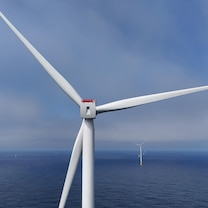


With its slogan, “Growth with Goodness,” the company soon had a clean energy portfolio of over 20 gigawatts, including one of the world’s largest solar power plants in the southern state of Tamil Nadu.
The Adani Group once set a goal of becoming the country’s biggest player in the space by 2030 with plans to invest $70 billion in clean energy projects by 2032.
Adani’s close ties with the government and Prime Minister Narendra Modi sometimes attracted criticism, and short-seller Hindenburg Research, a U.S.-based financial research firm, has accused Adani and his company of “brazen stock manipulation” and “accounting fraud.”
The Adani Group labeled the claims “a malicious combination of selective misinformation and stale, baseless and discredited allegations.”
After the Brooklyn case was announced, Kenya’s president canceled multimillion dollar deals with the Adani Group for airport modernization and energy projects. Adani Green Energy withdrew its wind energy projects from Sri Lanka after the island nation sought to renegotiate prices. A French oil giant also paused new investments.
Analysts say a key factor in Adani’s meteoric rise over the years has been his knack for aligning his group’s priorities with those of the Modi government. His critics accuse him of crony capitalism and of gaining preferential treatment from the government, including in winning contracts, which the Adani Group has denied.

Popular Reads
ABC News Live