Russia-Ukraine updates: 2 US veterans who joined Ukrainian forces missing
The Americans, Andy Tai Ngoc Huynh and Alexander Drueke, are both from Alabama.
Russian President Vladimir Putin's "special military operation" into neighboring Ukraine began on Feb. 24, with Russian forces invading from Belarus, to the north, and Russia, to the east. Ukrainian troops have offered "stiff resistance," according to U.S. officials.
The Russian military has since launched a full-scale ground offensive in eastern Ukraine's disputed Donbas region, capturing the strategic port city of Mariupol and securing a coastal corridor to the Moscow-annexed Crimean Peninsula.
For previous coverage, please click here.
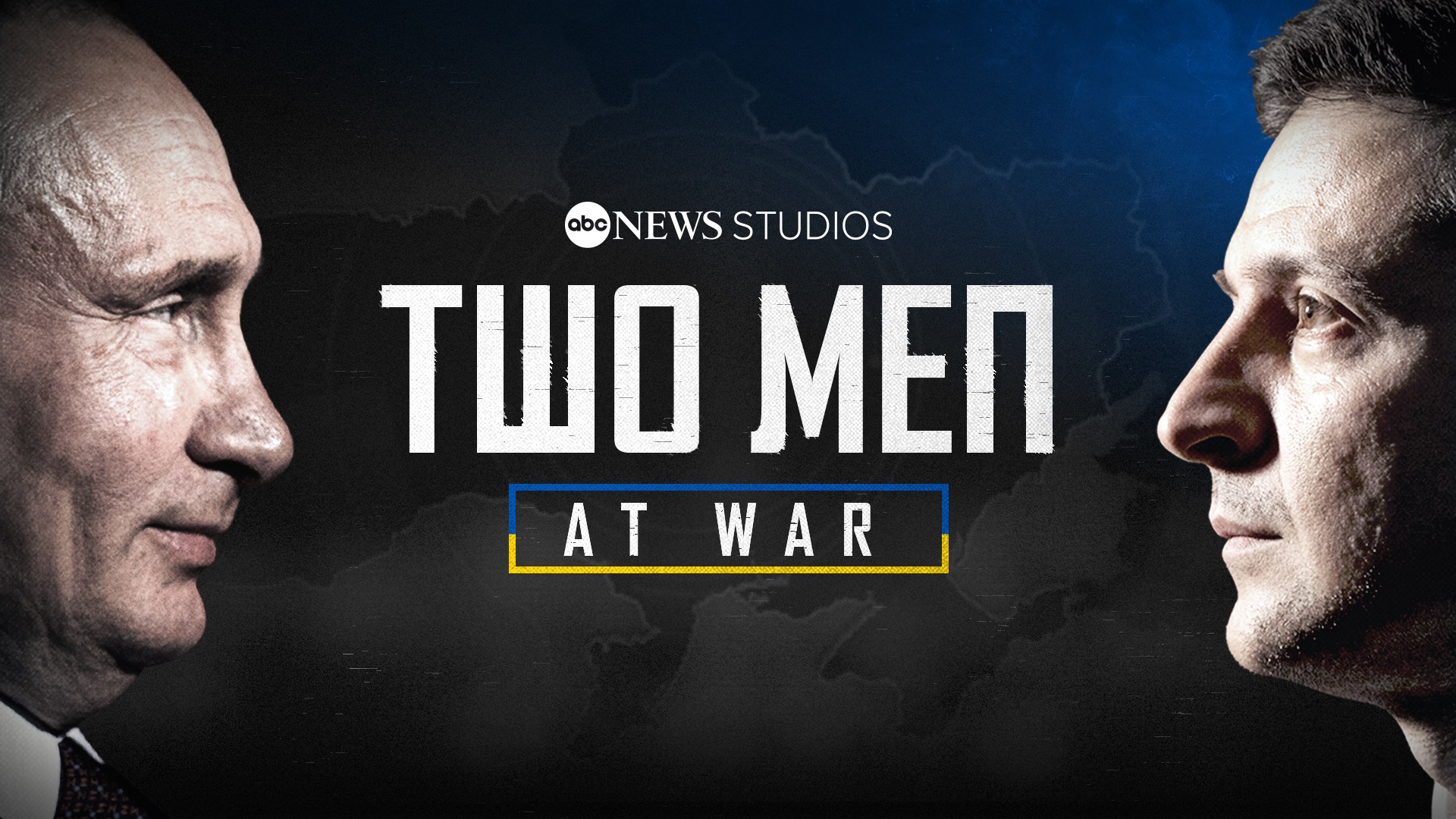


Latest headlines:
Ukrainian first lady sits down for exclusive interview with ABC News: 'Don't get used to our pain'
Since the start of Russia's invasion, the Ukrainian first lady has been in hiding with her two children. A difficult question her 9-year-old son keeps asking is when the war will end, Olena Zelenska said in an exclusive interview with ABC News.
"Unfortunately, I don't think any Ukrainian would be able to answer that question," Zelenska told "Good Morning America" co-anchor Robin Roberts in her first televised solo interview since the invasion began.
In discussing the state of the conflict nearly 100 days after Russian President Vladimir Putin launched a "special military operation" in Ukraine, Zelenska said that conceding territory to Russia won't stop the war.
"You just can't concede ... parts of your territory. It's like conceding a freedom," Zelenska, 44, said in the interview, airing on "Good Morning America" Thursday. "Even if we would consider territories, the aggressor would not stop at that. He would continue pressing, he would continue launching more and more steps forward, more and more attacks against our territory."
The interview with Zelenska will air Thursday on "Good Morning America" and across ABC News. "Good Morning America" airs at 7 a.m. on ABC.
Russia takes most of key city in Donbas
Russian forces have taken control of most of Sieverodonetsk in eastern Ukraine, the U.K. Ministry of Defense said Thursday in an intelligence update.
"The main road into the Sieverodonetsk pocket likely remains under Ukrainian control but Russia continues to make steady local gains, enabled by a heavy concentration of artillery," the ministry said. "This has not been without cost, and Russian forces have sustained losses in the process."
Sieverodonetsk, an industrial hub, is the largest city still held by Ukrainian troops in the contested Donbas region of Ukraine's east, which comprises the self-proclaimed republics in Luhansk and Donetsk oblasts.
"Crossing the Siverskyy Donets River -- which is a natural barrier to its axes of advance –- is vital for Russian forces as they secure Luhansk Oblast and prepare to switch focus to Donetsk Oblast," the ministry added. "Potential crossing sites include between Sieverodonetsk and the neighbouring town of Lysychansk; and near recently-captured Lyman. In both locations, the river line likely still remains controlled by Ukrainian forces, who have destroyed existing bridges."
Sievierodonetsk and Lysychansk are the last major cities in the Luhansk area still controlled by Ukraine.
"It is likely Russia will need at least a short tactical pause to re-set for opposed river crossings and subsequent attacks further into Donetsk Oblast, where Ukrainian armed forces have prepared defensive positions," the ministry added. "To do so risks losing some of the momentum they have built over the last week."
Ukraine's first lady tells ABC News that giving up land is 'like conceding a freedom'
In an exclusive interview with ABC News, Ukrainian first lady Olena Zelenska spoke about the state of the ongoing conflict with Russia and where the Ukrainian people currently stand as a country.
In her first televised solo interview since the invasion began, Zelenska, 44, told "Good Morning America" co-anchor Robin Roberts that conceding territory to Russia won't stop the war.
"You just can’t concede…parts of your territory. It’s like conceding a freedom," Zelenska said. "Even if we would consider territories, the aggressor would not stop at that. He would continue pressing, he would continue launching more and more steps forward, more and more attacks against our territory."
The interview with Zelenska will air Thursday, June 2, on "Good Morning America" and across ABC News. "GMA" airs at 7 a.m. on ABC.
Biden: New long-range missiles will help Ukraine 'defend their territory from Russian advances'
President Joe Biden issued a written statement Wednesday announcing his new package of security assistance to Ukraine, which the administration announced Tuesday night.
Biden wrote in a New York Times Op-Ed Tuesday that he'll provide longer-range missiles to Ukraine. His new statement says the systems will be "HIMARS with battlefield munitions." (The U.S. is providing munitions that travel only 50 miles, for use in eastern Ukraine, as opposed to the maximum the HIMARS system can handle, which is around 190 miles, which could strike into Russia.)
This is part of a $700 million security assistance package. Biden said, "This new package will arm them with new capabilities and advanced weaponry, including HIMARS with battlefield munitions, to defend their territory from Russian advances."
-ABC News' Ben Gittleson
White House national security adviser hints at more sanctions against Russia
White House national security advisor Jake Sullivan hinted Thursday of more sanctions coming against Russia in the "next week or two" aimed at targeting ways Moscow is evading sanctions already imposed.
“Where our focus will be over the course of the coming days is on evasion,” Sullivan said Thursday at the Economic Club of Washington. “As Russia tries to adjust to the fact that it’s under this massive economic pressure, what steps do they take to try to evade our sanctions and how do we crack down on that? And I think we'll have some announcements in the next week or two that identify targets that are trying to facilitate that evasion both inside Russia and beyond."
When Sullivan was asked whether sanctions will automatically be lifted if a negotiated peace deal between Russia and Ukraine is worked out, he appeared cautious with his words, saying, “a lot of that depends on what the shape and scope” of the agreement is.
“A lot of it depends on what the Ukrainians, in consultation with us and the Europeans come to agree to," Sullivan said. "You know, we're not going to do a deal over the head of the Ukrainians where we give a bunch of sanctions relief to Russia. But if some measure of sanctions relief were built in to some credible diplomatic solution led by the Ukrainians, that's something that we would happily discuss."
But Sullivan said Russian oligarchs shouldn't expect to ever get back their yachts and other assets seized under sanctions that have been imposed, saying the ultimate goal is "not to give them back” once the war is over.
“The president is actively looking at how we can deal with the fact that as we seize these assets, our goal is not to give them back. Our goal is to put them to a better use than that," Sullivan said. "But I'll be careful in what I say today because there's an ongoing kind of policy process around how we end up dealing with that question. But, rest assured, that the goal is not just to sit on them for a while."
-ABC News' Justin Gomez