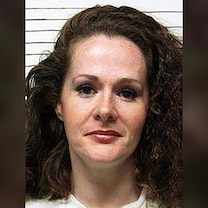
Lindsay Clancy trial: Jury being sent home for weekend

Clancy has pleaded not guilty to three murder charges.

Jury deliberations are underway in the murder trial of Lindsay Clancy, the Massachusetts mom who killed her three young children while in the family's home on Jan. 24, 2023.

Clancy’s defense attorney claims she was suffering from postpartum psychosis when she strangled her children and attempted to take her own life. Prosecutors argue that Clancy -- who has pleaded not guilty to three counts of first-degree murder -- is criminally responsible for her children's deaths.

If she is found guilty, Clancy could face life in prison without parole. If found not criminally responsible for the three murder charges, she will be sent to a state mental health facility.

If you or someone you know is struggling with thoughts of suicide, call or text 988 or chat 988lifeline.org. Free, confidential help is available 24 hours a day, 7 days a week. You are not on your own.

Aug 26, 2026, 1:14 PM EDT

Defense questions final prosecution witness on experience with postpartum psychosis, Clancy's medical care

As the prosecution in the murder trial of Lindsay Clancy nears the end of its rebuttal case, defense attorney Kevin Reddington is questioning the final prosecution witness, Gregory Saathoff, a senior psychiatrist with the FBI's Behavioral Analysis Unit, over his assessment that the Massachusetts mother was not experiencing postpartum psychosis.

Reddington used his cross-examination to not only attempt to poke holes in the assessment conducted by Saathoff after Clancy killed her children, but also highlight some of the challenges he says Clancy faced seeking medical care before the events transpired.

PHOTO: Lyndsay Clancy listens to the testimony of Dr. Gregory Saathoff  during her murder trial in Plymouth Superior Court, Aug. 26, 2026 in Plymouth, Mass.
Lyndsay Clancy listens to the testimony of Dr. Gregory Saathoff during her murder trial in Plymouth Superior Court, Aug. 26, 2026 in Plymouth, Mass.
Greg Derr/the Patriot Ledger/Pool via Reuters

“She was complaining, not just to her physicians, but she was complaining to people in her community that she was having intrusive thoughts, dark thoughts, suicidal thoughts, and homicidal ideation. She said that, correct?” Reddington said.

“The homicidal ideation, as I understand, was just voiced to her husband and her mother,” Saathoff testified.

Forensic psychiatrist Dr. Gregory Saathoff resumes his testimony about the mental state of Lindsay Clancy during Clancy's murder trial in Plymouth Superior Court, Aug. 26, 2026 in Plymouth, Mass.
Greg Derr/Pool/The Patriot Ledger via AP

“Just voiced. Is that what you just said? Just voiced. Is that like talking about the Red Sox? She's talking about homicidal ideation of her children,” Reddington shot back, prompting an objection.

While Saathoff testified that he treated thousands of people with psychosis over the course of his career, he acknowledged he only treated two women with postpartum psychosis. He also testified that memories fade over time, and that he interviewed Clancy three years after the killings.


Reddington also sought to highlight that Clancy was turned away two times from a suicide hotline, which redirected her to her medical provider without recommending hospitalization.

“What kind of a devastating effect would that have on a person who's ready to kill themselves that's called the Aspire Hotline twice and has been turned away?” Reddington asked.

“It could have a very serious effect,” Saathoff testified.
Aug 26, 2026, 11:37 AM EDT

Final prosecution expert testifies Clancy 'was criminally responsible' for actions

Lindsay Clancy had the "capacity to appreciate right from wrong" when she strangled her three children, according to the testimony of Gregory Saathoff, the longtime forensic psychiatrist testifying as a prosecution expert.

"My opinion is that she did have the capacity to appreciate right from wrong," Saathoff testified. "It is my opinion, within a reasonable degree of medical certainty, that Ms. Clancy was criminally responsible."

Saathoff noted that, in his opinion, the killings required "significant" planning and that her actions earlier that day suggested she was able "to conform right to the type of behavior that a concerned mother would engage in."


While Clancy says she heard a voice in her head commanding her to kill her children, Saathoff testified that the voice did not tell Clancy the specifics about how to kill the children and what to use, suggesting she "had control of the sequence of what she was doing throughout," based on the 11 hours he spent interviewing her.

Saathoff also testified that, in his opinion, even if Clancy was experiencing postpartum psychosis, she could have differentiated between right and wrong or pushed back on the voice she reported.

"Command hallucinations, when they occur, do not propel an individual to automatically obey them. And in fact, many people will engage in behaviors to stop them," he told the court.

Aug 26, 2026, 9:42 AM EDT

Trial enters final day of testimony

Testimony in the murder trial of Lindsay Clancy is set to conclude Wednesday, as jurors prepare to hear closing arguments and begin their deliberations on Thursday.

Prosecutors are ending their case with testimony from a senior psychiatrist with the FBI's Behavioral Analysis Unit, who testified that, based on the 11 hour he spent interviewing her, Clancy’s account of killing her three children was full of inconsistencies and does not align with how most patients experience hallucinations stemming from postpartum psychosis.

Aug 25, 2026, 5:00 PM EDT

Final prosecution witness testifies, closing arguments set for Thursday

Judge William Sullivan told jurors that prosecutors would rest their case on Wednesday, with closing arguments likely to take place Thursday.

Gregory Saathoff, a senior psychiatrist for the FBI's Behavioral Analysis Unit, took the stand on Tuesday afternoon as prosecution's final rebuttal witness. 

Saathoff picked apart Clancy's account of events during his testimony, comparing her description during two interviews with accounts from her ex-husband Patrick Clancy, as well as what she told others previously, noting several inconsistencies.

In his testimony, Saathoff raised concern that Patrick and Linsday Clancy had very different accounts of that afternoon, including Patrick Clancy saying that the kids were already eating chicken nuggets when he left the house the day of the killings, while Lindsay Clancy said she was preparing the chicken nuggets when she heard a voice telling her to kill her children.

Saathoff testified that he spent about 11 hours interviewing Clancy. He told jurors he has treated "thousands" of patients with psychosis throughout his career and testified that Clancy's description of the voice in her head commanding her to kill her children was "very unusual" compared to most descriptions of psychosis, in his opinion.

Saathoff testified that in his experience, it was unusual that Clancy claimed to have heard the voice only once in her head, compared to most patients with psychosis, who he said regularly experience auditory hallucinations. 

Saathoff also testified that, in his opinion, it was unusual Clancy claimed to have heard a constant voice -- rather than an intermittent one -- and that it abruptly ended once she killed her children. 

Saathoff testified that he has never seen a scenario when a patient reported a hallucination ending once the act demanded was complete. 

"Committing the act is not curative of the voice. I've not ever seen that," he told jurors. 

Saathoff also noted in his testimony that Clancy had told another psychiatrist the voice began as soon as Patrick Clancy left the house to run errands but told Saathoff that the voice began right after her phone call with Patrick – about a 20-minute gap.

Jurors have been sent home for the day. The charge conference is now scheduled for Wednesday, after the conclusion of evidence. 

Related Topics

Sponsored Content by Taboola