Hegseth says USS Abraham Lincoln deployment has been 'tough'
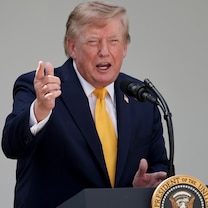
Defense Secretary Pete Hegseth told reporters during a visit to a defense contractor in Wisconsin on Monday that the nearly nine-month deployment of the USS Abraham Lincoln aircraft carrier in the Middle East had been "tough."
Several family members of those aboard the Lincoln have spoken out in recent days, suggesting that President Donald Trump's administration was downplaying the difficult conditions aboard the aircraft carrier, which is now heading back to the U.S. after more than 270 days at sea.
"To the sailors and families of the Lincoln, I say, 'Godspeed on a historic mission. Congratulations. You're on your way home. You've done epic things to secure the American people,'" Hegseth said.
"It's been a tough deployment. They haven't had as much port business as anyone would like. It's been longer than most, but they've done incredible things -- in the harshest of environments against an enemy, a determined enemy -- that will change the course of history for American security," Hegseth said.

Hegseth said he looks forward to greeting the sailors when they return home. He did not respond to my question about whether he's concerned about similar conditions on other carriers which are also currently deployed.
Pressed on the status of the ongoing conflict, Hegseth expressed confidence that the U.S. can outlast Iran in the standoff over the Strait of Hormuz. "We know that Iran can't handle it ultimately," he said. "They also know we control the Strait of Hormuz."
Trump's plan to increase economic pressure on Tehran means that the "only real choice they have is to come to the table and talk about their nuclear program," Hegseth said.
Asked if U.S. strikes were now paused, Hegseth replied, "If we need to use kinetic strikes we'll use them."
"We'll do what we need to do," Hegseth added. "Economic pressure is what we know hurts them the most."
Hegseth also denied that the U.S. is facing a munitions shortage, despite external analysis pointing toward a critical shortfall of munitions which take years to replace. "We had plenty when we needed it, we have plenty now and we'll have plenty when we'll need them in the future," he said.
-ABC News' Mariam Khan and Steve Beynon