'This Week' Transcript 11-15-26: Transportation Secretary Sean Duffy & Sen. Chris Van Hollen
This is a rush transcript of "This Week" airing Sunday, November 15.
A rush transcript of "This Week with George Stephanopoulos" airing on Sunday, November 15, 2026 on ABC News is below. This copy may not be in its final form, may be updated and may contain minor transcription errors. For previous show transcripts, visit the "This Week" transcript archive.
(COMMERCIAL BREAK)
MARTHA RADDATZ, ABC “THIS WEEK” CO-ANCHOR: Chaos after a nationwide ground stop. What went wrong and could it happen again?
“THIS WEEK” starts right now.
(BEGIN VIDEO CLIP)
RADDATZ: Ground stop.
SEAN DUFFY, TRANSPORTATION SECRETARY: A contractor didn’t meet the moment or the equipment didn’t meet the moment and caused the outages.
RADDATZ: A sudden, shocking communications failure cascades into a travel nightmare.
UNIDENTIFIED MALE: It’s definitely alarming.
UNIDENTIFIED MALE: Everything’s sold out.
UNIDENTIFIED FEMALE: We sat on the tarmac for another two hours.
UNIDENTIFIED FEMALE: We just want to get home.
RADDATZ: This morning, the mounting questions.
BRYAN BEDFORD, FAA ADMINISTRATOR: Let’s be clear. Nothing went down. What we saw was instability. And we couldn’t explain the instability.
RADDATZ: How vulnerable is our aging system? Transportation Secretary Sean Duffy joins us.
Downfall. Nvidia CEO Jensen Huang resigns after allegations involving an affair with an alleged Chinese spy. Did President Trump know?
DONALD TRUMP, PRESIDENT OF THE UNITED STATES: The big thing is, was the woman a spy? And I don’t know if that’s been determined yet.
RADDATZ: As lawmakers demand answers.
REP. JAMIE RASKIN (D-MD): Did this whole scheme end up compromising the national security of the United States?
RADDATZ: Power play. As the next Congress takes shape, a new battle for the Senate leadership.
SEN. CHUCK SCHUMER (D-NY): We have great unity in our caucus, and I’ll be proud to lead it as majority leader.
SEN. CHRIS VAN HOLLEN, (D) MARYLAND AND FOREIGN RELATIONS & BANKING COMMITTEES: The American people went to the ballot box and they voted for change.
RADDATZ: Senator Chris Van Hollen is here. Does he think he has the votes to beat Chuck Schumer?
And --
UNIDENTIFIED MALE: Now from our news headquarters in Washington, David Brinkley.
DAVID BRINKLEY, ABC ANCHOR: Good morning. We’re glad to have you with us.
RADDATZ: A special commemoration as “THIS WEEK” turns 45 today.
(END VIDEO CLIP)
ANNOUNCER: From ABC News, it’s “THIS WEEK.” Here now, Martha Raddatz.
RADDATZ: Good morning and welcome to “THIS WEEK.”
This morning, millions of Americans remain stranded or facing canceled or delayed flights after the unprecedented nationwide ground stop. For hours on Friday, with thousands of planes still in the sky, we were all left in the dark about what was happening and what might have caused the massive and historic shutdown. This morning, the administration is pointing the finger at a contractor upgrading the system, saying it was an error or faulty equipment. But major questions remain. How could an error like that cascade through nearly the entire system? And could it happen again? We will talk with the transportation secretary, Sean Duffy, in a moment.
First, we take you inside those chaotic few hours, the evolving explanations from officials and the ripple effect still being felt this morning after word of the shutdown rocked the nation.
(BEGIN VIDEOTAPE)
RADDATZ (voice over): This morning, hundreds of thousands of Americans remain stranded at airports across the country following Friday’s alarming nationwide ground stop. At 3:54 p.m. Eastern, pilots preparing to depart told to return to the gate immediately.
ATC: Attention all aircraft waiting for departure. National ground stop update unknown.
RADDATZ (voice over): Lasting nearly four and a half hours, it was the longest nationwide ground stop since 9/11, and only the third this century.
BRYAN BEDFORD, FAA ADMINISTRATOR: Tens of thousands of Americans had their flights disrupted yesterday. And I want you to understand, we did that out of an abundance of caution.
RADDATZ (voice over): The FAA chief, speaking for the first time Saturday morning, apologizing to the American people and standing by the decision to implement the stop.
BEDFORD: We couldn’t explain the instability. And we saw the instability start to propagate into facilities we couldn’t identify. That’s when we made the decision to ground stop out of an abundance of caution. But no facilities went dark.
RADDATZ (voice over): Transportation Secretary Sean Duffy, placing the blame on government contractor L3Harris while upgrading the nation’s aging air traffic control equipment.
SEAN DUFFY, TRANSPORTATION SECRETARY: A contractor was doing routine maintenance to switch telecommunication lines from old copper wire, and they were bringing it over to fiber. Either through contractor error or a faulty piece of equipment, that router that was being replaced as we switched from copper to fiber, it started flooding other routers in our air traffic control system.
RADDATZ (voice over): But Duffy, acknowledging, they are still unsure what exactly caused the router overload.
DUFFY: What we’re working to determine was whether we had incompetence, meaning was it user error or installator (ph) error from L3Harris, or did they install a faulty router?
RADDATZ (voice over): The FAA administration ruled out any cyberattack.
BEDFORD: We see zero evidence of anything nefarious and zero evidence of anything A.I. related.
RADDATZ (voice over): But that explanation was a far cry from the confusing joint press conference Friday night after the ground stop was lifted.
MARKWAYNE MULLIN, HOMELAND SECURITY SECRETARY: So, let’s talk about cybersecurity. Once again, we’re still looking at it. We’re not ruling out anything. What it appears to be right now is, as Secretary Duffy and FAA was going in and putting patches into the system, they were putting new equipment and new technology and that new equipment, new technology just wasn’t -- it was overwhelming the older system.
DUFFY: This is all the old legacy equipment. All of the new equipment that’s been deployed did not go down.
RADDATZ (voice over): That explanation coming more than four hours after the ground stop began, which has resulted in more than 17,000 flights canceled since Friday, according to FlightAware. Chaos unfolding at airports from coast to coast.
UNIDENTIFIED FEMALE: This is an all-day thing and going nowhere.
UNIDENTIFIED FEMALE: Everyone’s checked bag is stuck. No one can touch it. And they’re saying that we should just go home without it.
UNIDENTIFIED MALE: I just want to get back home to my wife.
RADDATZ (voice over): With planes frozen on runways and passengers stuck on board. Duffy making the case for Congress to pass $50 billion in funding to finish upgrading the entire air traffic control system. The Transportation secretary also appearing to blame his predecessors.
DUFFY: Now, if you look to the past administrations, going back 25 years, $15 billion has been given to the FAA to fix this air traffic control system. And guess what? Barely anything was done.
RADDATZ (voice over): Former Secretary of Transportation Pete Buttigieg, brushing off criticism.
PETE BUTTIGIEG, FORMER TRANSPORTATION SECRETARY: We did a lot to upgrade the system. When we had an outage, I didn’t stand there complaining about the Trump administration. We got to work.
RADDATZ (voice over): Now, ahead of the busiest travel week of the year over the Thanksgiving holiday, officials insisting the worst is over.
(END VIDEOTAPE)
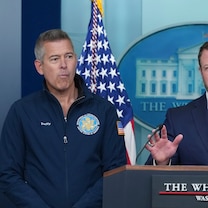
RADDATZ: And I'm joined now by the secretary of Transportation, Sean Duffy.
It’s good to see you this morning, Mr. Secretary. Thanks for joining us.
“The Wall Street Journal” is saying this morning that this began at a remote site in Arkansas. You have explained that a contract worker was replacing old copper wire and bringing it over to fiber and that the replacement router they installed started flooding other routers in our air traffic control system.
How can one single error or faulty piece of equipment at a remote location flood all these other routers?
SEAN DUFFY, TRANSPORTATION SECRETARY: Yes, so that's what we're investigating right now. We didn't think that should or would happen. And so, we have that router in the L3Harris lab down in Florida, our FAA team is on site as well. We've been partnering with the FBI and other law enforcement. Want to take a look at what happened there.
But what we've now done, we have 69 of these routers in the national airspace. We've stopped their ability to broadcast. And it was -- this router was broadcasting data from this radio facility into the whole network. Once we shut the -- shut the ability to broadcast down on the routers, the issue is resolved. So, we're going to take a hard look at it. And when I have more information, I'm going to tell the American people what we found in the labs down in Florida.
RADDATZ: But these were in -- this remote location was Arkansas and also possibly Texas?
DUFFY: So, the work was being done in El Dorado, Arkansas. This was -- we were replacing an old copper wire, which, by the way, was going to be discontinued. They were going to shut the line down. So, we had to do this work.
When we turned that router on, we saw that in Amarillo, Texas, a system we had replaced about three weeks earlier, that started to flood our system as well. So, we're looking at those two issues and trying to find the root cause of what happened. And I don't want to give information before we're certain. That's why we have to go through this investigation and determine why this happened in our network.
But, Martha, I think it's critical just to note that we did have an extraordinary ground stop on Friday. And I want the American people to know that my number one job is to keep them safe. They have to get from point A to point B and without incident. And so, if we see these inconsistencies in the network, whether it's communication with air traffic controllers and pilots or with data feeds, we're going to keep you safe.
And we did the ground stop. We were able to isolate the issue, shut it down. Our network came back online. And from there we opened up the airspace thereafter.
RADDATZ: You said this definitively was not a cyberattack, which DHS Secretary Markwayne Mullin said Friday could not be ruled out. At that point Friday, did you still think it could be a cyberattack?
So, the president had brought a whole-of-government approach to this issue. We had DNI, NSA, CISA, FBI, like everybody was on a call together. And our intelligence partners were saying, listen, we're not seeing any of the chatter or the footprints that we would normally see if this was a cyberattack. And so, we felt pretty comfortable that this was an internal network issue that's owned and operated for us by L3Harris, not an outside factor.
We feel pretty good still today that it is -- it's not a -- this is not a hacking event. But if the FBI comes in and says, no, we find something. Obviously, we'll share that with the American people, but we have no indication that this was -- was a hack.
And listen, I get that a lot of speculation --
(CROSSTALK)
RADDATZ: Have you ruled out sabotage?
DUFFY: -- the Microsoft issue.
RADDATZ: Have you ruled out sabotage of some sort?
DUFFY: Well, we have to -- what we're doing is we're looking at a full suite of issues with the -- with the -- with the router and with the installation. Now, we know who did the install. A good American patriot, we believe, a veteran.
So, we don't think that someone tried to sabotage the network on the install at all. But we don’t -- we don't -- we don’t actually have the root cause, which is why we do the investigation with our L3Harris partner on the network and the FBI and the FAA.
RADDATZ: Can you give us any sort of possibility how this would happen? I know you're not certain, but it leaves all of us saying, give us some idea how something like this could spread through the entire system.
DUFFY: Yeah, we're doing that investigation, Martha. But I want to be clear, the world, every institution, every company, they've all switched over from an old copper wire network. They've all gone to digital fiber networks, everybody but the FAA. And so, for decades, there's been underinvestment or no investment in the FAA and the architecture of our infrastructure.
So, we're stuck with an old network. that by the way, costs hundreds of millions of dollars to operate because it's so obsolete, and what I'm doing is saying, hey, Congress, this is old. There's issues with how it operates. Let's build a brand-new system.
And this is, by the way, Martha, this will be the one great bipartisan bill that can pass in an era of great partisanship. Everybody agrees that we want to have the best system in the world. We just -- we just need funding to get that done.
And I think the Congress can find a way to find the to invest in the economy and air travel and safety. And I hope that before the end of the year, they'll see what happened on Friday and make the critical investment to make sure that we don't see these disruptions again in the future.
RADDATZ: You -- you know you had an old system. You said that again and again.
DUFFY: Yeah.
RADDATZ: Yet you said you didn't anticipate an incident of this nature could happen at this scale.
Are you concerned that you and your department do not fully understand what the vulnerabilities are in this system?
DUFFY: Well, we understand the age of the network. And we -- the work that was done on Friday, that's been done thousands of times by L3Harris in our network. It's been done thousands of times by other companies, and these issues haven’t -- haven’t -- haven't arisen, and so that's why we have to figure out, you know, what went wrong here.
Now, on these routers. this router was broadcasting. And when it broadcast, it was shooting off this data to all of our other routers in the system, which, by the way, Martha, the routers that were experiencing issues, those routers were purchased in 2001, they were obsolete in 2006, and we still use them in 2026, just to underscore how old the network is.
And the mission we have is to fix it. So, again, not knowing -- it's okay to say, let's not get ahead of ourselves. Let's not get over our skis. Let's -- let's be honest and transparent with the American people when we have the information.
But I can tell you this, as of Friday night, we had the network up and running. We -- when we shut down this El Dorado, Arkansas facility, the network came back online and operated like it was supposed to.
RADDATZ: So how long --
(CROSSTALK)
DUFFY: -- got to say, well, what was the issue with the router?
RADDATZ: Mr. Secretary --
DUFFY: And this worked (ph).
RADDATZ: -- just to close out here, how long will it take before things get back to normal?
DUFFY: So, in the airspace, we're going to see things come back to normal today, but probably fully normal tomorrow. We had airplanes and crews out of position because of Friday, so it takes a little bit of time to do that.
But I'll tell you this, I have AT&T, Verizon and Lumens, the greatest telecom companies in the world. I have an architecture ready to go. We've designed it. They're ready to start working tomorrow. All we need is the money to say, go, build a new network. That would be done by the end of 2028 or possibly the first quarter of 2029.
So, we're ready. We've done the work. I just need the money to make the investment, to make sure this never happens again.
RADDATZ: And you know that some members of Congress are saying they already approved $12.5 billion and you haven't used it all.
DUFFY: A --
RADDATZ: If you can be quick here.
DUFFY: Let me -- let me answer that, Martha. You're right. I'll be quick. The Congress was very specific on how we spend the money. They gave me money for tower -- for radios, money for radar, money for systems. But I don't have any money in that $12.5 billion for a new architecture for telecom. I don't have any money given by Congress to build a new software system to manage the airspace.
They were very specific on how we spend the 12.5 and none of the money goes to this telecom that I have to build. So, they need to give me additional money to finish that project.
By the way, the $12.5 billion will all be spent and deployed by the end of 2028. We're building at an amazing speed that's happening safely. But $12.5 billion by -- is not nearly enough to fix a system that has been neglected for decades.
RADDATZ: OK, thanks for joining us this morning, Mr. Secretary. We appreciate it.
DUFFY: Thanks, Martha.
RADDATZ: And I’m joined now by former Marine Corps pilot, retired Colonel Steve Ganyard, who was also a mishap investigator.
Good morning to you, Steve.
There seems to be no question that these systems need to be upgraded. But to have one router cause an entire shutdown, overloading that system is quite extraordinary.
COL. STEVE GANYARD, U.S. MARINE CORPS (RET.) & ABC NEWS CONTRIBUTOR: It is. So, obviously, you build into the system redundancy so that a cascading failure doesn’t take out the whole system. But here we had a single technician in rural Arkansas who may have flipped a switch that wasn’t supposed to be flipped, which ended up flooding data into the system and overloaded the system. So, how do you prevent a single contractor from doing the wrong thing? So, you prepare for failures. This wasn’t a failure. It was an installation where somebody flipped the wrong switch. So, yes, I’m sure Secretary Duffy wished he could have seen this in retrospect, but this was not something really that you could plan for.
RADDATZ: Do you worry about the vulnerabilities -- again, I think we all do -- after what we have seen, that this could clearly happen again, it seems? They don’t quite know why this happened.
GANYARD: So, we actually had the FAA administrator say, yes, this is going to happen again until we can modernize the system. But it’s important to understand just how obsolete the FAA is. So, when Secretary Duffy talks about copper wires, you know who else used copper wires for communication? Alexander Graham Bell in 1876. So, that’s where we are. We’re trying to take these copper wires, electrical signals, analog signals and make them work with optical fiber. So, a trillion bits per second going down an optical glass fiber. How do you make those work? And so that’s what we’re trying to do is to modernize this system in a way that’s never been done before. Because, you know, it’s the old adage of trying to fix an airplane while it’s airborne. That’s what’s happening here. You can’t just stop the system.
RADDATZ: I think one of the things is, if they got the $50 billion today, how long would it take to fix that system?
GANYARD: Yes. So, it’s not just a question of money. The modernization efforts of the FAA average about 13 years. So, even if that money got put into the FAA’s bank account today, it would be a decade at least before we see some of these things that need to be fixed and need to be modernized.
RADDATZ: OK, that’s not great news, Steve.
You’re a pilot. You were watching this closely on Friday. How safe is it to fly right now? And how did they get those airplanes down?
GANYARD: Yes. So, every time you push back from a gate, you’re sitting on an airliner, you push back from the gate, that crew knows that once they take off, where they need to go. They essentially have clearance all the way to touchdown. And remember, on modern airliners, you have things called TCAS, so airplanes won’t essentially run into each other. It’ll tell them which way to go so they don’t run into each other. But nobody wants to test that system. So, I can’t find any example of loss of communication. There was some static. Apparently pilots were hearing static when they were talking to the controllers, or controllers weren’t getting through. But this wasn’t a thing where the -- all the communications shut down. The system worked. The backups worked. But we don’t ever want to get to the point where we have one failure away from losing the whole communication system.
RADDATZ: Just quickly, Steve, if you will, what questions do you still have about what happened?
GANYARD: How -- what are they doing in terms of building in cybersecurity into this new system? So, the FAA --
RADDATZ: Even though it wasn’t -- they said it wasn’t cyber.
GANYARD: Even though it wasn’t cyber. We’re -- you know, we’re seeing advances in frontier A.I. models now that are using a generic A.I. to swarm that critical infrastructure, not just the FAA system, but critical infrastructure around the country is unbelievably
vulnerable. And so I'm worried about what we're going to see in the future. It's not just modernization and things that are old breaking.
It's the kinds of threats that we're going to see in the future. Is the FAA spending the time now to create the cybersecurity resiliency that needs to match these new threats?
RADDATZ: So you think we're safe now, but we might have more delays and cancellations and grounding in the future.
GANYARD: Stand by and be patient.
RADDATZ: All right. Thanks so much for joining us, Steve.
GANYARD: Thank you.
RADDATZ: Up next, with President Trump set to head to Asia, our report on the fallout from the massive Nvidia scandal this week and what happens next after its CEO suddenly stepped down.
We're back in two minutes.
(COMMERCIAL BREAK)
(BEGIN VIDEO CLIP)
REP. DON BACON (R-NE): I never agreed with a deal. Why are we sending some of our best chips to China? So I think that was a mistake from the beginning. And we wish -- and I don't like they made that decision.
SEN. THOM TILLIS (R-NC): This is probably the most important technological platform that manufactured at scale in the history of humankind which may have been compromised at some level. We need to understand how that could have happened, what the repercussions could be.
(END VIDEO CLIP)
RADDATZ: Reaction there from Capitol Hill to the rapidly unfolding and stunning saga surrounding Nvidia CEO Jensen Huang and his affair with an alleged Chinese spy, which, along with reports of another alleged affair, led to his resignation from the $4 trillion company powering the A.I. revolution.
Chief business correspondent Rebecca Jarvis has the story.
(BEGIN VIDEOTAPE)
REBECCA JARVIS, ABC NEWS CHIEF BUSINESS CORRESPONDENT (voice-over): This week, the stunning fall of the most consequential player in the A.I. revolution.
JENSEN HUANG, FORMER NVIDIA CEO: Here it is.
JARVIS (voice-over): Nvidia CEO Jensen Huang, whose computer chips power the data centers behind artificial intelligence, resigning Thursday after admitting to an extramarital affair reported by "The New York Times" to have been with Alice Huang, a woman the U.S. intelligence community believes is an intelligence asset for China.
At first, the Nvidia boss was determined to stay at the company, writing in an apology e-mail last Sunday to employees, "I am fully committed to Nvidia and will work to earn back your confidence."
That didn't happen. In subsequent days, reports Jensen Huang had at least one additional affair with an employee at Nvidia. His resignation followed. But it's Huang's connection to Alice Huang, the alleged Chinese spy, that has rocked the company and the A.I. world. Alice Huang was a top executive at Megaspeed, a Singapore based company with access to Nvidia's top tier computer chips that are banned from being imported into China.
Chinese firms circumvent that ban by relying on data centers in Southeast Asia to access the computing power of those chips without needing the physical hardware. Nvidia's chief
has been photographed with Alice Huang since as early as 2024, when the U.S. began investigating Megaspeed for potentially smuggling those industry-leading chips into China, according to “The New York Times”. China has denied those allegations.
U.S. intelligence was also tracking the relationship. Sources telling ABC News, Secretary of State Marco Rubio briefed the president about the relationship on Air Force One en route to China in May, the second time Rubio warned Trump about the alleged plot, according to sources.
Trump asked Jensen Huang to join that trip, with the NVIDIA chief flying on Air Force One.
Trump this week denying that he knew of the alleged affair at the time of the trip.
DONALD TRUMP, PRESIDENT OF THE UNITED STATES: No, I didn't hear about it then, but a lot of people have heard about it, and Jensen totally denies that.
JARVIS (voice-over): Trump says he spoke to Jensen Huang on Monday and asked him about Alice Huang.
TRUMP: I asked him that question, “Did you have any idea that she was a spy?” He said, “I had no idea that she was a spy,” and I really believe him.
JARVIS (voice-over): But the president hedging when asked if resigning was the right move.
TRUMP: If the woman was a spy, yes. If the woman was not a spy, perhaps it would be different. But I can tell you this, somehow, he'll end up in his feet.
JARVIS (voice-over): The saga also exposing a rift inside the administration, with Treasury Secretary Scott Bessent placing blame on the Commerce Department for failing to place Megaspeed on an export blacklist.
SCOTT BESSENT, TREASURY SECRETARY: Treasury, War, USTR, and State, they were in favor of putting Megaspeed on the entity list for months. But Commerce has the pen, Commerce BIS has the pen, and you will has -- have to ask them about their internal processes.
JARVIS (voice-over): Last year, Huang shared a stage with Lutnick and touted their close relationship.
JENSEN HUANG, FORMER NVIDIA CEO: Howard is the person I talk to most in the administration.
(END VIDEOTAPE)

RADDATZ: Our thanks to Rebecca Jarvis.
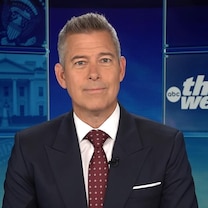
I'm joined now by Maryland Democratic Senator Chris Van Hollen, who sits on the Senate Foreign Relations Committee and the Banking Committee. He announced this week he's challenging Chuck Schumer for Senate Majority Leader.
Good to see you this morning, sir.
Let's -- let’s start with NVIDIA.
Jensen Huang has agreed to testify in a closed-door hearing, a briefing with the House Foreign Affairs Committee. How concerned are you about this, that this alleged spy might have gained confidential information?
SEN. CHRIS VAN HOLLEN, (D) MARYLAND AND FOREIGN RELATIONS & BANKING COMMITTEES: Well, Martha, it's good to be with you.
I'm very concerned about this. This has been part of the corruption of the Trump administration from day one. Jensen Huang and NVIDIA gave $25 million for Donald Trump's gold-plated ballroom. He's been a huge supporter of the president, and he has gotten the president to allow NVIDIA to send very high-end chips to China against the advice of folks in the national security arena.
And now we find out that he's had this relationship with a potential spy who's been part of an effort to actually divert these chips from Singapore, other places in Southeast China -- in Southeast Asia to China. So, this is very worrisome. We need to get to the bottom of it.
RADDATZ: As you heard, sources told ABC News that Secretary Rubio informed President Trump of Jensen Huang's relationship before picking up Huang in Alaska on Air Force One and then heading to China. The president denies he knew about it at the time.
Do you believe him?
VAN HOLLEN: I do not, because this is a president who lies to the American public all the time. And this is why we need an investigation. We need people testifying under oath.
RADDATZ: So, you do believe he was briefed?
VAN HOLLEN: I do believe he was briefed. I think -- all the information that I've seen suggests that this would not have escaped the attention of the president of the United States.
RADDATZ: “The New York Times” also reporting that President Trump urged Huang on Tuesday to fight to keep his job.
Is that appropriate to you?
VAN HOLLEN: Not at all. Here, you have somebody who's been implicated in an effort to smuggle high-end U.S. chips into China, as well as somebody who has been in cahoots with the president from day one by supporting the president, giving him money for different projects, and getting the ability to send these high-end chips in, which compromise our national security and our place in the A.I. race.
RADDATZ: If all of this is true, what can be done now? Obviously, you can do something to him or hold him responsible. But what can be done now in terms -- if there is this national security issue?
VAN HOLLEN: So, first of all, Megaspeed. This is the company that was run by the woman that he had the relationship with. That should be on the entities list. Commerce should have put that on the entities list as soon as they had this information.
We also need to close other loopholes in our export control laws, including with a provision that says that if you're a subsidiary of a company that's on the blacklist, you shouldn't be able to export and receive these high-end chips either. So, there are lots of things we can do to close these loopholes.
RADDATZ: The New York Times is also reporting this morning about Howard Lutnick, saying he pushed to weaken CHIP rules that overlapped with his family business. So, is this Secretary Lutnick's fault in your view? If so, should he be fired?
VAN HOLLEN: I think he should be fired. And I chair the subcommittee that oversees the Department of Commerce that helped expose his involvement with the -- with Epstein. And now we have this on top of what we already knew. Yes, he should be fired because this is a case where this company should have been on the entities list. You just heard Bessent say that Treasury had recommended to Commerce that they be put on the entities list.
So the question is, why were they not done that? And I think now we're getting the answers through the relationship between the president, Jensen Huang, and now Jensen Huang's girlfriend.
RADDATZ: And what do you think President Trump will do about this? What do you foresee?
VAN HOLLEN: Well, what he should do is actually get to the bottom of it and close these loopholes. What he will do apparently is tell Jensen Huang to fight this effort. So essentially, what the president is doing is once again undermining our national security and giving a green light to the idea that we should send these very high-end chips to China.
RADDATZ: Of course, he would argue with that. And you already heard him say he wasn't sure she was actually a spy or not, and seemed to hedge there.
Speaking of the president, he is meeting with President Xi and President Putin next week at a summit in China. What do you expect to happen there? Do you think they will talk about NVIDIA? President Trump will talk about NVIDIA with President Xi. And what about Putin there? What does this symbolize to you?
VAN HOLLEN: Well, this is another example, in my view, of President Trump cozying up to authoritarian leaders. We have, of course, President Putin, who day after day is undermining the freedom and independence of the people of Ukraine, and Donald Trump is essentially sided with Putin.
And now in this case, it seems that he's essentially siding with President Xi in the question of sending very high-end chips to China. That is crazy. That undermines our national security.
RADDATZ: OK, let's switch here to Senate leadership, which you are very much in the news about. You're challenging Chuck Schumer to be majority leader in the next Congress, saying this is a generational opportunity. Why do you think you are the one to represent this generational opportunity? And what chance do you think you have of winning?
VAN HOLLEN: I think this is a wide open race, Martha. And I think the American people spoke loudly and clearly on Election Day. First of all, they rejected Trump's policy, his wars, his corruption, the high costs. But they haven't fully hired the Democrats. We have a chance, but we need to earn the people's trust.
And I don't think you earn people's trust by simply going back to business as usual, the status quo. So this isn't about any one individual. It's about what the American people had to say and the fact that we have to take on this system where you've got an economic system that is rigged in favor of the folks at the top against working people.
And it is fueled by political corruption. We need to go after that.
RADDATZ: Schumer oversaw the highly successful Senate Democratic campaign effort, flipping all those seats blue. Senator Angus King, in support of Schumer, said, why would you fire the manager who just won the World Series?
VAN HOLLEN: So, Martha, look, I respect the work of the DSCC. And I used to chair the DSCC and the DCCC in the House. But let's be real. This was not a Washington-orchestrated election around the country. This was the American people rising up against a lawless president and demanding change.
We won not just Senate seats and House seats, we won governor's races. We won legislative races. And if you look at some of the races we won, say, in Mississippi, and Scott Colom has actually talked about this, he wasn't recruited or picked by anybody in Washington. And in fact, Washington was very late in the game to supporting that.
South Carolina, Annie Andrews. I mean, this is not a Washington-orchestrated win. Again, I respect the work. I respect the fact that they raised funds. Republicans in Washington raised twice as many funds. That's the thing about this election. It was the people --
(CROSSTALK)
RADDATZ: And you really think you have the votes? Chuck Schumer says he has the votes.
VAN HOLLEN: I think there's a very open lane here. The Schumer team's put out a lot of misinformation. They're essentially trying to instill fear in people who may say that they're going to support me as a new leader. But that's part of the problem. That's part of the old system.
We just had a great day for our democracy around the country. How about a little democracy in the Senate Democratic Caucus?
RADDATZ: OK, thanks for joining us this morning. We really appreciate it.
VAN HOLLEN: Thank you.
RADDATZ: What does the Roundtable think of the Democrats' leadership fight? Is it good for the party? We're back in two minutes.
(COMMERCIAL BREAK)
RADDATZ: And the roundtable is now here. Former DNC chair Donna Brazile; “Cook Political Report” editor-in-chief Amy Walter; SCOTUSBlog editor Sarah Isgur; and former New Jersey Governor Chris Christie.
I'm going to start with you, former governor, Governor Christie.
Your reaction to this ground stop and how that was handled?
CHRIS CHRISTIE, (R) FORMER NEW JERSEY GOVERNOR & ABC NEWS CONTRIBUTOR: You know, and especially now, 10, 12 days after the election, to me, it's the confluence of the corruption of this administration and the incompetence came together at this moment.
You know, you have all these people on there who have spent more time focusing on feathering their own nest, lining in their own pockets, and their competence is now right in the front as well -- rather incompetence.
So, you look at the ground stop situation, you have the secretary of transportation pointing fingers at the secretary of homeland security, you have people pointing back to the Biden administration. No one's willing to take responsibility.
And Donald Trump is in the witness protection program on this issue. A guy who will post on social media about anything, we haven't heard a word from him on this topic.
RADDATZ: Oh, wait. Wait, we have this morning.
CHRISTIE: Oh!
RADDATZ: The Biden administration was an FAA disaster. Everything they touched turned bad, big money spent. We have the knowledge and plan for the flight control system.
There's no question it's an ancient system and needs upgrading. You can't argue that.
But, Sarah, to that point, that President Trump may be on Truth Social this morning, but he has not come out. Friday, it was hours before people knew anything.
SARAH ISGUR, EDITOR AT SCOTUSBLOG & ABC NEWS CONTRIBUTOR: This actually ties into the Nvidia scandal as well. We have spent so much time, really since the 2008 financial crisis, on domestic politics and these culture war issues. That's not really what government does. What government does is competence, running infrastructure, and national security.
And to have 24 hours where both of those things collapse in front of the American people might be a nice reminder that we need to worry less about, you know, who's on what team, and red versus blue, and a little more about some core governmental functions. And this is an opportunity for Democrats. But will they actually be able to prove that they can do those things or do they want to just do some culture war fun, you know, pew-pew?
RADDATZ: Which is a nice transition into -- into the midterms. They're still counting votes in Alaska, but Peltola is making gains, apparently about 11,000 votes ahead now. When all is said and done, Democrats could have 56 Senate seats and up to 260 House seats.
Voters said it's affordability and the war. President Trump said otherwise. Amy?
AMY WALTER, EDITOR-IN-CHIEF, COOK POLITICAL REPORT: Well, yes, because this is not an administration -- and as we saw with the vote in the House to pick Jim Jordan as the leader of the minority party, this is not a party that's particularly interested in introspection right now about what went wrong, how did we miss the fact that the issue was the economy, affordability, the frustration that people were feeling that the administration wasn't and the president himself wasn't focused on the things that they cared about.
It was also a let's turn a page, right? This was a anti-status quo. And it's interesting thinking about tying all this back together with the FAA piece of all of this.
RADDATZ: So many things to --
(CROSSTALK)
WALTER: So many things can all come together.
But we have voters saying the status quo isn't working. We also have voters saying institutions, the government itself, these institutions are old and creaky and need to be changed. But nobody's talking actually about Sarah's point, which is you actually do need to fix the things that we do need institutions to work.
So, upending all institutions and all stability is not the answer either.
RADDATZ: Donna, I want to talk to you about -- about the leadership fight here.
(CROSSTALK)
DONNA BRAZILE, FORMER DNC CHAIR & ABC NEWS CONTRIBUTOR: Which one? We got it in the Senate and the House. Which one?
RADDATZ: You heard what --
BRAZILE: Yeah.
RADDATZ: -- Chris Van Hollen says that he thinks he could possibly have the vote.
I really haven't talked to anybody who doesn't think Chuck Schumer would win. So why is Van Hollen doing this?
BRAZILE: Look, there's no question that the Democrats who were very energized over the last year and a half, they're bringing this energy now into these leadership conversations.
This is once again a generational fight. Schumer, who is 75. I think Chris is --
RADDATZ: Sixty --
BRAZILE: Sixty --
RADDATZ: Maybe a decade behind.
BRAZILE: Right, right. But look, they -- they really want to set the agenda. There are progressives inside the party. They want to set the agenda.
They want to basically control what happens now that Democrats have a great team of people both in the house as well as the Senate. They just want this agenda to be about getting things done. To your point, they want to return confidence, rebuild trust in institutions. But I'm not afraid of the fight on the House or the Senate side. What I'm concerned about is that we don't spend the next 100 days talking about, you know, internal stuff, we have to deliver for the American people because they did not elect Democrats to come to Washington, D.C. and figure out who's going to sit in the high chair.
SARAH ISGUR, EDITOR AT SCOTUSBLOG & ABC NEWS CONTRIBUTOR: But isn't this fascinating? Because Democrats are having this leadership fight. When we talk about 2028, we're talking about near 20 candidates, maybe more, on the Democratic side that are thinking of throwing their hat in the ring.
That's not happening on the Republican side, no leadership fight. The number of candidates for 2028 is, well, at least in modern politics, a relatively small number. Donald Trump has hollowed out his side of the aisle, and it has really energized the left.
AMY WALTER, EDITOR-IN-CHIEF, COOK POLITICAL REPORT: But can I say something, too, about where the real fight's going to be? I mean, this is a fun conversation to have right now. And it is real. I'm not discounting that.
But we know that in, I don't know, two weeks from now, actually, when we turn the calendar into 2027, all the focus is going to be on 2028. And the real leader of the Democratic Party is going to be who Democrats pick as their nominee for president. And that is going to be, I think, the more substantive issue (ph).
BRAZILE: But I want to be clear. Hakeem Jeffries has to vote, and I think Chuck Schumer has to vote. Now, many on the left will not like that, but they've worked hard. How do you fire the winning coach for the Super Bowl after you have, you know, made --
RADDATZ: Well, Chris Van Hollen had an answer to that, too.
(LAUGH)
BRAZILE: Well, keep going.
RADDATZ: New leadership. Chris, I want to take it to you about the Republicans and what you've seen so far. Before the midterms, a Republican congressman told me that if there was a Democratic blowout against the Republicans, and Republicans doubled down on Donald Trump's agenda, he said, we're screwed.
From what you've seen already, do you think they will double down on Donald Trump's agenda, given the Stephen Miller, Jim Jordan?
CHRIS CHRISTIE, (R) FORMER NEW JERSEY GOVERNOR & ABC NEWS CONTRIBUTOR: I don't think that's been determined yet. I still think 11, 12 days away, people are still kind of recovering from what happened and are still trying to figure it out. I don't think that the president -- and Amy and I were talking about this beforehand.
He's going to look back at 38 percent job approval as the good old days. This is not going to get better for him. And here's why.
And again, we go back to NVIDIA and the FAA, the stories this week. They point out the biggest weaknesses of his administration, which are not going to get any better over the next two years, that all these cabinet officers are in those jobs because they kiss his rear end better than anybody else does. That's why they're there.
And then you add to it that the Huang situation at its core is about corruption. It's about the fact that Jensen Huang kissed his rear end enough to have been a cabinet member if he wanted to be. But more importantly, $25 million to the ballroom, and millions and millions of dollars to the campaign.
So when something came up that was serious, what happened? Trump walked away from it and wouldn't deal with it. That's the intersection of corruption and incompetence that causes the American people to lose.
ISGUR: Martha, I was at the Federalist Society convention this week. Watch the judicial moms. It's going to tell you everything you need to know about what Republicans in the Senate think about the last two years of Donald Trump's presidency. They have six weeks.
If they're going to move his noms quickly, that'll be a good sign. But there's every indication that they may just not show up.
RADDATZ: And Sarah, outside of those nominations, the White House is gearing up to fight congressional investigations. Attorney General, Todd Blanche said it may be criminal --
ISGUR: A war footing. Yeah.
RADDATZ: So how does how does that go?
ISGUR: The Department of Justice is being hollowed out as we speak. I don't know what's going to be left by New Year's in terms of the department's ability to fight some of these fights.
I mean, there's the bonkers docket where there's no one really left to sign some of these briefs because the arguments they're making are sanctionable.
RADDATZ: And Amy, we know what Americans care about. We've seen the polls again and again, 78 percent say Congress should focus on cost of living. So if the Democrats pursue these investigations, could it actually help Donald Trump and the Republicans?
WALTER: I think that is the hope, is when you talk to Republicans, what they are counting on is for Democrats to overreach or even to just the distraction, right, that they're going to focus on these things over here. It's going to get media attention.
And the president is much better than your traditional lame duck president at getting attention. And he is going to still use the power of executive authority to try to put Democrats on their heels. Now, when I talked to Democrats before the election, they were very aware of this dynamic.
They feel like they are united in a way that they hadn't been in previous eras because this isn't really -- the rift between the party isn't ideological.
There is a through line on all of it, which is about being able to deliver on the promises that they made on the campaign, which feels much more so than it has been at previous --
RADDATZ: Donna, we got about 40 seconds.
BRAZILE: We haven't seen a Democratic Congress or Republican Congress work with the Article 1 powers. Democrats are going to hold this administration accountable. They're going to keep them in check, but they have to deliver first on the things that the American people are worried about. That's number one. Affordability, and right now, people are losing their food stamps, their supplemental income.
That's what worries Democrats right now. How are we going to help the American people and yes, we're going to hold this administration accountable?
ISGUR: Do legislation, make him veto it.
RADDATZ: OK. Thanks to all of you. Appreciate it.
So much more to talk about in the coming weeks, but we'll be right back with a special note on a special anniversary for this program, which got its start right here 45 years ago.
(COMMERCIAL BREAK)
(BEGIN VIDEO CLIP)
DAVID BRINKLEY, THEN ABC NEWS ANCHOR: Good morning. We're glad to have you with us. We have a new Sunday program for you, which we hope you will find useful. We will look at what has been happening, what is happening now, and what we can see happening next week.
(END VIDEO CLIP)
RADDATZ: That was David Brinkley 45 years ago today, November 15th, 1981, beginning the very first broadcast of ABC's THIS WEEK. We're so grateful for your support over the years, and we wanted to close the show this morning with a special look back through the decades as we celebrate 45 years on the air.
(BEGIN VIDEOTAPE)
ANNOUNCER: For 45 years.
BRINKLEY: Here in Washington and other places, we're all here. Pleased to have you with us.
ANNOUNCER: From presidents.
BRINKLEY: You do have some explaining to do if the polls mean anything.
GEORGE H.W. BUSH, FORMER U.S. PRESIDENT: I sure do.
COKIE ROBERTS, FORMER ABC NEWS CORRESPONDENT: On the tax pledge.
GEORGE W. BUSH, FORMER U.S. PRESIDENT: Yes.
ROBERTS: Would you take it again? Would you sign that piece of paper again?
ANNOUNCER: And before they were presidents.
GEORGE WILL, FORMER ABC NEWS CORRESPONDENT: You've never had or aspired to, as far as anyone can tell, a job outside of politics. Do you think that's the best kind of person to be president?
ROBERTS: Isn't it possible that you could have affected the policy if you all had spoken up sooner, instead of just going along?
GEORGE W. BUSH, FORMER PRESIDENT OF THE UNITED STATES OF AMERICA: Well, let me e very specific. The answer is yes, we could have.
UNIDENTIFIED MALE (voice-over): To world leaders and newsmakers.
GEORGE STEPHANOPOULOS, ABC ANCHOR OF "THIS WEEK" AND FORMER WHITE HOUSE COMMUNICATIONS DIRECTOR: What do you say to Americans who see Russia and you not only as a rival, but an unfriendly adversary?
RADDATZ: The President of the United States is accusing the former President of wiretapping him.
UNIDENTIFIED FEMALE: If this happened, Martha, if, if, if, if.
JONATHAN KARL, ABC CO-ANCHOR OF "THIS WEEK" AND CHIEF WASHINGTON CORRESPONDENT: You said you advocated giving extra votes to people with children. Do you regret saying that? You take that back?
UNIDENTIFIED MALE (voice-over): Asking the tough questions.
KARL: Trump actually said, in response to what you said recently about January 6th, that it was your fault. That's what he said. What do you -- what do you think of that?
STEPHANOPOULOS: Let's start with the debate. Was this a bad episode, or the sign of a more serious condition?
SAM DONALDSON, ABC NEWS, FORMER CO-ANCHOR OF "THIS WEEK": I get to ask the question. You're right, you get to give whatever answer you want. And my question is, do you want to ban abortion?
UNIDENTIFIED MALE (voice-over): For 45 years, the most interesting place to come on Sunday mornings.
DONALDSON: Welcome to our Roundtable.
UNIDENTIFIED MALE: Thanks, Sam.
DONALDSON: We're glad to have you. Now that may be the last kind word anyone says to you today.
(LAUGH)
UNIDENTIFIED MALE: More than I expect.
UNIDENTIFIED MALE (voice-over): ABC's "This Week."
STEPHANOPOULOS: 45 years. It all started with David Brinkley. I still remember my first time when I was a young campaign aide. Bill Clinton coming on and getting grilled by Sam, Cokie, and George.
RADDATZ: The first time I was ever on "This Week," I was basically terrified. I was on the Roundtable with George Stephanopoulos and thought, what will he ask me this time? I still get that feeling.
KARL: I started watching "This Week" with this guy when I was in middle school. And for years, it was my favorite political show on television. It has been the honor of a lifetime to actually be part of this great program.
UNIDENTIFIED MALE (voice-over): If it's Sunday morning, it's "This Week."
STEPHANOPOULOS: Good morning and welcome to "This Week."
RADDATZ: Welcome to "This Week."
KARL: Welcome to "This Week."
DONALDSON: And until next week, that's "This Week."
UNIDENTIFIED MALE: For all of us at ABC News, until next week, thank you.
(END VIDEOTAPE)
RADDATZ (on camera): Got nothing else to say. That was great.
(COMMERCIAL BREAK)
RADDATZ: And that's all for today. Thanks for sharing part of your Sunday with us. As Sam Donaldson and the great Cokie Roberts used to say, to sign off every show. Until next week, that's "This Week." Have a good day.
(COMMERCIAL BREAK)
END

Popular Reads

ABC News Live