'This Week' Transcript 9-6-26: Energy Secretary Chris Wright, former Air Force Secretary Frank Kendall & Utah Gov. Spencer Cox
This is a rush transcript of "This Week" airing Sunday, September 6.
A rush transcript of "This Week with George Stephanopoulos" airing on Sunday, September 6, 2026 on ABC News is below. This copy may not be in its final form, may be updated and may contain minor transcription errors. For previous show transcripts, visit the "This Week" transcript archive.
MARTHA RADDATZ, ABC “THIS WEEK” CO-ANCHOR: The U.S. and Iran trade attacks in the Strait, as Americans face record high gas prices for Labor Day.
“THIS WEEK” starts right now.
(BEGIN VIDEO CLIP)
RADDATZ: What war? Into the war’s seventh month, President Trump downplays it.
DONALD TRUMP, PRESIDENT OF THE UNITED STATES: I call it a military conflict because it’s small potatoes for us. It’s not a big thing.
RADDATZ: All as Americans feel the pain as gas and diesel prices soar.
UNIDENTIFIED MALE: It’s scary. Honestly, I just pulled up and I didn’t expect to see $4.57 for regular gas right now.
RADDATZ: This morning, we speak with Energy Secretary Chris Wright.
Turmoil at the Pentagon.
VICE ADM. NANCY LACORE, FORMER CHIEF OF U.S. NAVY RESERVE (RET.) & (D) SOUTH CAROLINA CONGRESSIONAL CANDIDATE: You know, it’s just weakening our military and really putting our country at risk.
RADDATZ: After the Army secretary resigns, growing concerns over Defense Secretary Pete Hegseth’s leadership.
REP. DON BACON, (R) NEBRASKA: He would not be on my team.
RADDATZ: Former Air Force Secretary Frank Kendall with his warnings over the state of the military.
A plea for civility.
GOV. SPENCER COX, (R) UTAH: Seventy percent of this country doesn’t like where we are right now. They’re tired of the hyper partisanship.
RADDATZ: One year after Charlie Kirk’s assassination, we speak with Utah Governor Spencer Cox about his new book on “Off Ramp,” and his push to turn down the temperature.
Plus, 25 years later.
UNIDENTIFIED FEMALE: I was not alive for 9/11.
JAY O'BRIEN, ABC NEWS CORRESPONDENT: What do you know about it?
RADDATZ: The college class trying to preserve the memory of 9/11 for a new generation.
(END VIDEO CLIP)
ANNOUNCER: From ABC News it’s “THIS WEEK.” Here now, Martha Raddatz.
RADDATZ: Good morning and welcome to “THIS WEEK” on this Labor Day weekend. A weekend where gas prices are rising and so are tensions in the Middle East. We are now into the war’s seventh month, despite President Trump calling it small potatoes and the vice president refusing to even call it a war. It has flared up once again.
On Saturday, Iran launching ballistic missiles at a U.S. Navy destroyer and an aircraft carrier. The U.S. firing back, disabling or destroying three Iranian oil tankers. That, of course, in addition to the fact we have had 18 Americans killed and nearly 800 wounded.
And with just 58 days until the midterms, voters are watching this all play out, the Iran war, the rising price of gas and the state of the Trump presidency in general.
Our Rachel Scott was watching it all from the White House this week and leads us off.
(BEGIN VIDEOTAPE)
RACHEL SCOTT, ABC NEWS SENIOR POLITICAL CORRESPONDENT (voice over): Into the Iran War’s seventh month with no end in sight, President Trump declaring this week the conflict is, quote, “small potatoes.”
SCOTT: Can you explain to the American people, if this is not a war, what exactly is it?
DONALD TRUMP, PRESIDENT OF THE UNITED STATES: Well, I’ll tell you what, a lot of people don’t call it a war. I call it a military conflict because it’s small potatoes for us. It’s not a big thing.
SCOTT (voice over): But 18 U.S. service members have died, nearly 800 have been wounded, in a conflict the president said would only last four to six weeks.
SCOTT: It certainly doesn’t feel like small potatoes. Eighteen service members have died. We’re seeing record long deployments. You initially said this would last --
TRUMP: Record long -- why is it record long? So --
SCOTT: Well, the 82nd Airborne is now being extended to a year.
TRUMP: How long are we in Vietnam? How long were we in Vietnam?
SCOTT: We’re seeing record --
TRUMP: No, no, how long were we in Vietnam?
SCOTT: The USS Abraham Lincoln was out for more than 250 days at sea.
TRUMP: We’re in five months now.
SCOTT (voice over): The president making those comments as he defended Vice President J.D. Vance, who earlier in the week claimed it was not a war.
J.D. VANCE, VICE PRESIDENT OF THE UNITED STATES: I wouldn’t call it a war. Right now there is no active shooting.
SCOTT (voice over): This week, Commerce Secretary Howard Lutnick issued an apology after he says he misspoke when he forgot those 18 Americans who have died.
HOWARD LUTNICK, COMMERCE SECRETARY: I think the way the president is playing Iran, right, there’s not -- there haven’t been American deaths. It’s really just an economic choke out, which the administration is now executing more broadly.
SCOTT (voice over): Lutnick later saying he was thinking about the operation in Venezuela.
But by Saturday morning, the two sides trading attacks again. U.S. forces striking three Iranian crude oil carriers responding to Iran launching ballistic missiles toward two U.S. Navy warships.
CENTCOM Commander Brad Cooper saying in a statement, “if you shoot at two of our ships, we will impose an even higher economic cost, taking out three of yours.”
Meanwhile, President Trump’s special envoy, Steve Witkoff, and son-in-law Jared Kushner in Moscow yesterday, pushing for an end to the war in Ukraine. A White House official tells ABC News, the two discussed substantive plans for the next steps and a plan for peace. The pair arriving in Ukraine this morning to meet with President Volodymyr Zelenskyy.
It comes as Vladimir Putin has increased his assault on Kyiv, striking the Ukrainian capital at a level not seen since the earliest days of the war.
Ukraine ramping up their own attacks, hammering Russian energy infrastructure and striking deeper into Russian territory.
SCOTT BESSENT, TREASURY SECRETARY: We are going through an energy shock right now due to both the war in Ukraine, because, you know, Ukraine has decided that they want to blow up Russian energy assets and refined products. So, that is creating upward price pressure on a global basis.
(END VIDEOTAPE)
SCOTT (on camera): So, Martha, back to the war with Iran. Clearly, the larger problem for the Trump administration is the backup in the Strait of Hormuz. This war has no end in sight, and the conflict is driving up gas prices, Martha.
RADDATZ: Thanks, Rachel.
I'm joined now by the secretary of Energy, Chris Wright.
Good morning, Mr. Secretary.
As you know, we have renewed fighting with Iran. In fact, Iran is claiming they hit some ships overnight. President Trump has called this “small potatoes,” but it seems like we are still at war.
ENERGY SECRETARY CHRIS WRIGHT: Look, it's a challenge. Iran is doing everything they can to cling on to something. They know their nuclear program's coming to an end. Their navy has come to an end. Their air force has come to an end.
They're clinging on to power as the United States continues to escalate the volume of oil that transits through the Strait of Hormuz. And when you add it together with the bypass pipelines, we're at two-thirds or so of total pre-conflict transits. And the world's had some buffers to not completely, but mostly offset that. So, things aren't looking so good for Iran.
RADDATZ: But would you say we're still at war? They did hit -- they did launch ballistic missiles.
WRIGHT: We're still in a conflict, for sure. The United States Navy is there to reduce Iran's ability to cause trouble, but they're doing everything they can to cause trouble. And the United States' capabilities to deflect that have continued to grow. But we're in a conflict zone.
RADDATZ: You said that Monday we broke a wartime record with 17 million barrels a day passing through. The average before the war was 20 million barrels a day. Have we sustained that this week? What was our seven-day average?
WRIGHT: The seven-day average right now is a little over nine million barrels a day, which is the highest the seven-day average has ever been. So, it continues to migrate up. And then there's also the bypass pipelines through Saudi Arabia, through the United Arab Emirates. And when you add those together, the flow through the -- out of that region is more like 13 million, 14 million barrels a day.
RADDATZ: You also said, and just now again, that Iran is losing its ability to hold the world economic hostage. You talk about our troops being there. We have 50,000 troops being there. They are certainly escorting -- helping to escort these ships.
How long can we sustain that? Do we have to have that to maintain this?
WRIGHT: Well, we'd love to see help from allies in the region, and I suspect we'll see some of that. But the critical mission that our Navy is doing is not just to escort the ships out, but it's to prevent any Iranian oil or any other export products from coming out. That's very important for the economic pressure in Iran that'll either change their regime, or it'll change their regime's policies.
So, this is a conflict. Make no mistake about that. But a nuclear armed Iran is an existential threat, not just for the region but for the world economy.
I'm very proud of President Trump, not just kicking this can down the road like previous presidents have done, but saying we've got to end that capability. We've got to reset the Middle East so it can have generations of peace and prosperity.
RADDATZ: Well, let's talk about gas prices. Right now, the average is $4.10 a gallon. A year ago, the Labor Day average was $3.16 a gallon. Diesel prices are also soaring.
Just a few weeks ago -- you mentioned President Trump -- he dismissed the increase in gas prices as just a tiny bit.
Let's play this for you.
(BEGIN VIDEO CLIP)
DONALD TRUMP, PRESIDENT OF THE UNITED STATES: For you to pay a tiny little bit more for your gasoline, just remember, you're doing it so that a very evil country cannot have -- a country really it’s the number one state sponsor of terror in the world. We don't want to have them have a nuclear weapon. So, remember that when you have to pay a little bit more, you're at $4, it’s OK. I mean it's -- I'm not -- I'm not -- I'll never apologize. I did the right thing.
(END VIDEO CLIP)
RADDATZ: OK, it's been more than six months of paying higher prices. And there is also no sign of a nuclear agreement. You talk about that. President Trump talks about that. But where's the sign that they're going to have a nuclear agreement?
WRIGHT: There may not be a nuclear agreement. It may be simply destroying their capabilities to do it. An agreement may await the next administration in Iran. We simply don't know that.
But I think what the president was communicating there is how critically important this is. If Iran has nuclear weapons, the Middle East, the world is a wildly different place than it is today. And the Trump administration, as you heard last year at Labor Day, incredibly low gas prices at the end of peak driving season.
Yes, they're higher today, but we're doing everything we can to push them down. We changed refinery -- refinery specs recently so that American refineries can produce more gasoline and diesel.
New York, Connecticut, California, and other Democratic-run states decided not to adopt those. Their goal is to raise energy prices. California's had that goal for quite some time.
RADDATZ: Mr. Secretary, I've got to stop you there. You said we may not get a nuclear agreement. So how do we keep them from having a nuclear weapon? Just keep bombing when they build things up?
WRIGHT: You have to destroy their capabilities to do it. They built a massive missile infrastructure to manufacture missiles, which you see them firing today, but they don't have the capability to build more missiles. We are degrading their capacity to develop nuclear weapons and ultimately to deliver them if they develop them.
It’s -- it is 47-year-long effort. This is not trivial, but the United States will get the job done and we will work in cooperation with our allies in the region. And I think you'll see countries from around the world joining this effort as well.
RADDATZ: And realistically, let's again talk about gas prices. How soon should Americans see these go down? We know you have this deal with Venezuela that could take years before we see any effect of that.
Will we see a change before the midterm? When will we see those gas prices go down?
WRIGHT: Well, if you look at the futures prices, you wanted to buy today in bulk gasoline for two months out in November, it's about 35 cents cheaper than it is today. So the marketplace thinks gasoline prices are going to move meaningfully lower. So trust the market, certainly don't trust my predictions.
But we're doing everything we can to grow the production of gasoline as we pass Labor Day tomorrow, you start to see demand decline as we move out of summer driving season. So the Trump administration is leaning in heavily in that area.
And Venezuela, I wouldn't discount it. Things there are going well ahead of plan. Venezuelan oil exports are up 50 percent. Their total national production is up 25 percent and billions of dollars of new investment has been announced.
The Trump administration is working on all fronts from the Gulf of America to Alaska to onshore in the U.S., to our allies in the hemisphere, to grow energy production, and long term to reset energy prices lower and more stable supply chain.
RADDATZ: And, Mr. Secretary, just finally, you negotiated this Venezuelan deal with Delcy Rodriguez, who was vice president under the Maduro regime, the regime that the Trump administration attacked as a socialist dictatorship. Why do you trust her?
WRIGHT: Well, I wasn't the negotiator on the deal, but she -- we have a lot of leverage over Venezuela. We control the sale of oil outside of their country.
So right now, they are forced to work in partnership with us, and they are working in partnership with us. It's drawing billions of dollars in investment and it's transforming that region from a region of conflict to a region of commerce. I think the momentum going that direction, whoever is ruling Venezuela, is quite strong, very, very positive for the hemis -- for the Western Hemisphere.
RADDATZ: Thanks very much for joining us this morning, Mr. Secretary.
WRIGHT: Thank you, Martha.
RADDATZ: And as the Iran war drags on, this week, Defense Secretary Pete Hegseth has faced mounting questions about his leadership. His army secretary resigned Monday. And that’s just the latest in a series of resignations and firings in Hegseth’s tumultuous tenure at the Pentagon.
(BEGIN VIDEOTAPE)
RADDATZ (voice-over): For Defense Secretary Pete Hegseth, it was a week of unwelcome headlines and renewed calls for his ouster.
Republican Thom Tillis posting on X, “I have never witnessed more inept management of the brave men and women who serve our country. I urge the president to find a new leader at the Pentagon who will retain and empower our military talent, rather than diminish it.”
That followed the resignation of Army Secretary Dan Driscoll after repeated disagreements with Hegseth over the firing of multiple senior military officers, including the highly respected Army chief of staff, Randy George, and a slew of others.
REP. DON BACON, (R) NEBRASKA: He has not been a very good leader in many -- in many ways.
REP. MIKE LAWLER, (R) NEW YORK: It is critical, frankly, that Pete Hegseth come forth and talk about exactly why these changes have been made.
RADDATZ (voice over): Before resigning, Driscoll warned President Trump about the impact of Hegseth firing senior military leaders and blocking promotions as well, according to sources familiar with the matter.
VICE ADM. NANCY LACORE, FORMER CHIEF OF U.S. NAVY RESERVE (RET.) & (D) SOUTH CAROLINA CONGRESSIONAL CANDIDATE: One year into that position, I was removed by Pete Hegseth. I was not given a reason.
RADDATZ (voice over): One Navy vice admiral Hegseth fired, Nancy Lacore.
LACORE: There was no notice other than, you know, being called down to a senior Navy four-star’s office on Friday afternoon and given the message. And that was it. An hour later, I was out of the Pentagon.
RADDATZ (voice over): Lacore, now running as a Democrat for the congressional seat currently held by Representative Nancy Mace.
LACORE: The abrupt end to my service really just wasn’t sitting well with me. And I, you know, service has been my entire life. And I just wanted to continue serving. Running for Congress was another way of serving our country.
RADDATZ (voice over): And it is not just those who have been ousted from the Pentagon who have concerns. “The Washington Post” reported that top military leaders have advised Hegseth that prolonging large scale operations against Iran was unsustainable and risked weakening our ability to confront threats elsewhere and at home. Leaks have infuriated Hegseth, but they keep coming, reportedly prompting him to polygraph Pentagon staff.
“The New York Times” reporting late Friday that some 50 members of the U.S. military’s joint staff have been polygraphed because of leaks about critical munitions shortages. Pentagon Spokesman Sean Parnell telling ABC News, the department “does not comment on internal personnel or investigative matters but takes all leaks of classified national security information extremely seriously and investigates accordingly.” Hegseth has repeatedly claimed the U.S. has won the war and depleted Iran’s missiles, while denying the U.S. has a problem.
PETE HEGSETH, DEFENSE SECRETARY: We had plenty when we needed it, and we have plenty now, and we’ll have plenty when we’ll need them in the future.
RADDATZ (voice over): Since the beginning of the war, Hegseth has rarely held press conferences, which are often combative.
HEGSETH: Excuse me. Why are you so rude? Just wait. I’m calling on people.
RADDATZ (voice over): And none since May 5th, more than four months ago. And never any explanation why he has taken the axe to so many senior officers.
(END VIDEOTAPE)
RADDATZ (on camera): And to talk about all of that, I’m joined now by former secretary of the Air Force under Joe Biden, Frank Kendall, who caused quite a stir this week with a “New York Times” op-ed titled “Military Officers Can’t Look Away From This Any Longer.”
It’s good to see you, sir.
And what you are talking about is Pete Hegseth’s Pentagon. You spent years at the Pentagon. Twenty years at the Pentagon in civilian jobs. About 11 years active duty in the Army. You know, politics has no place in the military, yet you say military officers should take action. What do you mean by that?
FRANK KENDALL III, FORMER AIR FORCE SECRETARY: I’ve always been incredibly impressed with the apolitical professionalism of our military. And I’ve served a total of 20 years, as you said, in the Pentagon. I’ve been through a number of transitions. Different parties come in. People just continue to do their jobs. They support whatever the policies are of the current party in power.
I’ve never seen an attempt to politicize our military like the one being conducted by Pete Hegseth. He’s fired 25, roughly, senior officers. He’s pulling people off of promotion lists. And that effect is rippling all the way down through the ranks. It’s causing people to be afraid and refuse -- and, in many cases, I think he’s not getting good advice because people are afraid to tell him things that he doesn’t want to hear. Long term serious damage is being done to our military.
But what the op-ed addressed was a tendency to try to partition the military off from responsibility for some of the decisions that the administration is making, that the military’s asked to carry out. There’s an obligation on our officers, particularly our senior officers, who interact directly with the senior political leadership to tell them the truth and to stand up to them when they want to do something which is morally wrong, unethical, or illegal. And we’re not -- I’m afraid they’re not doing that.
RADDATZ: The chairman of the Joint Chiefs, Dan Caine, you addressed that in your piece. He has said, in front of Congress, we don’t make policy. And the military doesn’t make policy. But do you think he’s filling his -- fulfilling his obligation to give the president his best military advice?
KENDALL: I think he’s trying to keep the military apolitical, but he’s drawing the line in the wrong place. He made a comment in a speech about how his role was about telling the administration what they can do, not what they should do. That’s not accurate. It can be accurate in one sense technically, but it’s not accurate when you’re asked to do something that’s illegal, immoral, wrong, or even unconstitutional. The most egregious example is the strikes on drug boats. Just because the president's lawyer told you they were legal, you have to look at this on your own and make your own decision.
And as we approach the midterms, I'm worried that all of our guardrails are gone. We already saw once what President Trump is capable of doing when he doesn't like the results of an election. I think we're going to get an opportunity to see that again. And with the Justice Department in the hands it's in, with the State Department -- I'm sorry, with the National Security, Homeland Security Department in the hands of (INAUDIBLE), with a passive Congress and, of course, with Pete Hegseth in the Pentagon, the professionalism and the apolitical nature of our military, I think, is going to be tested in a very serious way.
RADDATZ: But let me go back to -- you're talking about the military not saying what they want to say, not saying what should happen. The "Washington Post" reported this week that top military leaders have warned Hegseth that prolonged operations against Iran are unsustainable. Isn't that exactly what you're saying should happen and that has happened?
KENDALL: It is, Martha, but that's on the narrower, purely military advice side of the equation. That's the sort of thing I would routinely expect as a matter of course our military people are talking about. What I don't understand, frankly, about the Iran war is what advice was given to the president that led him to start this conflict?
Aside from the fact that he never got approval from Congress to do it, the results of the initial strike have been about as one would have predicted. The illusion that the Iranian regime would suddenly fall and this would be a very short conflict was not one that's been held by anybody else until now.
RADDATZ: What -- look, officers are, and enlisted, are understandably, if they go forward and say something about the Pentagon or about Pete Hegseth, they're fearful. You saw, Driscoll, Dan Driscoll resigned this week. You have seen other senior military officers who have been fired or resigned not say anything publicly after that because they're -- they say there is a real fear there.
KENDALL: I'm in touch with a lot of people who are currently serving and have served recently. And that climate of fear, which I wrote about over a year ago, is very real and it's very debilitating. Very good people that I know are leaving because of the climate of fear and because of the things the military is being asked to do. I talked to someone who was involved in teaching ethics at the Air Force Academy the other day.
They're in a very difficult time explaining how the decisions being made by this administration conform to ethics as it's been taught to our officers.
RADDATZ: We have about 20 seconds. What would you do if you were Air Force secretary right now?
KENDALL: I couldn't serve this administration.
RADDATZ: OK. Thanks for joining us this morning. We appreciate your time.
KENDALL: Thank you.
RADDATZ: Up next, one year after Charlie Kirk's assassination, I traveled to the side of the murder to speak with the state's governor about his proposed off-ramp from polarization. Is it possible in these divided times? We're back in two minutes.
(COMMERCIAL BREAK)
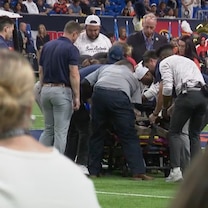
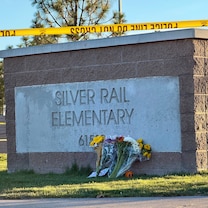
RADDATZ: Utah Governor Spencer Cox was thrusted to the spotlight one year ago after conservative activist Charlie Kirk was killed at Utah Valley University. After the shooting, Governor Cox desperately urged both sides to turn the temperature down.
We traveled to Utah this week to talk with Governor Cox about his new book, “Off Ramp”, which issues a dire warning that our democracy is at risk of failing if Americans do not come together.
(BEGIN VIDEOTAPE)
RADDATZ: Amazing it’s been a year.
GOV. BRIAN COX, (R) UTAH: Yeah, it’s -- it’s so tragic. It feels like yesterday, and yet it feels like 10 years ago. It’s all the emotions and, you know, the school’s still healing.
RADDATZ (voice-over): Governor Spencer Cox was having lunch with staff that day when the fatal shot hit Charlie Kirk.
CHARLIE KIRK, CONSERVATIVE ACTIVIST: I saw a lot of people. Utah, tell me what?
COX: Someone just handed me their phone, and the video was on there, and that's a moment I -- I can't get out of my mind. I wish I could, but it just kind of overwhelmed everything
DISPATCH: We’re getting several calls. We’re trying to get more information.
RADDATZ (voice-over): The updates were constant, the fear in the country palpable as Governor Cox pleaded for calm.
COX: We can return violence with violence. We can return hate with hate. We can always point the finger at the other side. And at some point, we have to find an off-ramp or it's going to get much, much worse.
RADDATZ (voice-over): And the governor is now sharing his idea of an off ramp. His new book with that title, a plea for Americans to find common ground and our leaders to set an example.
COX: Seventy percent of this country doesn't like where we are right now. They're tired of the hyperpartisanship. They're tired of the contempt, and they're desperate for something better, something different.
RADDATZ: One thing you have said is we desperately need leaders in our country who are -- who take the courageous off ramp from contempt. You said at the press conference, "History will dictate if this is a turning point for our country, but every single one of us gets to choose right now if this is a turning point for us."
Nine days later, the Charlie Kirk's memorial service, after a very forgiving and unifying speech by Erika Kirk, Charlie Kirk's widow, Donald Trump said this:
DONALD TRUMP, PRESIDENT OF THE UNITED STATES: He did not hate his opponents. He wanted the best for them. That's when I disagreed with Charlie. I hate my opponent, and I don't want the best for them.
I'm sorry. I am sorry, Erika, but now Erika can talk to me and the whole group, or maybe they can convince me that that’s not right, but I can't stand my opponent.
RADDATZ: What was your reaction to that?

COX: Well, so I was there at that, and you know, there was this moment that you mentioned where Erika forgives. One of the most powerful Christian moments I've ever experienced in my life. I talk about this, and, and yet, then the president comes up and says, you know, Charlie wanted me to love my enemies, and I can't do that.
One, I thought it was very transparent. He was being very honest, and I appreciate that. Sometimes politicians aren't honest,
RADDATZ (voice-over): Cox did not vote for President Trump in 2016 or 2020, but had a change of heart after the attempt on Trump’s life in 2024.
COX: I think a couple of things really impacted me at that that point. Just -- I've been talking about political violence. Is there a way to help do this? I'd spent eight years not having a relationship, and thought maybe there was an opportunity to have a relationship, and could that be helpful in some way?
RADDATZ (voice-over): And Cox remains a strong supporter today, despite the book’s message.
COX: Well, look. I think this is -- this is kind of a cop out that we take as Americans, where we can just blame a person or our political leaders for this. Now, I make the case that political leaders should do this. They also make the case that no president, no governor, no book is going to transform this or change this for our country.
RADDATZ: You do say in the book you describe the very high stakes. You say, "I am becoming more convinced that we are on a path to complete failure of our democratic republic and its institutions.” You write, “Freedom is a fragile thing.”
Those are really extraordinary statements for a Republican to say in the middle of a Republican presidency, not to mention Congress.
COX: Yeah, look, but I would have written those words five years earlier as well. In fact, I did write similar words five years earlier in a Democratic administration. This is -- this is not something that any one party owns. It's not something that -- that is the responsibility of any one person. This is -- this is America and our drift.
RADDATZ (voice-over): Cox says one way to cure that drift is to face each other, instead of our screens.
COX: Get off of the algorithms, to get off of the screens. I was a Twitter addict in December of last year. I deleted Twitter off my phone. Everything got better.
RADDATZ (voice-over): And as Republicans look towards the 2028 election, Cox insists he has no plans to run for president.
RADDATZ: You start the book by saying, I am not running for president, really. I'm going to just believe you right now. But would you make a good president?
COX: I don't know. I don't know if I would. It's a -- it's a -- it's a very hard job. I -- look, I'm not running for president. I don't want the job. If -- if I wrote a book because I was running for president, you shouldn't read that book because it wouldn't be sincere.
And I do think, though, that someone, I think there's a market failure in both parties right now. I think that the party that figures out that -- that Americans are tired of the toxicity will do very, very well in the election. I hope it's my party in '28. But that remains to be seen.
(END VIDEOTAPE)
RADDATZ (on camera): Our thanks to Governor Cox. His book "Offramp" comes out Tuesday.
Coming up, the first ballots are already in the mail. With now just two months to the midterms, the top Senate Republican is sounding the alarm, saying Republicans could lose the majority. What does the Roundtable think? We're back in two minutes.
(COMMERCIAL BREAK)
(BEGIN VIDEO CLIP)
COKIE ROBERTS, FORMER ABC NEWS POLITICAL JOURNALIST: I do sometimes feel with younger women, though, that they have really no understanding of what it took.
GLORIA STEINEM, JOURNALIST & ACTIVIST: But that's OK. I mean, I don't think, you know, there's no point in -- I wouldn't demand gratitude.
ROBERTS: Well, I would like a little. But the --
(LAUGH)
STEINEM: Well, I think it's really helpful. I mean, to know what happened in the past, it helps you. But there's another element of that, though, I think. And that is that women's pattern of activism, not everybody, but as a kind of general way, is the reverse of men's. That is, men tend to get, again, not everybody, but more conservative as they get older because they gain power as they get older.
Women get more radical as we get older because we lose power as we get older. And those young women haven’t experienced that yet, and maybe they haven’t even been in the labor force yet to discover what discrimination is.
(END VIDEO CLIP)
RADDATZ: Feminist icon Gloria Steinem with our own ABC News icon, the late Cokie Roberts in 2015. Steinem died this week at the age of 92.
The roundtable weighs in on Steinem’s legacy and all the week’s politics.
We’re back in a moment.
(COMMERCIAL BREAK)
RADDATZ: And the roundtable joins me now.
Former DNC chair Donna Brazile, “Free Press” columnist Charles Lane, “New Yorker” staff writer Susan Glasser, and former RNC communications director Doug Heye.
Welcome to all of you.
And, Doug, I want to start with you.
You heard Energy Secretary Chris Wright put the best face on gas prices. But realistically, they’re going to be high in the midterms.
DOUG HEYE, REPUBLICAN STRATEGIST & FORMER RNC COMMUNICATIONS DIRECTOR: They’re going to be high for a long time. And the problem with it isn’t just gas prices. It’s everything else that’s more expensive that gets delivered on a truck, which is sort of everything in this studio and --
RADDATZ: The diesel fuel, right? That’s what that effect that?
HEYE: Diesel fuel.
RADDATZ: Yes.
HEYE: But also anything that people go -- people go to the store and buy. And so, we’re going to see prices higher for a long time. And it’s why I think the president could have an opportunity here this week with his convention if he stays on message. Talk about what you’ve done and what you’re trying to do to make being at the lake more affordable for Labor Day, instead of what the name of the lake should be. How Trump messages this week is going to be very important, not just for him, but for every single Republican on the ballot.
RADDATZ: And, Donna, they did get good news this week about the job numbers. I mean, if President Trump stays on that, those job numbers, people getting jobs, three times higher than expected, right?
DONNA BRAZILE, FORMER DNC CHAIR & ABC NEWS CONTRIBUTOR: And the majority of the people who look like they were able to get employment again were women. Women in education. Women in health care. That’s good news. But once again, what’s eating at the American people is that they’re gathered around their kitchen table or at the lake or back at home under the tree, and they can’t afford to get a hamburger. They can’t afford to make potato salad. And with the new tariffs that are going to be enacted with Canada, pretty soon Americans won’t be able to just go out and get some regular old toilet paper.
RADDATZ: And all of this comes back to the Iran War. Despite whatever they say, this is about the Iran War with those gas prices.
You also heard Chris Wright say, we may not get a nuclear deal, which was the point of this, right?
SUSAN GLASSER, NEW YORKER STAFF WRITER: Well, there have been so many different points, Martha. I think, you know, that’s what we’re hearing this week. What we heard from President Trump was, pay no attention to that war over there behind the corner. If we don’t call it a war, if we don’t even call it a conflict, if we say it’s small potatoes, maybe people won’t pay attention. I think that's the strategy if somebody doesn't really have a strategy.
But, you know, I was really struck by that comment in your interview with the secretary as well. They have changed the goals of this conflict, whatever you call it. Initially, there was talk of regime change. The only --
RADDATZ: Protesters.
GLASSER: Exactly right. You don't hear about the Iranian people very much anymore. In fact, you heard President Trump demonizing the entire country, right? You know, these are an evil people rather than a country that is in the grip of a dictatorship that just a few months ago he said he was going to help those people.
I think the prospects, we have to be real at this point, of any kind of negotiated, long-term settlement are extremely realistic. There was a nuclear deal with Iran, of course, that President Obama negotiated, and it was blown up by Donald Trump in his first term. I think we're looking at the prospect potentially of a long-term, on-again, off-again conflict, as you suggested in that conversation.
RADDATZ: Exactly, Charles. And that would take -- and I ask him about keeping those 50,000 troops there, but this comes as “The Washington Post” was reporting that we can't -- this -- it’s unsustainable to go forward. Apparently, military advisors gave them that word.
CHARLES LANE, THE FREE PRESS COLUMNIST & AMERICAN ENTERPRISE INSTITUTE SENIOR FELLOW: We already have had the spectacle of the crew of the Lincoln, the aircraft carrier, in great distress. Some stories this week were out they finally got some shore leave in Thailand, and you could see the relief on their faces. That's just one aspect of the sustainability issue here.
As you say, it's a very open-ended conflict. I think the one thing the administration can say in its favor is that the blockade on Iran's exports seems to be working. And there's this kind of -- you know, question of whose blockade is leakier right now, and I think Iran's blockade of Hormuz is slightly leakier than the U.S. blockade of Iran.
But that just then begs the question, how long are we going to maintain this blockade? At what expense? With what endgame? And they --
RADDATZ: We keep bombing if they have to.
LANE: And there was more fighting again this week as well, yeah.
RADDATZ: Doug, I want to turn back to you. You mentioned this midterm RNC, which is quite unusual, and more unusual is the list of speakers. I think we have President Trump, we have J.D. Vance. We have House Speaker Johnson.
But we also have the Attorney General of the United States, Todd Blanche, going as well.
HEYE: Yeah, I'm disappointed by it, but not surprised.
Look, the Republicans had a convention. You know, former RNC chair, I've been to a lot, or comms director, I've been to a lot of them, but we had one at the White House, which certainly was also unprecedented.
And it shows that this is going to be a celebration of all things Donald Trump, which will make Donald Trump very happy. But for Republicans who are on the ballot who see where his approval ratings are, this doesn't help them unless they can somehow be on message about what's going on in the country and how -- what they've done, and what they're going to do in another Congress to keep that going.
And voters aren't feeling that. So if you're telling them, much like the president did in his State of the Union, that you've never been hotter or richer, voters are going to turn away from that pretty quickly.
And we're going to hear a lot about how this is produced. And we talk a lot about Donald Trump as an executive producer. It's going to be a slick, well put together event.
RADDATZ: Again, not all Republicans who are in tight races are going to go because they don't want that.
HEYE: That's not unusual. But I think Trump should realize as the executive producer in chief that shows often sort of run out of steam by the time you get to season six. And that's where Trump is right now.
BRAZILE: They're going to remind the American people that this is a referendum on Donald Trump and the affordability crisis.
Democrats will have a counter convention, and that is they're going to be helping to rebuild the food bank supply in and around Texas. They're bringing farmers and ranchers who've been devastated by this administration’s tariffs and fuel prices.
And Democrats will also, Hakeem Jeffries is sending four strong Democratic leaders down to Texas to make sure that the affordability crisis is front and center.
RADDATZ: They will put that front and center, Donna, but I also want to say that there are Democrats running in red states who don't want Kamala Harris around.
BRAZILE: Well, a few. Many -- and Kamala has said, the vice president, former vice president said, look, I understand politics. If you -- if you want my support, I'm here to lend it. If you don't need my help, I don't want to hurt you.
But the good news is that Democrats have a great bench of leaders who are willing to help from Mr. Talarico to Mr. Ossoff to Ms. Mary out in Alaska. It's going to be a good election cycle for Democrats.
RADDATZ: Susan, Senate Majority Leader John Thune this week acknowledged he's concerned about losing the Republican majority.
GLASSER: Yeah, I mean, history and math, you know, both suggest he's right to be concerned. You know, the thing that's so striking to me, though, Martha, is that we don't -- the playing field has shrunk. You know, the way that our politics has developed with gerrymandering, with the extreme polarization, there are very few toss up races right now. Only, I think, 18 genuine toss ups in the House of Representatives.
When I was a young reporter on Capitol Hill, it was something like 100 races every year
were really competitive.
And so, when Donald Trump gets up and says, I'm going to have a midterm convention and make it all about myself, that makes very little sense for those 18 competitive races. But the problem is, this is all about always speaking only to your own core supporters.
Now, Trump, where I think that's the warning indicator, is that his polls have slipped among Republicans and Republican-leaning Independents. Of course, he's still heavily favored by them. But those numbers have gone down by, I think, 15 points or so. That's a warning indicator for a party that relies upon its own turnout.
HEYE: And to Susan's point, when I was at the RNC in 2010, our magic number for Obama was 46. We felt if he was at or below that, we'd take back the House. He was at that number. We won 63 seats. Trump's numbers are well below Obama's. But that map, to your point, just doesn't exist like it did in 2010.
RADDATZ: Chuck?
LANE: Well, there's two ways to win an election, right? Persuasion or mobilization. And in this season of extreme polarization, it's about mobilizing. And that's, I think, the goal of this Dallas convention, to turn out the Republican base.
But what strikes me about the lead-up to it is the president is talking about things, anything but what voters are really concerned about. He's pursuing this trade war with Canada. He's renaming Lake Ontario. He's focused on the erection of this arch near the entrance to Arlington Cemetery, pursuing all kinds of vendettas.
I think I saw him on T.V. the other day saying that the interest rate should be cut to half a percent and throwing shade at Kevin Warsh, who's his own choice for Fed chairman. So it's a longstanding hope of the Republicans that the president will finally get back on message, but he never seems to actually do that.
RADDATZ: Donna, let me read what Political Analyst Charlie Cook said. Republicans should brace themselves. The three most plausible outcomes are that it will be bad, really bad, or truly horrible. Conversely, a Democrat should at least briefly consider that the good fortune they may have in November will come compliments of the president, not as a result of much that they have done. Agree with that?
BRAZILE: Well, look, the Democrats want to -- first of all, anybody from Louisiana, I'm going to agree with them.
(LAUGH)
BRAZILE: We may not make gumbo the same, but we love it. And Charlie Cook is one of the best.
Look, the good news is that Democrats don't have to run on their "record" because it's the Republican record, the trifecta. Democrats want to break the trifecta so that they can govern on behalf of the American people to lower costs and to focus on what really is the biggest concern in this country.
And that is America is losing ground across the globe because we have a president that keep picking fights and don't know how to stop them.
HEYE: And if Democrats take back the House, get ready for the House Democratic Freedom Caucus. There's this cache of candidates that we've seen. They want to fight before they want to legislate. I've seen those troubles firsthand in the House of Representatives. Donna, good luck.
(LAUGH)
RADDATZ: And I want to end here with some reflection on Gloria Steinem. We saw that wonderful interview with our Cokie Roberts. Susan, just your thoughts.
PAGE: You know, Martha, I mean, we're talking about politics 10 years into the age of Donald Trump. It's, you know, the juxtaposition that really gets you, I think, it's this sort of golden age of toxic masculinity in our politics. And of course, in an election season, even more so.
You know, a lot of people don't appreciate that it took a lot of fights by a lot of people like Gloria Steinem for women to get where they are today.
RADDATZ: Donna, she was your mentor, your icon, so many people.
BRAZILE: Look, through my friend, Christina Kiel, my long-term friend, I had an opportunity to intern for Gloria 44 years ago. I'm still a young cat. But Gloria was somebody who broadened the table. She didn't want women just to have seats.
She wanted women to have a voice. She wanted women to be seen in the future. I had the opportunity, because Gloria said, you've got to put it in writing. You've got to talk. You've got to write. And I wrote for "Ms. Magazine" for over a decade.
Gloria was someone who I think from now on, history will remember the fights she waged and what she did for all Americans, including young women as well.
RADDATZ: Got about 20 seconds, Chuck. I'm interested in a male view there.
(LAUGH)
LANE: Well, I'm really admiring of the overcoming of very difficult circumstances early in her life.
BRAZILE: Yeah.
LANE: I think that's another aspect of her career people aren't really all that aware of, because she projected such a glamorous and successful image. But she came up in a very difficult home and never lost her positive attitude and her desire to achieve something.
RADDATZ: She did not. And we appreciate all your comments. I'm sure you feel the same way, Doug. Appreciate all you being here.
Up next, 25 years after 9/11, the college course teaching the history of that tragic day to those who weren't alive yet to experience it.
(COMMERCIAL BREAK)
RADDATZ: This Friday marks 25 years since the horrific attacks on September 11th. Today, just a 30-minute drive from the Pentagon, at George Mason University, a professor has created a course called 9/11 in history and memory to reach a generation of students who weren't even born yet on that tragic day.
Jay O'Brien has the story.
(BEGIN VIDEOTAPE)
JAY O'BRIEN, ABC NEWS CORRESPONDENT: You guys are a full 60 years apart.
MICAYLA CRANFORD, GEORGE MASON UNIVERSITY STUDENT: Yes.
BARBARA KYRIAKAKIS, GEORGE MASON UNIVERSITY STUDENT: And I'm glad to know her.
O'BRIEN (voice-over): Barbara Kyriakakis is 83 years young. Her new pal, Micayla Cranford, is 23.
So you both have very different relationships with 9/11.
KYRIAKAKIS: Yes.
O'BRIEN: Barbara, you remember it?
KYRIAKAKIS: Of course.
O'BRIEN (voice-over): Barbara was at work on September 11th, 2001, and later learned one of her neighbors was on Flight 93, brought down in a Pennsylvania field by brave passengers.
But it hit you right in your community.
KYRIAKAKIS: Yes, absolutely. And for a long time, we watched that little girl grow up without a father.
O'BRIEN (voice-over): To Barbara and so many others, that day is personal. For Micayla, it's just another moment in history.
CRANFORD: I was not alive for 9/11.
O'BRIEN: What do you know about it?
CRANFORD: I -- all I know is, like what I know what I learned in school.
O'BRIEN (voice-over): These two had never spoken to each other before today, although they've been sitting steps away for a few weeks now in a class here at Virginia's George Mason University, dedicated to helping students honor and understand 9/11.
MEREDITH LAIR, GEORGE MASON UNIVERSITY HISTORY PROFESSOR: One of the questions that we have to consider is why.
O'BRIEN (voice-over): Professor Meredith Lair teaches this course every five years around major anniversaries because she told us she found many of her young students felt no connection to 9/11. One hundred million Americans, according to the 9/11 Memorial and Museum, have no lived memory of that day.
LAIR: It seemed like there was a kind of intensifying forgetting and also a glibness around the conversation around 9/11.
O'BRIEN (voice-over): Over the semester, this course will cover the lead-up to the attacks, that fateful day and its aftermath, including two decades of the war on terror and the age of misinformation after 9/11.
ETHAN MCCUTCHEON, GEORGE MASON UNIVERSITY STUDENT: When I first learned about it, like years ago, it felt like something that kind of like happened, like before I was born. Like something just --
O'BRIEN: Yes.
MCCUTCHEON: But then when you actually like see, like pictures, photos, videos, it feels like something that was just like -- it just hits you all at once.
O'BRIEN (voice-over): Alongside the college-age students who signed up for these lectures are several older pupils, including Barbara. She's auditing the course in her retirement. We asked Micayla if she knew anything about the unity the country felt in the wake of the attacks. She had no clue.
KYRIAKAKIS: Oh my gosh, that was amazing. The whole United States came together. We -- we --
O'BRIEN: Did you know that?
CRANFORD: No, I didn't.
O'BRIEN: Barbara, can you explain to her what it was like in the months after 9/11?
KYRIAKAKIS: Well, think of what it's like right now, it's just the opposite.
O'BRIEN (voice-over): In the smoldering aftermath of 9/11, our country vowed to never forget. But how can we truly keep that promise when history marches on, and successive generations have no memory to keep alive in the first place?
The solution, Professor Lair believes, starts with conversations like these.
LAIR: I want them to ask hard questions, and I guess, I'm OK if they're a little bit traumatized as a consequence because that is part of being human, it's part of feeling, it's part of thinking about others. And --
O'BRIEN: And ultimately, they'll understand the American experience better.
LAIR: That is my hope, and that they will remember 9/11 as something that happened not to a nation, but to regular people just like them.
CRANFORD: It shows that like even during a terrorist attack, real humans, firefighters, even people on the ground, still wanted to help the people that were in a -- literally, a burning building.
O'BRIEN: In our darkest hour.
CRANFORD: In our darkest hour, people still wanted to help.
O'BRIEN (voice-over): A day that young people like Micayla didn't live, but one that forever shaped their future.
O'BRIEN: What do you think people your age should take away about that day?
CRANFORD: Ask your parents about that day. Ask how it made them feel and get a deeper knowledge of it. Because it's a day that will truly live on in history that will forever be talked about.
(END VIDEOTAPE)
RADDATZ: And it will indeed. Our thanks to Jay. And be sure to tune in to full coverage on ABC News this Friday, September 11th, throughout the day as "25 Years Later, America Remembers."
And at 8 p.m. Eastern Friday, a special "Tribute in Light" live from Lower Manhattan in partnership with the 9/11 Memorial & Museum.
We'll be right back.
(COMMERCIAL BREAK)
RADDATZ: That's all for today. Thanks for sharing part of your Sunday with us. Check out "World News Tonight" and have a great Labor Day.
(COMMERCIAL BREAK)

Popular Reads

ABC News Live